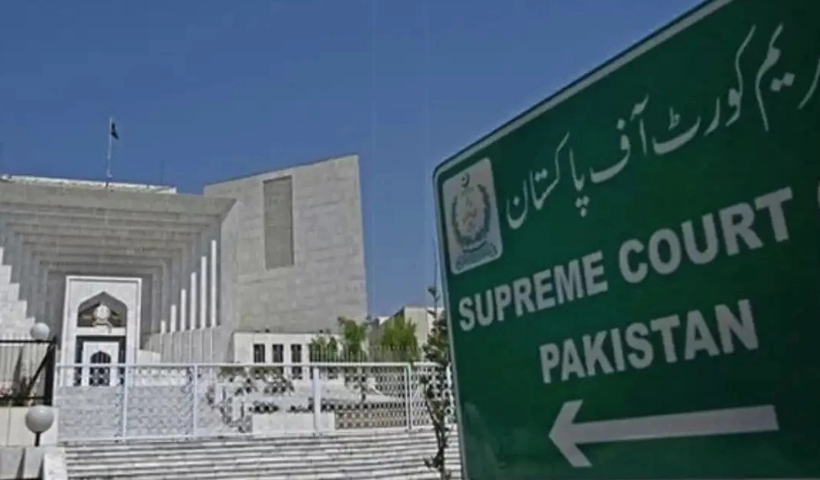
Islamabad, November 14, 2025: The Supreme Court of Pakistan on Friday said there was no discussion on the recently enacted 27th Constitutional Amendment during a full court meeting convened by Chief Justice Yahya Afridi, despite multiple requests from judges for deliberation on the matter.
According to an SC press release, the meeting instead focused on finalising and approving the Supreme Court Rules, 2025, which were unanimously updated on the recommendation of a committee comprising Justices Shahid Waheed, Irfan Saadat Khan, Naeem Akhtar Afghan, and Aqeel Ahmed Abbasi.
The statement praised the committee for “meticulously reviewing” the Supreme Court Rules, 1980 and drafting the updated framework to “improve service delivery and ensure inexpensive and expeditious administration of justice.”
The full court also unanimously approved the elevation of advocate Muhammad Munir Paracha to the status of senior advocate of the Supreme Court under Rule 5 of Order IV of the new rules.
Calls for a full court meeting intensified this week after Justice Salahuddin Panhwar became the third Supreme Court judge to formally request deliberation on the 27th Amendment. In a two-page letter, he urged the CJP to examine the amendment “clause by clause,” warning that it may disrupt the constitutional balance regarding judicial independence, security of tenure, bench composition, and administrative autonomy.
Before the amendment’s passage, Justices Syed Mansoor Ali Shah and Athar Minallah—both of whom resigned following its enactment—also wrote separate letters urging the CJP to convene either a full court or a judicial conference.
Justice Shah, in a six-page letter, called the amendment a “political device” aimed at weakening the judiciary and urged the chief justice to assert that no constitutional changes affecting the courts should occur without prior consultation with superior judges.
“You act not merely as administrator but as guardian,” he reminded the CJP.
Justice Minallah, in a seven-page letter, called for a judicial conference involving all SC and high court judges, citing “threats to the independence of the judiciary” and warning that the institution stands “at a perilous crossroads.”
He said Parliament should consider the judiciary’s collective input before “tinkering with the basic law of the land.”
Meanwhile, senior lawyer Faisal Siddiqui, in a letter endorsed by former judges, also urged the chief justice to take a firm institutional position on the issue.