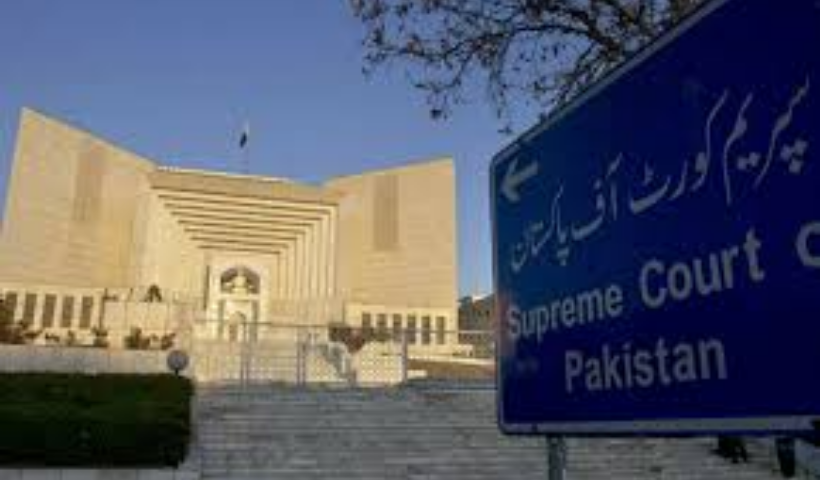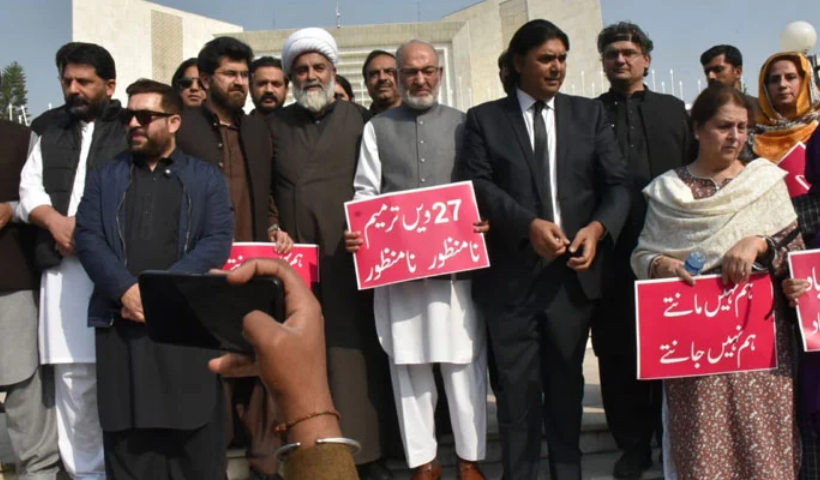
Islamabad, November 18, 2025: The joint opposition alliance, Tehreek Tahaffuz-e-Ayeen Pakistan (TTAP), on Tuesday staged a protest rally against the recently passed 27th Constitutional Amendment, marching from Parliament House to the Supreme Court.
TTAP chief Mahmood Khan Achakzai led the demonstration, accompanied by Allama Raja Nasir Abbas, Barrister Gohar Ali Khan, parliamentarians, lawyers, and party workers. The rally concluded peacefully after a brief sit-in outside the Supreme Court. The alliance also announced a nationwide “Black Day” to register its opposition to what it called “ongoing constitutional violations” in the country.
Speaking to reporters, Allama Abbas said the march represented the alliance’s struggle to “protect” the Constitution, asserting that avenues for justice had been “sealed” for citizens.
“We walked from Parliament to the Supreme Court to highlight how all roads to justice have been closed for the people of Pakistan,” he said.
He added that the national consensus established around the Constitution had been undermined, turning it into a “contested document,” and stressed that no legislation should contradict its basic spirit.
Allama Abbas further alleged that freedom of expression was being “suppressed” and fundamental rights violated. “People have been silenced, their rights trampled, and we will not remain quiet as long as we live,” he said.
Announcing the alliance’s next steps, Abbas said TTAP would observe a nationwide “Black Day” on Friday, during which supporters will wear black armbands. He also revealed that a national conference is being convened as part of the movement.
The protest comes days after Parliament approved the 27th Constitutional Amendment with a two-thirds majority, introducing sweeping changes to the judicial structure and military command.
Key Features of the 27th Constitutional Amendment,
- Chief of Army Staff to become Chief of Defence Forces
- Honorary military titles—Field Marshal, Marshal of Air Force, Admiral of Fleet—to remain for life
- Incumbent Chief Justice to continue in office until completion of current term
- Seniority principle revised: Senior-most among SC Chief Justice and FCC Chief Justice to serve as Chief Justice of Pakistan
- Establishment of a Federal Constitutional Court (FCC)
- Equal provincial representation in the FCC
- FCC empowered to initiate suo motu proceedings on petitions
- President and Prime Minister to have enhanced roles in judicial appointments
- residential immunity to be limited if the president assumes a public office after completing their term
- Judicial Commission to decide on the transfer of high court judges
- Supreme Judicial Council to review objections on judges’ transfers