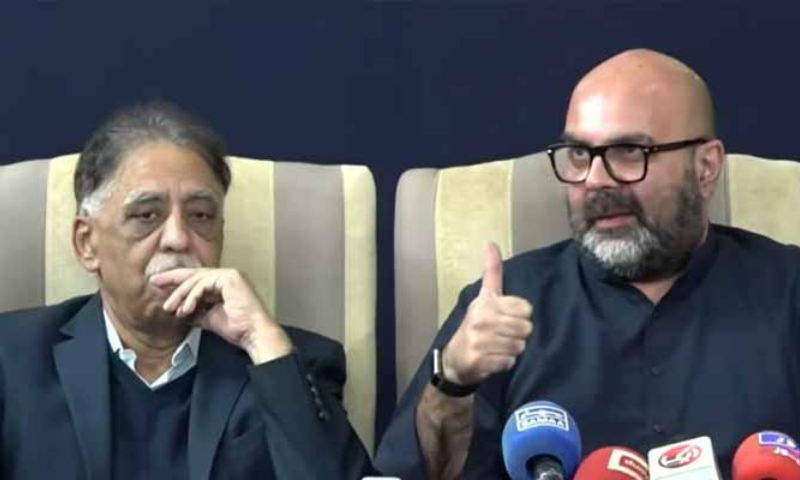
Islamabad, November 22, 2025: A six-party opposition alliance operating under the banner of Tehreek Tahafuz Ayeen-i-Pakistan (TTAP) on Saturday called for a formal investigation into alleged economic irregularities highlighted in a recent International Monetary Fund (IMF) report.
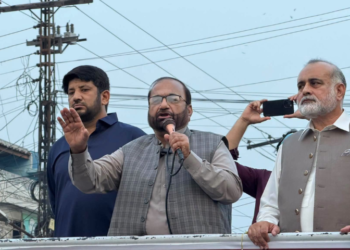
At a joint press conference with Pakistan Tehreek-e-Insaf (PTI) leader Taimur Khan Jhagra, former Sindh governor Muhammad Zubair criticised the government for failing to provide any clarification more than 48 hours after the IMF’s findings became public.
“The government has neither denied nor responded to the IMF’s report despite repeated demands,” Zubair said, questioning why the administration had “kept the report hidden for three months,” even though, according to him, the IMF had made its publication a prerequisite for releasing the next tranche.
The IMF’s long-awaited Governance and Corruption Diagnostic Assessment (GCDA) warned that persistent corruption and weak institutions continue to undermine Pakistan’s economic development, even as the country stabilises under the Extended Fund Facility (EFF). Publication of the report is a condition for IMF executive board approval of a $1.2 billion disbursement expected next month.
According to the GCDA, Pakistan could boost economic growth by 5% to 6.5% over five years if it implements a package of governance reforms within the next three to six months. The report also urges an end to preferential treatment for influential public-sector entities in direct government contracts, tighter limits on government financial powers without enhanced parliamentary oversight, and the streamlining of anti-corruption agencies. The government had reportedly delayed the report’s release since August.
Zubair said the opposition was formally seeking a probe into the “irregularities documented in the report,” adding that citizens were already struggling with high inflation. He reiterated his criticism of the cases filed against PTI founder Imran Khan, calling them “false, fabricated and baseless.”
Speaking at the briefing, Jhagra said the IMF had explicitly raised concerns over corruption and political interference across Pakistan’s institutional framework.
“The IMF is saying there is corruption in Pakistan,” he remarked. “It says institutional performance is compromised due to political pressure.”
He added that investor confidence was deeply affected because “judicial institutions are perceived as corrupt,” leading to reduced foreign investment. Citing the IMF report, Jhagra said Pakistan’s entrenched “transfer culture” operated as a form of administrative punishment.
He stressed that accountability must apply to all, noting that “no one in the world enjoys lifelong immunity.” While he clarified that the IMF did not directly comment on the Special Investment Facilitation Council (SIFC), he said the global lender had repeatedly demanded greater transparency in governance.
“In such conditions, no investor will come to Pakistan,” Jhagra warned, calling for a transparent system and broad-based accountability to restore domestic and international trust.