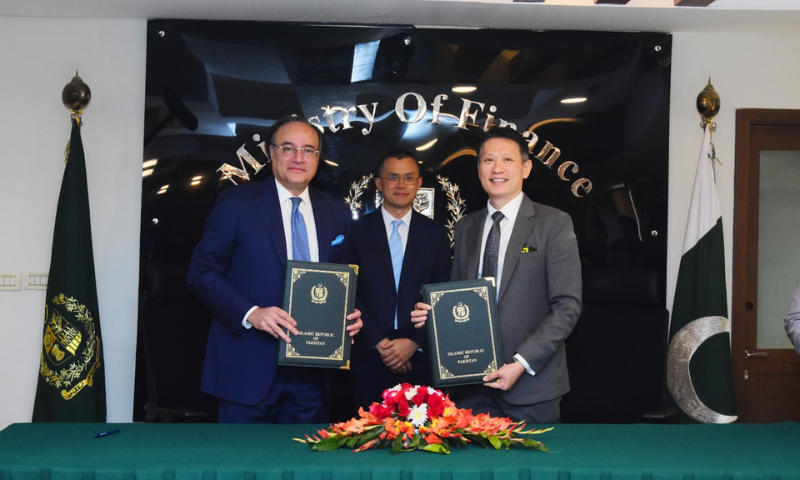
Islamabad, December 12,2025: Pakistan on Friday signed a memorandum of understanding (MoU) with global crypto exchange Binance to explore the tokenisation of up to $2 billion worth of national assets, the finance ministry announced.
According to the ministry, the MoU provides a framework for potential collaboration on the tokenisation and blockchain-based distribution of Pakistan’s real-world and sovereign assets. These may include sovereign bonds, treasury bills, and commodity reserves such as oil, gas, metals and other government-owned raw materials.
Tokenisation refers to converting physical or traditional financial assets into digital tokens, enabling faster transactions, broader investor access and enhanced transparency.
The ministry said the initiative, subject to necessary approvals, aims to improve liquidity, transparency and Pakistan’s access to global markets.
Finance Minister Muhammad Aurangzeb described the agreement as a reflection of Pakistan’s continued reform agenda and “a long-term partnership” with the global blockchain industry. Binance founder Changpeng Zhao termed the development “a great signal” for the global crypto ecosystem and for Pakistan, saying it would pave the way for the full rollout of tokenisation in the country.
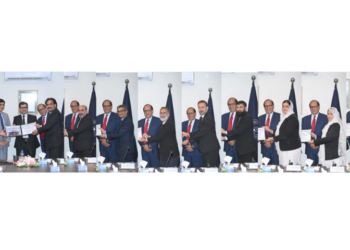
Separately, the Pakistan Virtual Assets Regulatory Authority (PVARA) granted no-objection certificates (NOCs) to Binance and HTX, allowing both firms to begin regulated engagement in Pakistan’s digital asset landscape.
According to PVARA, the NOCs were issued after a detailed review involving public-sector stakeholders, with emphasis on governance, compliance, risk management and alignment with evolving regulatory frameworks.
Finance Minister Aurangzeb said the introduction of a structured NOC mechanism “demonstrates Pakistan’s commitment to responsible innovation and financial discipline.”
The NOCs will allow the firms to register on the FMU’s goAML system, liaise with the Securities and Exchange Commission of Pakistan (SECP) to establish local subsidiaries, submit applications for full Virtual Asset Service Provider (VASP) licences and eventually offer AML-compliant services after goAML registration.
PVARA Chairman Bilal Bin Saqib welcomed the development, calling it “the beginning of a new chapter for Pakistan’s digital asset ecosystem.” He said the move is the first step toward a fully licensed and regulated environment prioritising consumer protection, financial integrity and responsible innovation.
Pakistan ranks third globally in crypto adoption, with an estimated 30–40 million users. Annual trading volumes linked to the country are projected to exceed $300 billion.
PVARA said timely regulation was crucial for ensuring transparency, governance and market stability, while signalling Pakistan’s openness to regulated digital innovation.