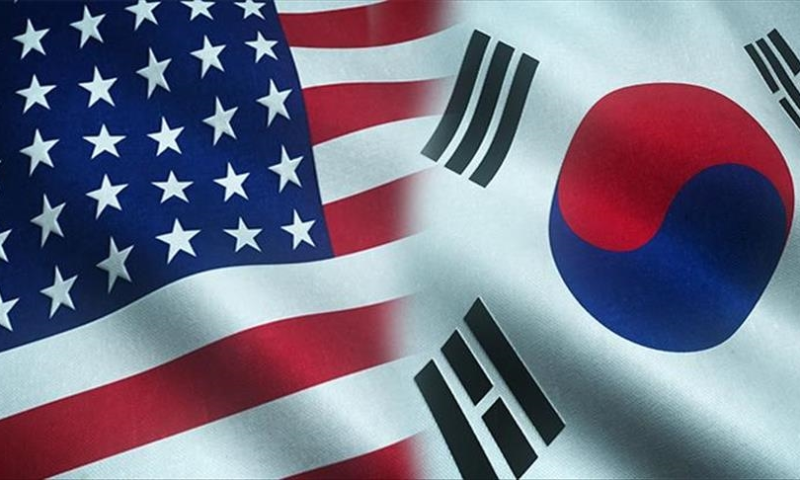
Pyongyang, December 25, 2025: North Korea on Wednesday strongly condemned the United States for deploying a nuclear-powered attack submarine to South Korea, warning that the move has sharply escalated nuclear tensions on the Korean Peninsula and vowing to take corresponding countermeasures.
In a statement released by the spokesperson of the Ministry of National Defense, the Democratic People’s Republic of Korea (DPRK) said recent US actions reflected an increasingly “blatant” attempt to entrench nuclear instability in the region. The statement referred to the arrival of a US Navy nuclear attack submarine at the Busan Operational Base on December 23, officially described by Washington as routine stop for crew rest and logistical replenishment.
The spokesperson said the deployment came just 46 days after the USS George Washington nuclear-powered aircraft carrier strike group entered South Korea on November 7, calling the repeated presence of US strategic assets a “serious act of destabilisation” that heightens military tensions on the peninsula and across the wider region.
The statement also criticised the outcome of the recent 5th US–ROK Nuclear Consultative Group meeting in Washington, where the United States reaffirmed its commitment to providing South Korea with “extended deterrence,” including the use of nuclear weapons. According to Pyongyang, Washington has effectively given Seoul a “green light” to pursue nuclear submarine development while simultaneously increasing the deployment of US nuclear assets.
North Korea warned that these moves signal Washington’s intention to transform its military alliance with South Korea into a “nuclear confrontation bloc” centred on US nuclear weapons, describing the situation as approaching a “critical juncture” for regional security.
Reiterating its stance, the DPRK said its determination to strengthen defence capabilities in response to what it views as hostile US policies remains “absolutely unchangeable.” The statement stressed that the deployment of US nuclear submarines would not alter Pyongyang’s resolve and instead reinforced the need to secure strategic retaliatory capabilities capable of neutralising nuclear threats within its maritime sovereignty.
The spokesperson concluded by stating that North Korea would consider appropriate countermeasures in response to US nuclear force demonstrations, in line with what it described as the doctrine of mutual restraint among nuclear powers. The timing and method of any response, it added, would be decided based on principles of symmetry and asymmetry.