Dhaka, December 31, 2025: Bangladesh bid farewell on Wednesday to former Prime Minister Khaleda Zia in a state funeral attended by thousands, mourning the towering political leader whose career shaped the country’s politics for decades. Khaleda, the first woman to serve as Bangladesh’s prime minister, passed away on Tuesday at the age of 80.
Flags were flown at half-mast, and thousands of security personnel lined the streets as her body was carried through Dhaka in a vehicle adorned with the national flag. Funeral prayers were held outside the parliament at around 3:00 pm local time, with attendees waving national flags and those of Khaleda’s Bangladesh Nationalist Party (BNP). She was laid to rest alongside her late husband, former President Ziaur Rahman, who was assassinated in 1981.
Mourners paid tribute to her enduring influence. Seventy-year-old retired official Minhaz Uddin, who had never voted for Khaleda, said he attended “just to say goodbye to a veteran politician whose contributions will always be remembered.” Sharmina Siraj, 40, highlighted the impact of stipends introduced by Khaleda to support girls’ education, describing her as “an inspiration” and noting the challenge of imagining women in leadership roles anytime soon.
Pakistani delegation expresses condolences
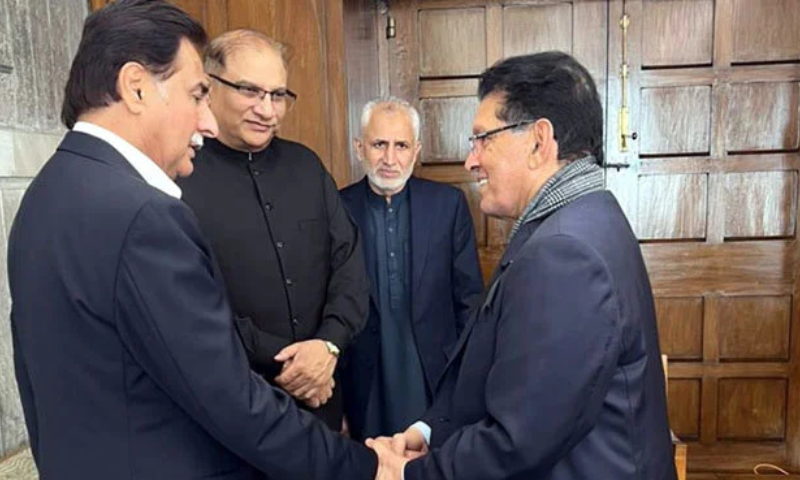
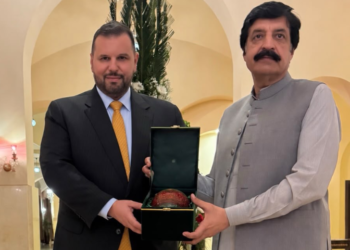
National Assembly Speaker Sardar Ayaz Sadiq, who traveled to Bangladesh for the funeral, visited Khaleda’s residence to meet her son Tarique Rahman and daughter. In a statement, he expressed Pakistan’s condolences, saying, “In this hour of grief and sorrow, the government and the people of Pakistan stand with you.” Khaleda’s family thanked Sadiq for his support.
The NA speaker also met Bangladesh’s national security adviser Khalilur Rehman and the adviser for law, justice, and parliamentary affairs, Asif Nazrul, discussing matters of mutual interest. Later, Sadiq interacted with Indian Foreign Minister Dr Subrahmanyam Jaishankar at the Bangladesh Parliament.
A legacy of resilience and political influence
Despite years of ill health and imprisonment, Khaleda remained politically active, submitting nomination papers for three constituencies just hours before her death ahead of next year’s elections scheduled for February 12. Her party, the BNP, is widely seen as a frontrunner, with her son Tarique Rahman expected to play a prominent leadership role following his recent return from 17 years in exile.
“She is no more, but her legacy lives on — and so does the BNP,” said Jenny Parvez, a mourner who traveled hours to pay her respects. Interim Prime Minister Muhammad Yunus declared three days of national mourning, calling Khaleda “a great guardian” of Bangladesh.
Tarique Rahman highlighted his mother’s resilience in the face of repeated arrests, medical neglect, and political persecution, calling her fortitude “unbreakable.” Despite deteriorating health, Khaleda remained engaged in the political process until her final hours.
International leaders also paid tribute. Indian Prime Minister Narendra Modi extended condolences, expressing hope that Khaleda’s “vision and legacy will continue to guide our partnership,” despite strained ties between New Delhi and Dhaka since the political transition last year.