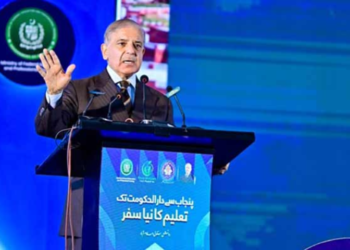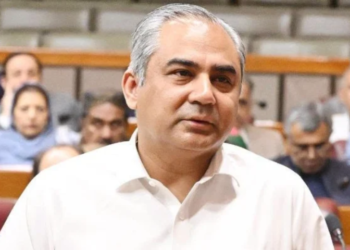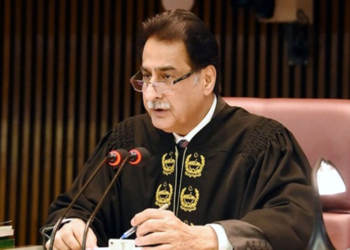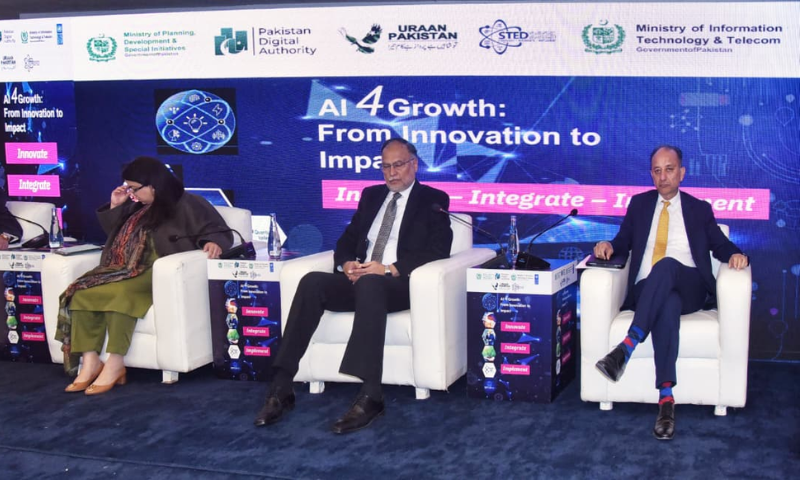
Islamabad, February 10, 2026: Federal Minister for Climate Change and Environmental Coordination Dr. Musadik Malik underscored the transformative role of artificial intelligence (AI) in climate governance, public policy, and disaster risk management while addressing a panel discussion at the National Artificial Intelligence Workshop.
The minister described AI’s predictive and preventive capabilities as its most impactful application, noting that Pakistan faces significant challenges due to sparse and fragmented data, which hampers effective policymaking.
Citing the Pakistan Vulnerability Report, Malik revealed that 20 districts have been identified as the country’s most climate-vulnerable, including 18 in Balochistan and two in Khyber Pakhtunkhwa. “These assessments enable us to pinpoint risks and, through AI-based modelling, design interventions that deliver maximum impact with limited resources,” he said.
He emphasized that AI can serve as a watchdog by integrating multiple technologies and monitoring systems, enabling early detection of potential disasters and facilitating timely preventive measures. However, Malik cautioned against overreliance on the technology, warning that excessive dependence could undermine critical human thinking and decision-making. “Vigilance is required in how we use AI,” he remarked.
The minister also warned that the next phase of the AI revolution—particularly the rise of AI agents—could significantly affect employment. He stressed the need for careful integration of AI into public services and timely reskilling of affected workers.
Highlighting the importance of innovation, Malik noted that while technology can deliver short-term productivity gains, sustainable progress depends on continuous innovation.
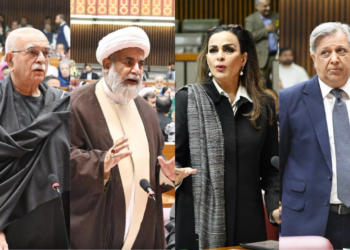
The panel was also attended by Federal Minister for Finance and Revenue Senator Muhammad Aurangzeb, Federal Minister for Planning, Development and Special Initiatives Ahsan Iqbal Chaudhary, and Federal Minister for IT and Telecommunications Shaza Fatima Khawaja, along with policymakers, experts, and stakeholders from the public and private sectors.