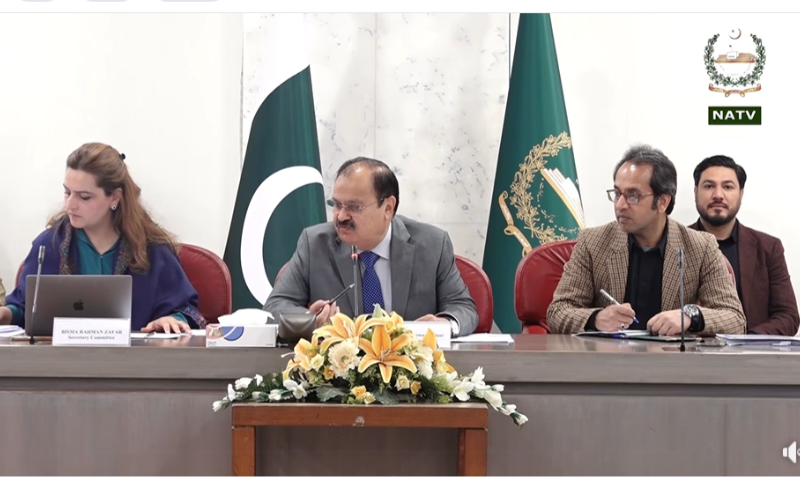
Islamabad, February 20, 2026: The Standing Committee on National Health Services, Regulations and Coordination convened under the chairmanship of Dr. Mahesh Kumar Malani to review regulatory and policy matters in the health sector, with a particular focus on HIV reporting, healthcare oversight, and project implementation.
During the session, the Committee noted significant deficiencies in the HIV-related report submitted by the Ministry of Health, including missing provincial data from Balochistan. Committee members highlighted discrepancies in reported figures, noting that approximately 350,000 HIV patients had been recorded in Sindh and Punjab—representing an increase of around 75 percent—with 20,000 new cases reported in 2018–19 and 9,700 cases recorded in the first nine months of 2024.
The Committee also flagged gaps in patient treatment tracking, citing 31 HIV-positive patients at Nishtar Hospital with no recorded treatment progress and missing data for 669 cases out of 5,000 in Kot Momin, Sargodha during 2018–19. While 24,000 patients were registered for treatment in 2019, only 84,000 individuals are currently under treatment, according to the Minister for Health.
The Minister explained that the apparent rise in cases was due to expanded testing efforts, with screening centers increasing from 24 to 127 nationwide. He noted that more people were being identified and reported as a result of these measures and highlighted positive steps undertaken during his tenure, which he said should be reflected in official documentation. The Committee requested a detailed report on these initiatives for its next meeting.
The session also addressed regulatory oversight, including performance gaps in healthcare authorities such as the Islamabad Healthcare Regulatory Authority. Committee members raised concerns over outdated information sharing, limited progress reporting, and enforcement issues. The Ministry noted that some matters required time for review and development, while members stressed the need for comprehensive documentation and evidence-based assessments in future submissions.
Regarding the Pakistan Nursing and Midwifery Council (Ordinance No. IX of 2025), the Minister described ongoing challenges as “the war was still on” and proposed an in-camera discussion at a later session. Members expressed concerns over unqualified members, particularly from Gilgit-Baltistan and Balochistan, requesting verification of degrees and qualifications. The Ministry indicated that a report would be shared after reviewing submitted evidence, deferring formal discussion until the next meeting.
The Committee also examined project implementation and program utilization under the Public Sector Development Programme, expressing grave concerns over the Ministry’s preparedness and calling for detailed briefings and documentation in future sessions.
The meeting was attended by committee members including Zahra Wadood Fatemi, Farah Naz Akbar, Dr. Shazia Sobia Aslam Soomro, Dr. Nikhat Shakeel Khan, Aliya Kamran, Dr. Darshan, Sabheen Ghoury, and Dr. Shaista Khan, along with the Minister for Health and relevant officials from the Ministry and its attached departments.
The Committee directed the Ministry to provide a consolidated progress report detailing actions taken on HIV programs, funding allocations to NGOs, and project-specific operational briefings at its next session, signaling a push for greater transparency and accountability in Pakistan’s health sector.