Islamabad, February 22, 2026: Leaders of the opposition alliance Tehreek Tahafuz Ayeen-i-Pakistan (TTAP) on Sunday strongly criticised the government’s national and foreign policies, calling them “flawed,” while warning that poor economic management and weak governance were pushing the country toward irreversible damage.
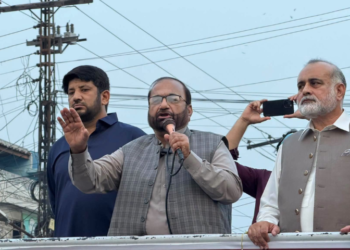
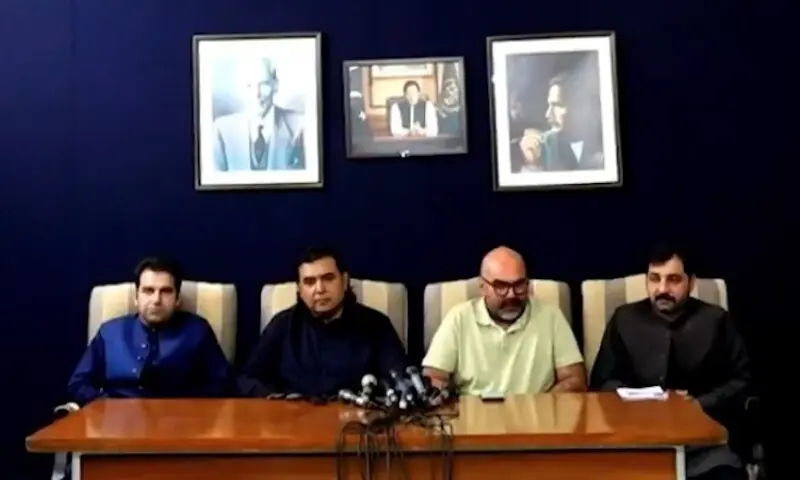
The remarks were made during a press conference in Islamabad by senior TTAP leaders, including Taimur Khan Jhagra, Mustafa Nawaz Khokhar and Akhunzada Hussain Yousafzai, among others.
Jhagra rejected the government’s claims of economic recovery, alleging that the ruling coalition lacked any concrete plan to stabilise the economy. Citing recently released poverty figures, he said the proportion of Pakistan’s population living below the poverty line had risen from 22 per cent in 2018 to 29 per cent at present.
“Over the past 11 years, poverty has not only increased, but the gap between the rich and the poor has widened further, with poverty reaching 32.7 per cent,” he claimed.
He alleged that Punjab and Sindh had witnessed the sharpest increases in poverty, with figures rising by 41 per cent and 33 per cent respectively. Jhagra further claimed that the government’s latest labour data showed the highest unemployment rate in 21 years.
Raising governance concerns, he alleged that special privileges were being extended to senior officials in Punjab, including the inspector general and chief secretary, who were allegedly provided 4500cc vehicles. He claimed that vehicles worth Rs110 million had been allocated to government officials in the province.
Addressing foreign policy issues, Khokhar warned of escalating regional tensions, saying that “clouds of war are looming over a neighbouring country.” He claimed that the United States had deployed naval fleets against Iran, comparing the scale of deployment to that seen in 2003 prior to the US invasion of Iraq.
Khokhar also criticised Pakistan’s participation in US President Donald Trump’s “Board of Peace,” citing a report by The Guardian that alleged the presence of representatives from authoritarian regimes and monarchies. He questioned why Pakistan attended the event when China chose to stay away.
He further alleged that shortly after the meeting, reports emerged about a deal concerning the Roosevelt Hotel, demanding that the government make the agreement’s terms and conditions public.
On internal security, Khokhar urged the government to take decisive action against militant groups, including the Balochistan Liberation Army (BLA) and the Tehreek-i-Taliban Pakistan (TTP), as terrorist incidents continue to rise.
TTAP spokesperson Akhunzada Yousafzai expressed serious concern over the health of the incarcerated founder of Pakistan Tehreek-e-Insaf, Imran Khan. He said a second medical injection was scheduled for February 24 or 25 and demanded that Imran Khan be shifted to Shifa International Hospital for treatment in the presence of his family and Dr Asim Hussain.
Yousafzai also condemned recent tensions between Pakistan and Afghanistan, stressing that disputes with neighbouring states should be resolved through dialogue rather than confrontation.