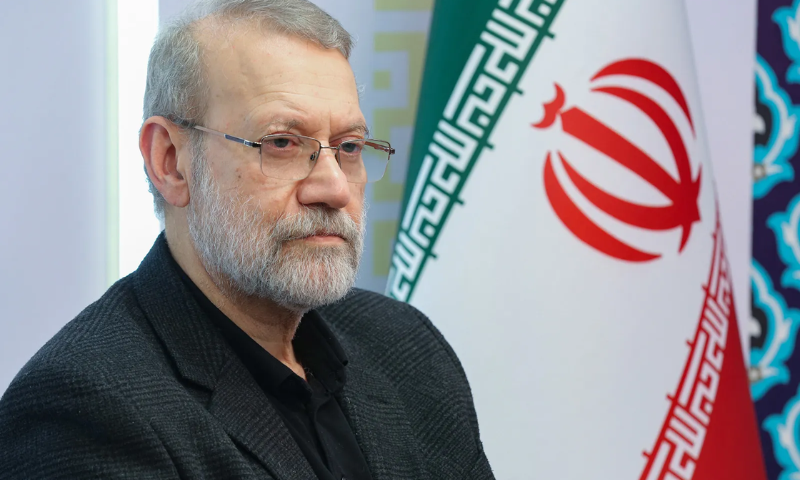
Jerusalem/Tehran, March 17,2026: Israel’s Defence Minister Israel Katz on Tuesday claimed that Iran’s senior security official Ali Larijani and Basij paramilitary commander Gholamreza Soleimani were killed in an overnight strike, though Tehran has yet to confirm the report.
According to Israeli officials, the two leaders were “eliminated” in what was described as a precise operation in Tehran. The Israeli military earlier said it had carried out an airstrike targeting Soleimani and other Basij commanders at a makeshift headquarters.
However, uncertainty remains over Larijani’s reported death after a message appeared on his official X account on Tuesday, paying tribute to Iranian naval personnel killed in a recent US attack.
The office of Prime Minister Benjamin Netanyahu also released an image showing him on the phone, stating that he had ordered operations against senior figures of the Iranian leadership.
If confirmed, the killing of Larijani would mark one of the most high-profile assassinations since the reported death of Iran’s Supreme Leader Ali Khamenei during the initial wave of US-Israeli strikes that began the war on February 28.
Intensifying conflict
The conflict, now in its third week, continues to escalate with no signs of de-escalation. Explosions were heard in Jerusalem after Israel reported intercepting missiles launched from Iran toward northern parts of the country.
Iran has also expanded its attacks across the region, targeting key US allies in the Gulf. Strikes were reported in the United Arab Emirates, including a drone hit on an oil facility in Fujairah and missile debris falling in Abu Dhabi, resulting in the death of a Pakistani national.
In Iraq, rockets and drones targeted the US embassy in Baghdad, marking one of the most intense assaults since the war began, although no casualties were reported.
Meanwhile, the Israeli military said it had launched a new wave of strikes on Iranian infrastructure in Tehran, as well as positions linked to Hezbollah in Beirut.
Strait of Hormuz tensions
The strategic Strait of Hormuz remains largely closed, with Iran deploying drones and naval mines, disrupting nearly 20 percent of global oil and gas flows and raising fears of a global energy crisis.
US President Donald Trump expressed surprise at Iran’s attacks on Gulf countries, though officials acknowledged he had been warned such escalation was likely if military action was taken against Tehran.
Several US allies, including Germany, Spain, Italy, Japan and Australia, have declined requests to deploy naval forces to help secure the waterway, citing legal and strategic concerns.
Iranian officials insist their military capabilities remain intact despite sustained strikes. Parliament Speaker Mohammad Baqer Qalibaf said the country’s offensive power and precision had increased.
At the diplomatic level, tensions also escalated after Iran’s Foreign Minister Seyyed Abbas Araghchi criticized remarks by US Defence Secretary Pete Hegseth, warning that statements suggesting “no quarter” in warfare violate international humanitarian law.
With more than 2,000 people reported dead and attacks continuing across multiple fronts, fears are growing of a prolonged regional conflict with far-reaching global economic and security consequences.