Tehran/Washington/Tel Aviv, March 20, 2026: The ongoing conflict involving Iran, the United States and Israel escalated sharply on Friday, with fresh strikes, high-profile casualties, and growing economic fallout across the region.
Iranian state media reported that Ali Mohammad Naini, spokesperson and deputy head of public relations for the Islamic Revolutionary Guard Corps (IRGC), was killed in strikes attributed to the US and Israel. The Israel Defense Forces also confirmed his death, alleging his role in disseminating propaganda to regional groups.
Meanwhile, Iran’s Supreme Leader Ali Khamenei issued a message of condolence to President Masoud Pezeshkian following the reported killing of Intelligence Minister Esmail Khatib earlier this week. He praised Khatib’s service and urged officials to maintain internal and external security.
Iran warns UK over military bases
Iranian Foreign Minister Abbas Araghchi, in a call with UK Foreign Secretary Yvette Cooper, warned that allowing US forces to operate from British bases would be viewed as participation in aggression. He reiterated Iran’s right to self-defence under international law, while criticizing Western responses to the conflict.
IRGC claims strike on US fighter jet
The IRGC claimed it had struck and seriously damaged a US F-35 Lightning II over central Iran, though the fate of the aircraft remains unclear. Iran’s Parliament Speaker Mohammad Bagher Ghalibaf described the incident as a symbolic blow to US military dominance.
Oil infrastructure targeted, markets shaken
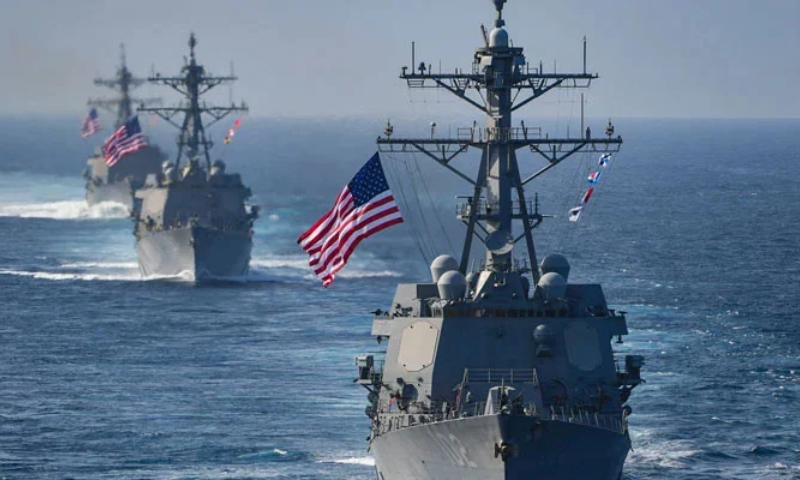
According to international reports, US and Israeli strikes targeted multiple Iranian vessels and energy facilities, including the strategic Kharg Island, which handles the bulk of Iran’s oil exports. US President Donald Trump is reportedly considering further measures, including a potential blockade of the island.
The conflict has severely disrupted global energy markets, particularly through the Strait of Hormuz, a critical route for around 20% of the world’s oil and gas supply. Iran has restricted traffic through the strait, raising fears of prolonged supply shortages.
Oil prices surged dramatically, with benchmark crude prices spiking and refined fuel costs hitting record levels across Europe and Asia. Analysts warn that continued disruptions could trigger a prolonged global energy crisis.
Regional spillover widens
Israeli strikes continued across Iranian territory, while also expanding to Syria and Lebanon, where casualties have reportedly climbed sharply. Gulf countries, including Bahrain, Kuwait and the United Arab Emirates, reported missile and drone activity, with infrastructure such as Kuwait’s Al Ahmadi refinery targeted.
In a significant escalation, the US has reportedly begun deploying ground-launched ballistic missiles, marking a shift from primarily aerial operations. Some reports suggest launches may have originated from Gulf bases, though this remains unconfirmed.
Rising human and economic toll
Since the conflict began on February 28, thousands have reportedly been killed, with widespread damage to infrastructure across multiple countries. Iran has responded with drone and missile strikes targeting Israel and US-linked sites in the region.
Global markets continue to react sharply, with oil supply disruptions estimated at around 12% of daily world demand. Experts warn that even if hostilities subside, restoring normal supply chains could take months.
As tensions remain high, international calls for de-escalation and diplomacy are intensifying, amid fears of a broader regional war with far-reaching global consequences.