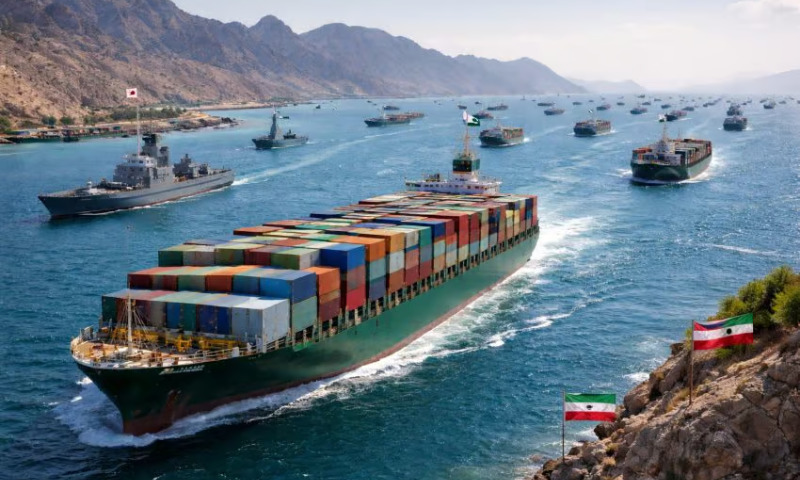
Islamabad, March 29, 2026: Deputy Prime Minister and Foreign Minister Ishaq Dar announced that Iran has agreed to allow 20 additional ships under the Pakistani flag to transit daily through the strategically vital Strait of Hormuz, in what he described as a “constructive gesture” aimed at easing regional tensions.
In a post on X late Saturday, Dar said two ships would cross the Strait each day, calling the move a “harbinger of peace” that would contribute to regional stability.
“This is a welcome and constructive gesture by Iran and deserves appreciation. It will help usher stability in the region,” he said, adding that such confidence-building measures are essential for peace.
Dar emphasized that “dialogue and diplomacy remain the only way forward,” tagging key international figures including US Vice President JD Vance, US Secretary of State Marco Rubio, Iranian Foreign Minister Abbas Araghchi, and US special envoy Steve Witkoff.
The development comes amid a worsening global fuel crisis triggered by the ongoing conflict involving the United States, Israel, and Iran, which has disrupted shipping through the Strait of Hormuz — a critical maritime corridor responsible for nearly 20% of global liquefied natural gas shipments and around a quarter of seaborne oil trade.
Earlier, Iran had permitted two Pakistani cargo ships to transit the Strait, according to reports, while a Pakistani oil tanker successfully crossed the route on March 16 — marking the first such voyage by a non-Iranian vessel since the outbreak of hostilities.
The announcement follows a telephonic conversation between Prime Minister Shehbaz Sharif and Iranian President Masoud Pezeshkian, during which Pakistan briefed Tehran on its diplomatic efforts to facilitate dialogue between Washington and Iran.
Pakistan has increasingly taken a central role in mediating between the United States and Iran, working in coordination with regional partners including Türkiye and Egypt.
Meanwhile, Islamabad is set to host the foreign ministers of Saudi Arabia, Türkiye, and Egypt on Sunday for in-depth consultations aimed at de-escalating tensions and promoting dialogue amid the ongoing regional crisis.