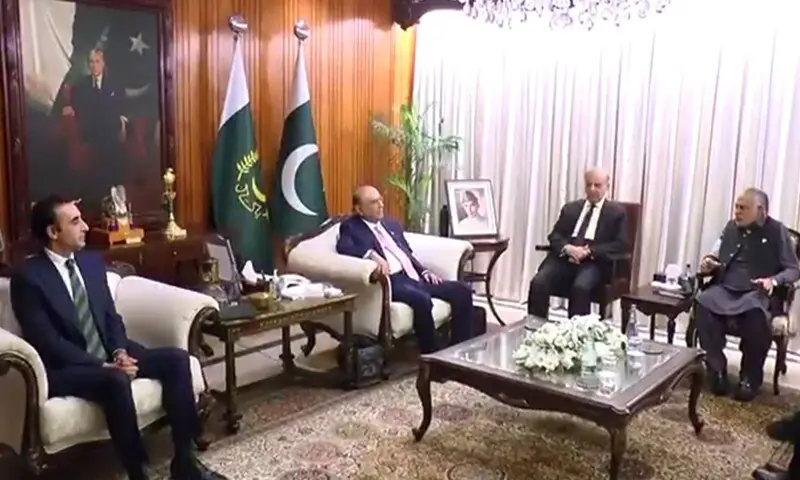
Islamabad, March 30, 2026: Prime Minister Shehbaz Sharif on Monday called on President Asif Ali Zardari to discuss the country’s overall national security situation and key economic and energy challenges, amid evolving regional tensions.
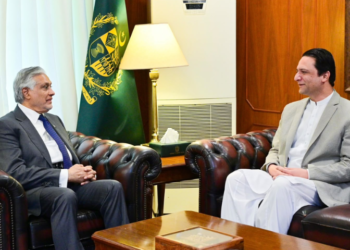
According to the President’s Secretariat, the high-level meeting was attended by Deputy Prime Minister and Foreign Minister Mohammad Ishaq Dar, PPP Chairman Bilawal Bhutto Zardari, Interior Minister Mohsin Naqvi, National Security Adviser, and ISI Director General Asim Malik.
Participants held detailed discussions on the national security landscape, reviewing the evolving regional situation and its implications for Pakistan. Key issues including economic stability, energy security, and broader governance challenges were also deliberated.
The meeting underscored the need for a coordinated national strategy and enhanced institutional harmony to effectively respond to emerging challenges.
The meeting came a day after a quadrilateral ministerial meeting in Islamabad involving foreign ministers of Pakistan, Saudi Arabia, Turkiye, and Egypt, which focused on efforts to bring an early and lasting end to the ongoing regional conflict. The visiting foreign ministers also met Prime Minister Shehbaz Sharif following the session.
Later in the day, President Zardari chaired an expanded consultative meeting at Aiwan-i-Sadr, attended by the prime minister, provincial leadership, and representatives from Gilgit-Baltistan and Azad Jammu and Kashmir, along with senior federal officials.
The meeting reviewed steps being taken across provinces to manage inflationary pressures, ensure the availability of essential commodities, and mitigate the impact of rising prices on the public.
President Zardari directed authorities to take all possible measures to ease the burden on citizens, particularly in light of rising energy costs and oil and gas supply concerns.
Officials briefed the meeting that adequate fuel reserves are currently available and that timely decisions have prevented any disruption in supply despite the global crisis.
The forum was informed that proposals to increase petroleum prices had been repeatedly rejected, with savings from austerity measures being redirected toward public relief initiatives.
The government’s austerity drive—including cuts in development spending and grounding of 60 percent of official vehicles—was also highlighted.
Deputy Prime Minister Ishaq Dar briefed participants on Pakistan’s ongoing diplomatic engagements with regional and global leaders, as well as his upcoming visit to Beijing.
President Zardari emphasized coordinated decision-making across economic, energy, and security domains, while also calling for public awareness campaigns to promote fuel conservation, increased use of public transport, and shared mobility practices.
Reiterating the government’s commitment, he said economically vulnerable segments would not be left alone during the current crisis, stressing the need for a unified national response.