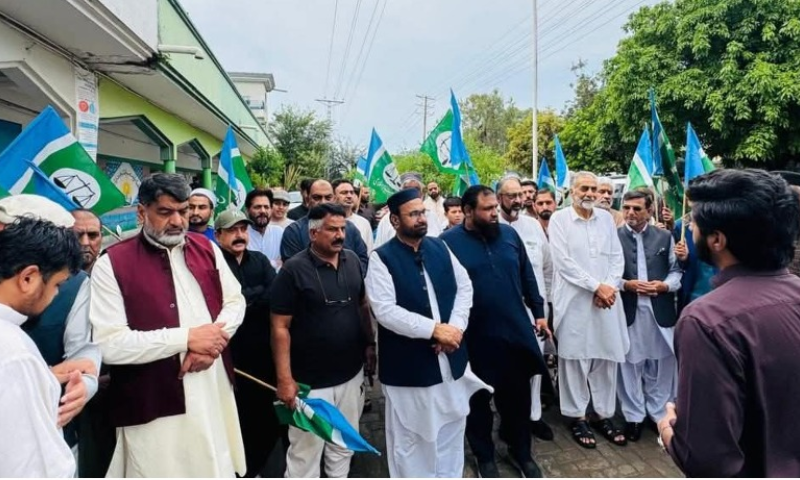
Islamabad, April 3, 2026: Responding to an appeal by Ameer Jamaat-e-Islami Pakistan Hafiz Naeem-ur-Rehman, the party organized nationwide protest demonstrations after Friday prayers against the recent sharp increase in petroleum prices.
Protests were held across the country, including multiple districts of North Punjab, where party workers and supporters gathered to voice strong opposition to the rising cost of fuel and its impact on daily life.
The demonstrations were led by local and provincial leadership of the party. Ameer Jamaat-e-Islami Punjab Dr. Tariq Saleem led the protest in Gujrat, while Secretary General Iqbal Khan headed the demonstration in Attock.
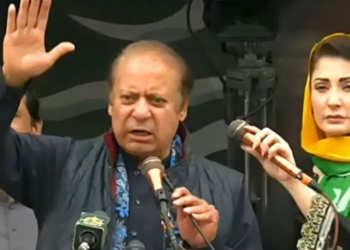
Addressing protesters in Gujrat, Dr. Tariq Saleem strongly criticized the federal government, stating that it has “pushed the people against the wall” and that public patience has reached its limit.
He termed the increase in petrol price to Rs458 per litre as “an act of cruelty,” adding that successive hikes—first Rs55 and then Rs137—have placed an unbearable burden on the masses.
The Jamaat-e-Islami leader warned that the price hike would affect all segments of society, particularly:
- Motorcyclists and daily commuters
- Delivery workers and laborers
- Students and lower-income households
He emphasized that the poor and middle classes would bear the brunt of these increases, further aggravated by rising taxation.
Dr. Tariq Saleem announced the launch of a countrywide protest movement under the leadership of Hafiz Naeem-ur-Rehman, rejecting the petroleum price hike.
He criticized the government for failing to cut its own expenditures while continuing what he described as lavish spending on luxury vehicles and aircraft.
The leadership also expressed concern over continued payments to Independent Power Producers (IPPs), alleging that billions of rupees are being paid despite the ongoing economic crisis, while no relief is being extended to the public.
Calling for immediate relief measures, the party urged the government to prioritize public welfare over external pressures, including those linked to the International Monetary Fund (IMF).
Jamaat-e-Islami termed the current economic policies as ineffective, warning that they have significantly worsened the financial condition of ordinary citizens across the country.