Tehran/Washington/Islamabad, April 13, 2026: Tensions across the Arabian Gulf and the Sea of Oman intensified sharply after the unified command of the Iranian armed forces issued a stark warning over maritime access, while the United States signaled sweeping naval restrictions and potential military escalation following stalled diplomatic negotiations.
According to Iran’s state broadcaster IRIB, the Iranian armed forces declared that ports in the Arabian Gulf and the Sea of Oman are “either for everyone or for no one,” underscoring Tehran’s hardening stance on maritime sovereignty and regional access routes.
The statement, cited by regional media outlet Al Jazeera, emphasized that defending Iran’s territorial waters is a “natural and legal duty,” adding that safeguarding national maritime rights is an inherent obligation of the Iranian state.
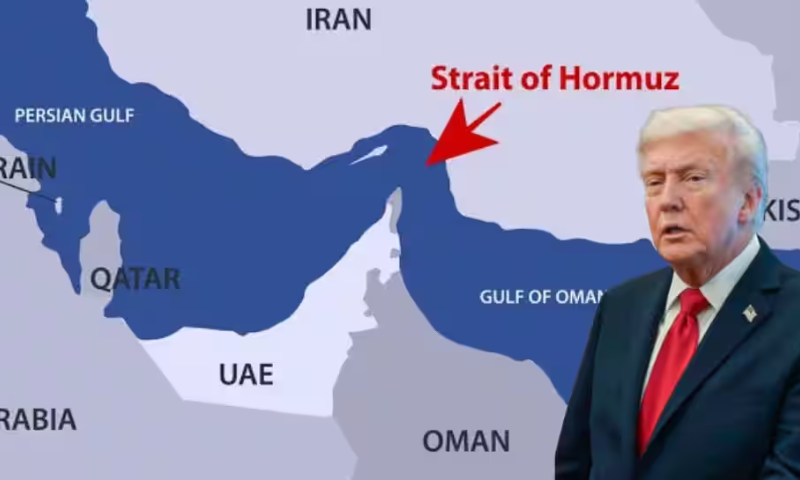
Iranian forces further warned that “enemy-affiliated vessels” may be allowed passage through the Strait of Hormuz under regulated conditions set by Tehran, while accusing the United States of “illegal” interference in international navigation. The statement described U.S. actions as “piracy” and warned that any threat to Iranian ports could endanger the wider region’s maritime security.
US considers blockade amid rising military posture
In parallel developments, U.S. President Donald Trump reportedly weighed limited military strikes alongside a maritime blockade of Iranian ports, according to international reports.
The U.S. military has announced plans to begin a blockade of maritime traffic entering and exiting Iranian coastal areas, following what officials described as unsuccessful negotiations aimed at preserving a fragile ceasefire. The move comes amid heightened concerns over escalating hostilities and disruption of global energy routes.
The blockade, set to be enforced from Monday, is expected to apply to vessels of all nationalities operating in Iranian port zones, while allowing limited transit through international waters. The U.S. Central Command stated that additional operational guidance would be issued to commercial shipping operators ahead of implementation.
President Trump further warned that vessels allegedly paying tolls to Iran would be intercepted, and said U.S. naval forces would act against any attempts to deploy mines in the Strait of Hormuz, a critical artery for global oil shipments.
Energy markets react as diplomatic efforts falter
The announcement triggered immediate shock in global markets, with crude oil prices surging above $100 per barrel amid fears of supply disruption. Analysts warned that prolonged instability in the Gulf could drive sustained inflationary pressure worldwide, particularly in energy-importing economies.
Former Pentagon official Dana Stroul noted that while Washington seeks a rapid resolution, enforcing a maritime containment strategy unilaterally could prove operationally difficult and strategically unsustainable over time.
Stalled negotiations and “Islamabad Talks 2026”
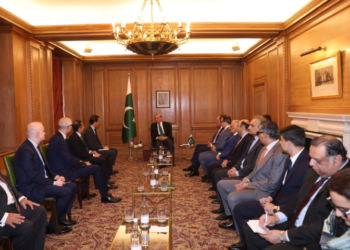
The crisis follows the recently concluded high-level diplomatic engagement known as the Islamabad Talks 2026, which marked the first direct contact between Washington and Tehran in over a decade.
Although both sides initially described discussions as constructive, key disagreements reportedly persisted over Iran’s nuclear program and control of the Strait of Hormuz. Iranian officials accused the U.S. of shifting demands and “blockade diplomacy,” while Washington insisted on stricter limits on enrichment activities and regional military alignments.
Iranian Foreign Minister Abbas Araghchi said Tehran had faced “maximalism and shifting goalposts” during negotiations, while reaffirming that Iran seeks a “balanced and fair agreement.”
Rising risk of regional spillover
Security analysts warn that escalating rhetoric from both sides raises the risk of direct confrontation in one of the world’s most strategically sensitive waterways. Any sustained disruption in the Strait of Hormuz could impact nearly one-fifth of global oil flows, with cascading effects on shipping insurance costs, energy prices, and global inflation.
Despite the escalating rhetoric, diplomatic channels remain formally open, with both sides signaling conditional willingness to return to negotiations. However, mutual distrust and competing strategic objectives continue to stall progress toward a durable ceasefire framework.
For now, the Gulf remains on edge—caught between fragile diplomacy and the growing risk of maritime confrontation.