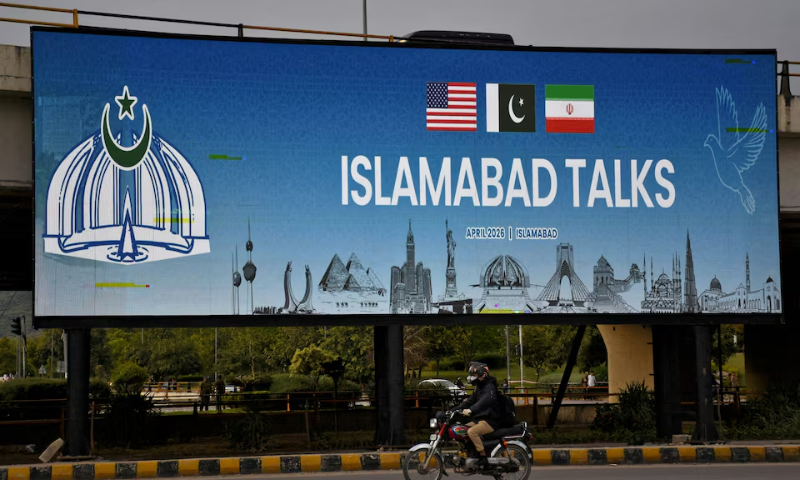
Islamabad / Tehran, April 17,2026: The Pakistan Air Force (PAF) carried out a major aerial escort operation to secure the return of Iranian negotiators following inconclusive peace talks with the United States in Islamabad last weekend, amid heightened fears of potential Israeli threats against the delegation, multiple sources have told international media.
According to three officials familiar with the matter, the Iranian delegation had expressed concern that it could be targeted during its return journey after the breakdown of negotiations. In response, Pakistan deployed a robust air protection package, including around two dozen fighter jets and airborne surveillance support from an Airborne Warning and Control System (AWACS), to ensure the safe passage of the delegation.
The unprecedented operation underscores the high-risk security environment surrounding the ongoing Iran–US diplomatic engagement, which has been conducted amid open hostilities between Iran and Israel since late February.
A regional diplomat briefed by Tehran said Pakistan insisted on providing the escort after Iranian officials raised concerns—described as “hypothetical” but serious—about possible threats during air transit. One security source noted that Iranian delegates believed there was a risk they could be targeted following the breakdown of talks.
“When the talks failed, the Iranians were wary that things had not gone right. It was their suspicion that they might be targeted,” one source said.
The Pakistan Air Force has not officially commented on the operation, nor have the military or government authorities confirmed operational details.
Sources said the escort included Chinese-origin J-10 fighter jets—among the most advanced aircraft in the Pakistan Air Force fleet—reflecting the scale and sensitivity of the mission. Officials described the deployment as an extraordinary measure, far beyond standard diplomatic protection protocols.
One source involved in the talks said Pakistani aircraft remained engaged throughout the delegation’s return journey, with full responsibility for their safety extending beyond Pakistan’s airspace.
“We dropped them all the way to Tehran. Their security was our responsibility even beyond their time here,” the source said.
However, another diplomat indicated that the delegation may not have landed directly in Tehran, without providing further details on their final destination.
The security arrangements came against the backdrop of heightened regional tensions, with Iranian officials reportedly concerned about being placed on potential Israeli target lists amid the ongoing conflict.
Israeli authorities have not responded to requests for comment on the allegations. Iran’s mission in Geneva also did not issue an immediate response.
The reports further suggest that Pakistan, in coordination with other diplomatic channels, had raised concerns with Washington regarding the risks facing senior Iranian officials during the crisis period.
The escort operation followed last weekend’s high-level Iran–US talks in Islamabad, which ended without a breakthrough but were described by sources as keeping diplomatic engagement alive.
The Iranian delegation reportedly included senior officials such as Foreign Minister Abbas Araghchi and Parliament Speaker Mohammad Baqer Qalibaf.
The talks were part of broader backchannel diplomacy aimed at easing tensions following months of military escalation between Iran and Israel, which has also drawn in the United States.
Despite the inconclusive outcome, diplomatic sources indicate that discussions remain ongoing, with preparations underway for another possible round of talks as early as this weekend.
US President Donald Trump has suggested that negotiations are still active and that a deal “should be ending pretty soon,” raising the possibility of further engagement in Islamabad.
A Pakistani source involved in mediation efforts said that while technical gaps remain, dialogue channels are still open and progress has been made in indirect discussions between the parties.
The operation highlights Pakistan’s increasingly prominent role as a facilitator in one of the world’s most volatile diplomatic crises, particularly as Islamabad continues to host and mediate sensitive Iran–US contacts.
Security analysts say the scale of the air escort operation signals not only the seriousness of perceived threats but also the degree of trust both sides are placing in Pakistan’s logistical and security capabilities.
However, neither Pakistan’s military nor government has publicly confirmed the details of the mission.
The Iran–US talks are unfolding against the backdrop of ongoing regional conflict involving Iran, Israel, Hezbollah, and broader international stakeholders. With ceasefires holding only partially and mistrust running high, even routine diplomatic movements now require extraordinary security arrangements.
For now, the safe return of the Iranian delegation underscores both the fragility of the peace process and the intensity of the geopolitical stakes shaping it.