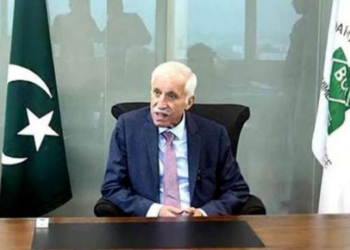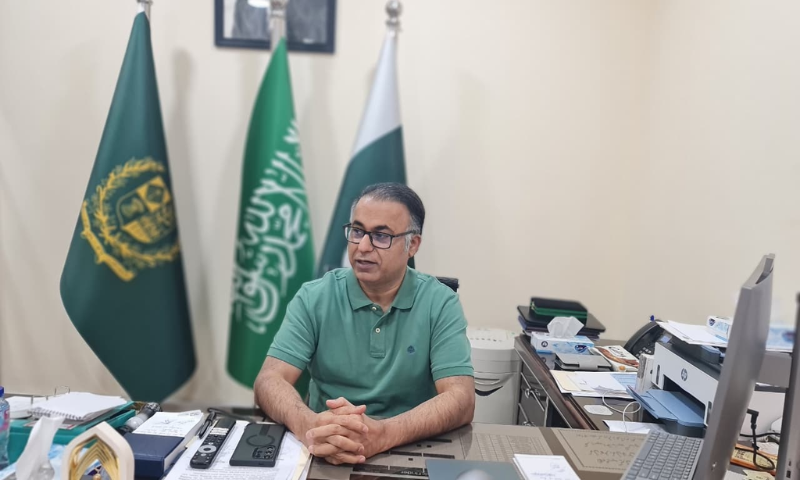
Makkah Mukarramah, May 4, 2026: Director General Hajj and Head of the Pakistan Hajj Mission in Jeddah, Abdul Wahab Soomro, has said that Pakistan successfully maintained Hajj expenses without any increase for the past four years despite global inflation, rising operational costs in Saudi Arabia, and currency fluctuations.
Speaking in an interview with media, Soomro said administrative reforms, digital governance, and improved planning had significantly enhanced the quality of services for Pakistani pilgrims.
He revealed that 278 residential buildings were acquired this year to accommodate 118,925 Pakistani pilgrims in areas including Al-Aziziyah, Bathah Quraish, An-Naseem, Rai Bakhshi, Jarwal, and Nuzha in Makkah. According to him, all approvals, inspections, and digital documentation were completed through the Masar portal.
Soomro noted that several countries, including Indonesia, Malaysia, India, and Iraq, also accommodate their pilgrims in the Al-Aziziyah district.
He said Pakistani pilgrims staying in Al-Aziziyah are being provided a free 24-hour shuttle service for convenient access to the Haram, while all pilgrims in Madinah have been accommodated in hotels located within the Markaziya area near Masjid-e-Nabawi.
Highlighting financial reforms, the DG Hajj said Pakistan refunded a total of Rs27 billion to pilgrims over the last three years, including Rs17 billion in 2023, Rs7 billion in 2024, and Rs3 billion in 2025. He termed it the largest refund in the country’s Hajj history and attributed it to improved financial management, transparency, and digital contracting systems through the Masar portal.
Soomro said the “Short Hajj” programme had gained significant popularity, with the number of participants increasing from 17,000 in 2023 to 41,825 in 2026, accounting for more than 35 percent of total pilgrims this year.
He added that new reforms such as “Family Rooms” have also been introduced, allowing male and female family members to stay together in shared rooms for an additional fee. This year, around 13.82 percent of pilgrims opted for the facility.
The DG Hajj further said the “Green Baggage” initiative had greatly improved luggage identification and reduced incidents of lost baggage at airports.
He noted that facilities at the holy sites, previously limited to tents and air coolers, have now been upgraded with full air-conditioning, while pilgrims are also being provided mobile SIM cards upon arrival to help them stay connected with their families.
A WhatsApp-based command system has also been introduced for 29 hospitality centres, with building inspections made mandatory 72 hours in advance.
Providing an overview of Hajj 2026 operations, Soomro said 118,925 Pakistanis would perform Hajj under the government scheme this year, including 56.47 percent men and 43.53 percent women. He added that 55 percent of pilgrims would travel through train services while 45 percent would use buses.
According to the figures shared, the highest number of pilgrims are departing from Islamabad, followed by Lahore and Karachi, while over 95 percent of pilgrims are under the age of 70.
Soomro also noted that he received an “Excellence Award” from the Saudi government last year after securing first position among eight global heads of Hajj missions. He reaffirmed that the mission’s primary objective remains to make the pilgrimage easier, safer, and more memorable for Pakistani pilgrims each year.