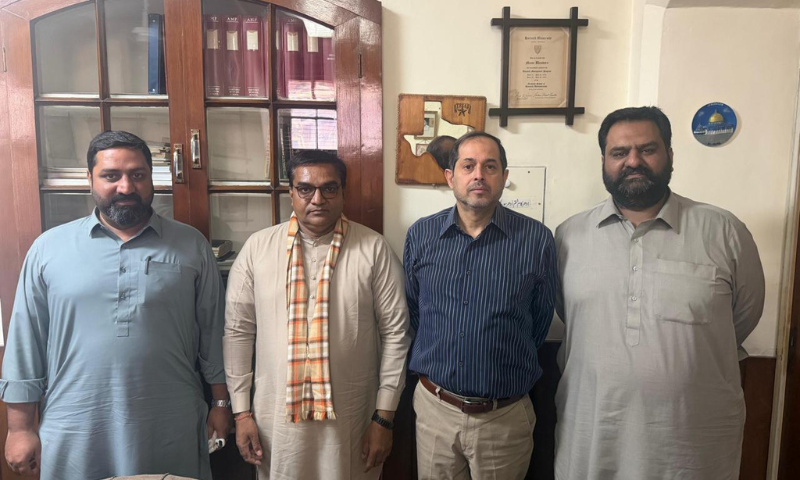
Makkah, May 8, 2026: Director Hajj Mohammad Arif Aslam Rao has described the newly introduced “Nusuk Card” by the Saudi authorities as more than just an identity document, calling it a “digital guardian” designed to ensure the safety, identification and smooth movement of pilgrims during the Hajj season.
Speaking to the media in Makkah, Rao stressed that carrying the Nusuk Card has been made mandatory for all pilgrims, warning that entry into key holy sites — including Mina, Arafat and Muzdalifah — will not be allowed without it.
He said the system is part of the Saudi government’s strict enforcement of the “No Hajj Without Permit” policy, under which security personnel at entry points are authorized to check the card at any time. The card, he added, serves as proof of legal registration and ensures access to official services and emergency medical facilities.
Highlighting a key feature of the system, Rao said the QR code embedded in the Nusuk Card functions as a digital navigation tool, enabling authorities to quickly identify a pilgrim’s assigned location.
“In case a pilgrim gets lost or cannot locate their tent, security personnel can scan the card to immediately retrieve their Maktab, tent number and hotel details,” he said, adding that this feature is especially helpful for elderly and first-time pilgrims.
He described the system as one of the most significant facilitation measures introduced this year.
Rao further explained that the Nusuk Card is available in both physical and digital formats through the Nusuk App. Pilgrims are encouraged to download the application as a backup to ensure uninterrupted access in case the physical card is lost.
“This hybrid system ensures that even if the physical card is misplaced, the digital version can be used as a valid alternative,” he said.
Issuing special instructions for Pakistan pilgrims, Rao advised them to wear the card around the neck in a protective cover and keep a digital copy on their phones or with companions for safety.
He said the Pakistan Hajj Mission was actively supporting pilgrims, but stressed that individual responsibility and proper use of the Nusuk system were essential for a smooth and safe pilgrimage experience.
Rao concluded that strict adherence to guidelines would ensure better crowd management, improved safety, and enhanced facilitation for millions of pilgrims performing Hajj.