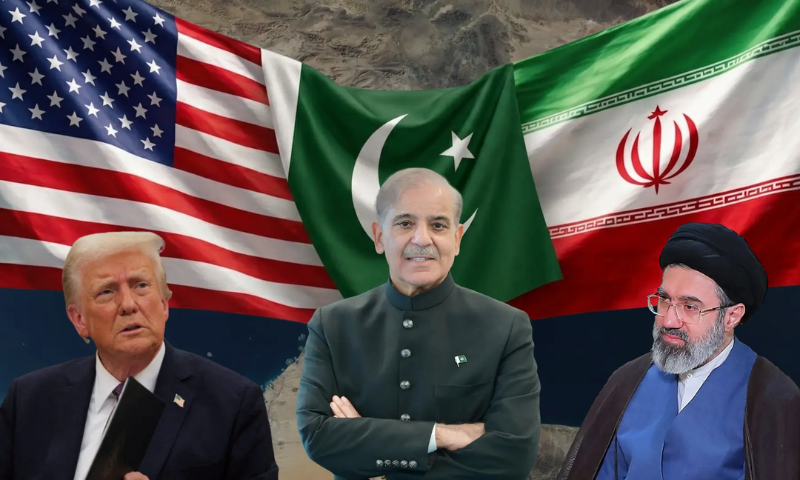
Islamabad/Tehran, May 10, 2026: Prime Minister Muhammad Shehbaz Sharif on Sunday confirmed that Pakistan had received Iran’s response to a United States proposal aimed at ending the ongoing regional conflict and advancing peace negotiations.
Speaking at a ceremony in Islamabad commemorating the first anniversary of Marka-i-Haq, the prime minister disclosed that Chief of Defence Forces and Chief of Army Staff Asim Munir had informed him that Iran’s response had been received through diplomatic channels.
“Our sincere efforts for de-escalation continue, and Field Marshal Asim Munir informed me a while ago that we have received Iran’s response,” PM Shehbaz said, while refraining from divulging further details.
The premier praised the efforts of Deputy Prime Minister and Foreign Minister Muhammad Ishaq Dar and Field Marshal Asim Munir for their role in facilitating diplomatic engagement between Washington and Tehran.
Earlier, Iranian state media confirmed that Tehran had transmitted its response to the latest US proposal through Pakistani mediators.
According to Islamic Republic News Agency, Iran conveyed its official response to the US proposal aimed at ending the conflict and opening a pathway for negotiations.
Another Iranian news agency, Iranian Students News Agency, reported that Tehran’s response primarily focused on “ending the war and maritime security” in the Persian Gulf and the Strait of Hormuz.
Later, Reuters quoted a Pakistani government official involved in the negotiations as confirming that Islamabad had forwarded Iran’s response to the United States.
Diplomatic sources said Iran had been reviewing a 14-point US proposal designed to formally end hostilities and initiate a 30-day negotiating period focused on Tehran’s nuclear programme, sanctions relief, and secure maritime transit through the Strait of Hormuz.
The strategic waterway, through which nearly one-fifth of the world’s oil supply traditionally passes, has emerged as a central flashpoint in the conflict after Tehran largely restricted non-Iranian commercial shipping.
The latest diplomatic developments come amid mounting international pressure to end the conflict, particularly ahead of the upcoming visit of US President Donald Trump to China later this week.
President Trump had earlier stated that he expected Iran’s response to Washington’s proposal “supposedly tonight,” while also announcing the suspension of “Project Freedom” — a US naval operation intended to escort commercial vessels through the Strait of Hormuz — citing progress in peace talks and requests from Pakistan and other countries.
Meanwhile, Pakistan’s Foreign Office has expressed optimism regarding the possibility of a breakthrough.
During a weekly briefing, Foreign Office spokesperson Tahir Andrabi said Islamabad expected an agreement “sooner rather than later” and hoped the parties would move towards a peaceful and sustainable resolution.
Deputy Prime Minister Ishaq Dar also held discussions earlier this week with Iranian Foreign Minister Abbas Araghchi amid indications that Washington and Tehran were inching closer to a preliminary understanding.
However, tensions escalated again on Friday after a US fighter jet reportedly targeted and disabled two Iranian-flagged tankers accused by Washington of violating its naval blockade of Iranian ports.
An Iranian military official later claimed that Tehran’s naval forces had retaliated against what it described as “American terrorism”, adding that the clashes had subsequently ceased.
On Sunday, the Islamic Revolutionary Guard Corps warned that any future attacks on Iranian tankers or commercial vessels would trigger retaliation against US military facilities and “enemy ships” in the region.
Iranian state television also reported that military commander Ali Abdollahi had met with Supreme Leader Mojtaba Khamenei, who issued fresh directives regarding the continuation of military operations.
The conflict between the United States and Iran began more than two months ago following joint US-Israeli strikes inside Iran on February 28.
Although a comprehensive peace agreement has yet to be finalised, active hostilities largely subsided after the two sides agreed to a Pakistan-mediated ceasefire on April 8.
Following the truce, historic direct talks between the United States and Iran were held in Islamabad on April 11 and 12, with Pakistan serving as a mediator. While the discussions concluded without a formal agreement, they were viewed as an important diplomatic breakthrough.
Diplomatic observers say unresolved issues continue to include freedom of navigation through the Strait of Hormuz and Washington’s demands for long-term assurances regarding Iran’s nuclear programme, including limits on uranium enrichment and safeguards against weaponisation.