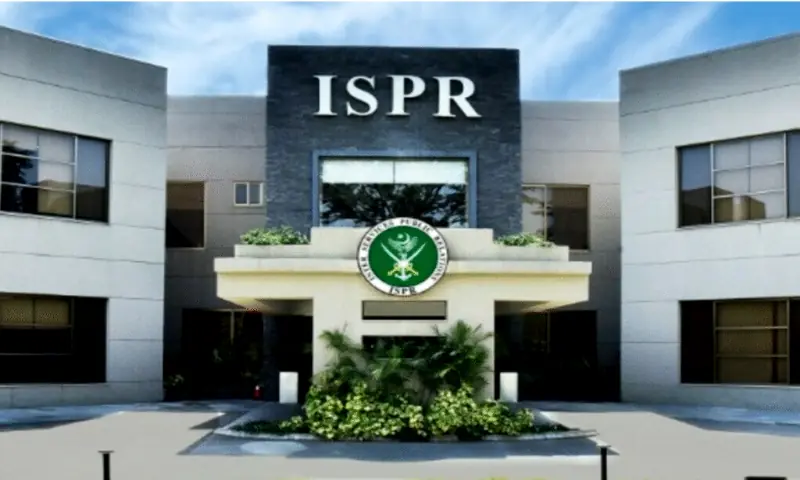
Rawalpindi, May 17, 2026: Pakistan’s military on Sunday strongly rejected remarks made by the Indian Chief of Army Staff (COAS) during a recent interview, describing the statement as “provocative,” “irresponsible,” and reflective of a “hubristic and jingoistic mindset.”
In a statement issued by the military’s media wing, the Inter-Services Public Relations (ISPR), the Pakistan Army responded to the Indian army chief’s reported remarks suggesting that “Pakistan should decide if it desired to be part of geography and history.”
The ISPR said Pakistan was “already a country of consequence at the global level, a declared nuclear power and an indelible part of South Asia’s geography and history,” adding that the Indian leadership had failed to reconcile with the existence of Pakistan despite the passage of nearly eight decades.
“The statement reflects that the Indian leadership has neither been able to reconcile with the very idea of Pakistan nor it has learnt the right lessons,” the statement said.
The military termed the remarks dangerous and warned that threatening a “sovereign nuclear neighbour with elimination from geography” could not be viewed as strategic signalling or brinkmanship.
“Responsible nuclear states reflect restraint, maturity and strategic sobriety. They do not speak the language of civilisational supremacy or national erasure,” the ISPR added.
The statement further accused India of pursuing aggressive regional policies and alleged that New Delhi had historically acted as a source of regional instability, terrorism and disinformation campaigns.
Referring to “Marka-e-Haq,” the ISPR claimed that India’s “inability to harm Pakistan” had been exposed, adding that Indian posturing stemmed more from frustration than confidence.
The military warned that any attempt to target Pakistan could trigger consequences that “shall neither be geographically confined nor strategically or politically palatable for India.”
Calling for peaceful coexistence, the ISPR urged India to “reconcile with Pakistan’s salience” and avoid pushing South Asia toward another conflict, warning that a new crisis or war would have devastating consequences for the entire region and beyond.