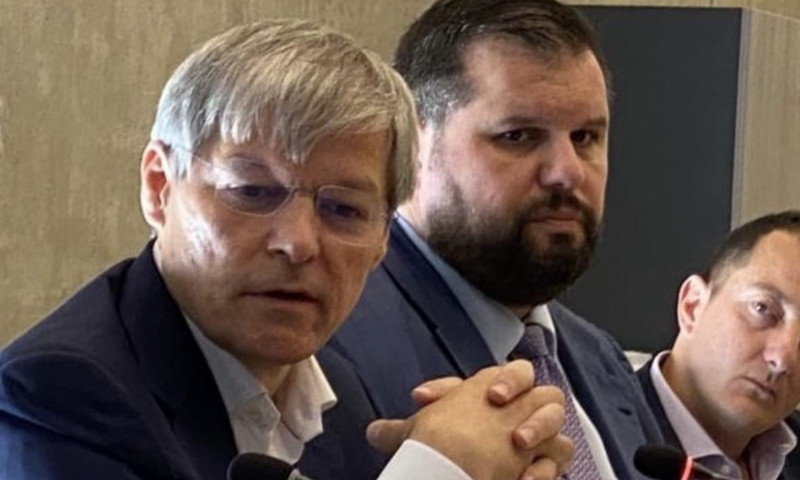
Islamabad, May 28,2026: Romanian former Prime Minister and former European Commissioner Dacian Cioloș is emerging as a leading contender for the position of Secretary General of the Organisation internationale de la Francophonie (OIF), with elections scheduled during the Francophonie Summit in Siem Reap, Cambodia, in November 2026.
Widely regarded as one of Romania’s most respected European statesmen, Cioloș brings extensive executive, diplomatic, and multilateral experience to the race. His candidacy, officially supported by Romania, is increasingly being viewed as a consensus-driven and forward-looking option for the future leadership of the Francophonie.
A global Francophone community
The Francophonie represents far more than a linguistic community. Founded in 1970, the OIF today unites 90 member states and governments across five continents, representing nearly 396 million French speakers worldwide.
Guided by the principles of equality, solidarity, and complementarity, the organization promotes the French language, cultural diversity, democracy, human rights, education, and sustainable development. It also supports projects focused on youth empowerment, gender equality, economic growth, and institutional development, particularly in Africa, where the French language continues to expand rapidly.
Although Pakistan is not a member of the OIF, it maintains strong diplomatic relations with many Francophone countries.
A career rooted in European and Francophone values
Trained as an agronomist in France, Cioloș has built a distinguished political career spanning national and European institutions. He served as Prime Minister of Romania from 2015 to 2017, European Commissioner for Agriculture and Rural Development, and later President of the Renew Europe group in the European Parliament.
Political colleagues and diplomats who have worked with him describe him as a consensus-builder capable of managing complex reforms while maintaining a strong commitment to democratic governance and international cooperation.
“I had the privilege of serving in his government as Minister Delegate for Romanians Abroad,” said Dan Stoenescu, Romania’s current ambassador to Pakistan. “His human qualities, capacity for dialogue, deep listening skills, and unwavering European and Francophone commitment left a lasting impression. His commitment to consensus and his international experience will give a new impetus to La Francophonie in the years to come.”
Vision for a renewed francophonie
Cioloș has advocated for a more pragmatic, inclusive, and results-oriented Francophonie focused on delivering tangible benefits for member states and citizens.
A central pillar of his vision is strengthening Africa’s role within the organization’s development agenda while ensuring balanced participation from all regions of the Francophone world.
He has also emphasized the importance of transparent and accountable governance, improved institutional credibility, and stronger multilateral cooperation in an increasingly polarized global environment.
According to supporters of his candidacy, Cioloș aims to modernize the organization by improving resource mobilization and directing investments toward impactful initiatives, particularly those supporting youth development and women’s empowerment.
Romania’s bridge-building role
Observers note that Cioloș’s candidacy also reflects Romania’s broader engagement with the Francophone world. As a Central and Eastern European country with experience in democratic transition and institutional reform, Romania is seen as uniquely positioned to bridge diverse regional perspectives within the organization.
Analysts believe the next Secretary General of the OIF will play a crucial role in shaping the organization’s global relevance as multilateral institutions face growing geopolitical and economic challenges.
With his profile combining European leadership experience, diplomatic credibility, and commitment to Francophone values, Dacian Cioloș is increasingly being viewed as a strong candidate capable of guiding the organization into a new era.