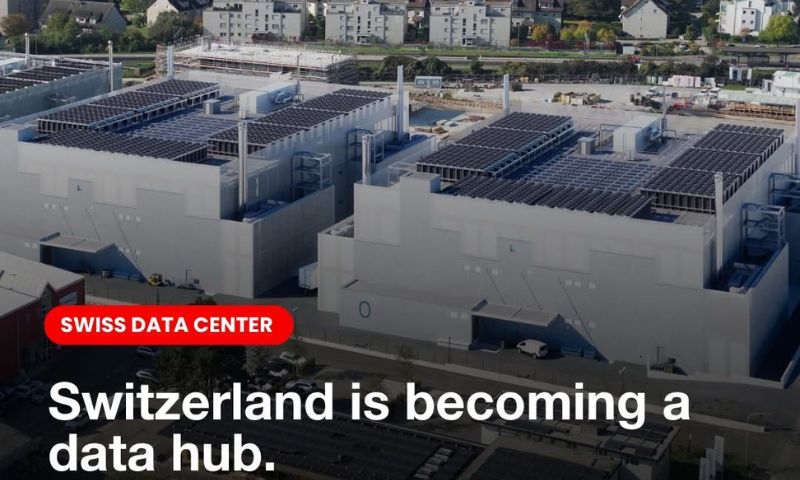
Geneva, May 29,2026: Switzerland is steadily emerging as one of Europe’s most important data infrastructure hubs, driven by growing demand for cloud services, artificial intelligence (AI), and secure digital storage solutions.
More than 120 data centers are currently operating across the country, while several new facilities are under construction. Industry experts say Switzerland’s political stability, reliable electricity supply, strong data protection laws, and high-speed connectivity continue to attract major technology and infrastructure companies.
The rapid global expansion of AI technologies is also accelerating the need for advanced computing power and data storage capacity. Zurich, in particular, has become a major center for digital infrastructure, hosting more than 30 data centers and increasingly positioning itself as a hub for AI-related operations.
Behind every cloud platform, AI model, video call, and online search lies a vast network of physical infrastructure operating around the clock. However, the sector’s rapid growth is also raising concerns about rising energy consumption and environmental sustainability.
Data centers require significant amounts of electricity and water to power and cool servers, placing increasing pressure on energy systems worldwide.
In response, several operators in Switzerland are adopting environmentally conscious solutions to reduce their carbon footprint. These initiatives include closed-loop cooling systems, the reuse of waste heat to warm residential and commercial buildings, and the installation of solar panels on facility rooftops.
At the Swiss National Supercomputing Centre in Lugano, the “Alps” supercomputer uses water from Lake Lugano as part of its cooling system. The facility supports climate modeling, weather forecasting, and advanced AI research applications.
Experts note that the future of AI will depend not only on software and algorithms, but also on the availability of sustainable energy, robust infrastructure, and secure locations for processing and storing data.