Islamabad, June 1, 2026: A sub-committee of the Senate Standing Committee on Information Technology and Telecommunications on Monday expressed serious concern over the worsening quality of internet services and widespread theft and vandalism targeting telecommunications infrastructure across Pakistan.
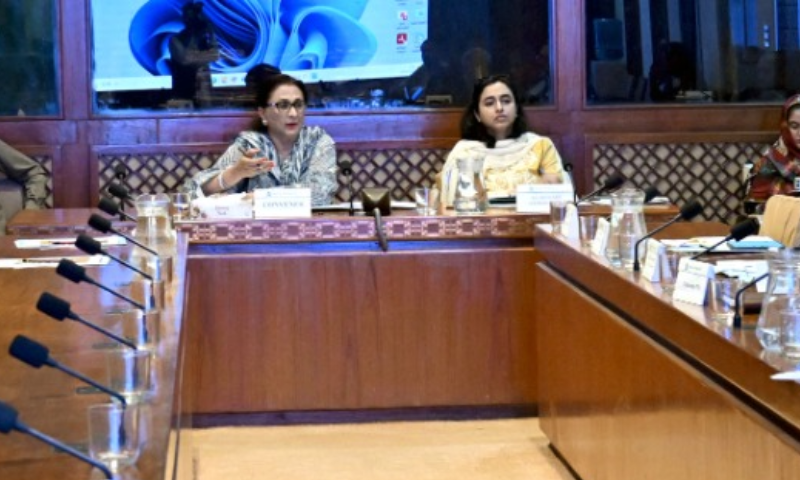
The meeting, chaired by Senator Sadia Abbasi at Parliament House, was attended by Senators Kamran Murtaza and Dr. Afnan Ullah Khan, along with senior officials from the relevant ministries and regulatory bodies. The session focused on critical vulnerabilities affecting national telecommunications infrastructure and service continuity.
During the briefing, the committee was informed that more than 9,200 incidents of theft and vandalism were reported across the country during the past eleven months, affecting nearly 16 percent of Pakistan’s cellular infrastructure.
According to official data, Sindh recorded the highest number of incidents, with 3,938 cases reported across 31 districts. Punjab followed with 2,827 incidents in 38 districts, while Khyber Pakhtunkhwa reported 1,668 cases in 25 districts. Balochistan recorded 716 incidents across 26 districts.
The committee noted that persistent power outages continue to undermine telecom services nationwide. Officials from the Pakistan Telecommunication Authority (PTA) explained that prolonged load-shedding rapidly drains backup battery systems and places excessive reliance on diesel-powered generators, making telecom infrastructure increasingly vulnerable.
To strengthen network resilience, the PTA informed lawmakers that it has engaged the National Electric Power Regulatory Authority (NEPRA) and the Power Division to secure dedicated priority power feeders and accelerate the installation of smart transformers for critical telecom sites.
Representatives of the Universal Service Fund (USF) also briefed the committee on ongoing telecommunications expansion projects in Balochistan. They stated that while around 80 percent of targeted areas have been identified through competitive bidding, security concerns and recurring diesel theft continue to hamper implementation and operational sustainability.
In response, the committee directed relevant authorities to identify high-risk theft hotspots and coordinate with district administrations and provincial governments to ensure strict legal action against offenders and strengthen protection measures for telecom installations.
The committee also reviewed ongoing efforts to modernize Pakistan’s telecommunications sector. Officials highlighted recent spectrum auctions that increased available bandwidth by 480 MHz, as well as the issuance of commercial 5G licenses in March 2026.
The regulator outlined ambitious performance targets, including increasing average 4G speeds from 4 Mbps to 20 Mbps, deploying 1,000 new telecom sites annually, and expanding advanced services such as Voice over LTE (VoLTE) and Voice over Wi-Fi (VoWiFi).
To improve service quality, telecom operators have been directed to adhere to strict network downtime limits. Under the new framework, downtime must remain below 5 percent at the Union Council level, 3 percent at the Tehsil level, 2 percent at the District level, and 1 percent nationwide.
Concluding the meeting, the committee reiterated that internet connectivity should be treated as an essential service and directed all telecom operators to immediately implement effective safeguards against fuel theft and infrastructure vandalism to ensure uninterrupted communication services across the country.