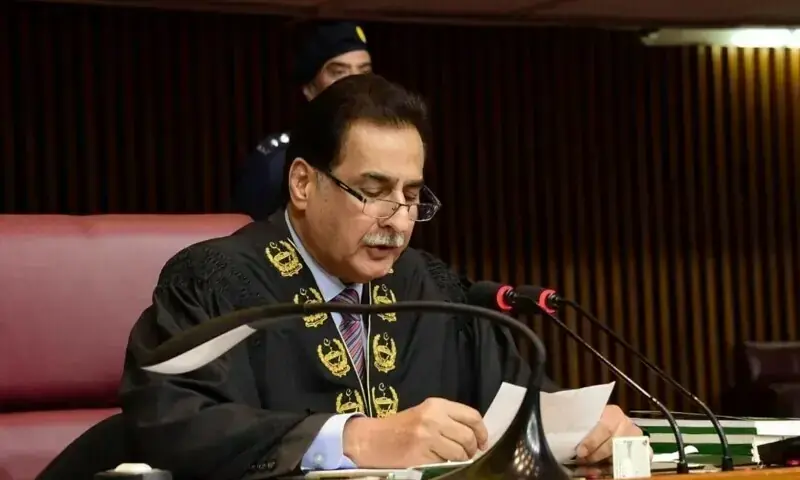
Islamabad, June 9, 2026: Speaker National Assembly Sardar Ayaz Sadiq has underscored the importance of fostering mutual respect, tolerance, and constructive engagement among nations and cultures, saying that dialogue among civilizations is indispensable for achieving global peace, stability, and shared prosperity.
In a message issued on the occasion of the International Day for Dialogue among Civilizations, observed annually on June 10, the Speaker said that dialogue, diplomacy, and cooperation—not confrontation—are the most effective means for resolving conflicts and differences peacefully in today’s increasingly complex global environment.
Sardar Ayaz Sadiq noted that Pakistan has consistently advocated for global peace, interfaith harmony, tolerance, and mutual respect at international forums. He emphasized that contemporary security, economic, and environmental challenges require collective action, parliamentary diplomacy, and constructive engagement to achieve sustainable solutions.
Highlighting the role of legislatures in promoting international understanding, the Speaker said that parliaments, as representatives of the people, have a vital responsibility in fostering harmony and strengthening relations among nations. He pointed out that the 103 Parliamentary Friendship Groups established in the National Assembly of Pakistan are actively working to deepen engagement with legislatures worldwide, promote mutual trust and understanding, and support shared development and lasting peace.
Referring to Pakistan’s diplomatic efforts, Sardar Ayaz Sadiq said that the country played a constructive and proactive role in promoting dialogue and understanding during recent tensions in the Middle East. He added that Pakistan’s contributions toward fostering dialogue and peaceful engagement have received international recognition.
The Speaker also highlighted Pakistan’s approach during recent tensions with India, stating that Islamabad demonstrated responsibility by offering transparent, impartial, and joint investigations into the Pahalgam incident while consistently advocating dialogue and diplomatic engagement. He said Pakistan has always prioritized peaceful dispute resolution, regional stability, and confidence-building measures.
Sardar Ayaz Sadiq credited Prime Minister Muhammad Shehbaz Sharif and Chief of Defence Forces Field Marshal Syed Asim Munir for effectively presenting Pakistan’s position on key regional and international issues, noting that their leadership had been widely acknowledged by the international community.
He stressed that all outstanding disputes should be resolved through dialogue, mutual understanding, respect for sovereignty, and adherence to the principle of self-determination. Reiterating Pakistan’s stance on the Jammu and Kashmir and Palestine issues, he called for their peaceful resolution through diplomacy, negotiations, and the implementation of relevant United Nations resolutions.
Expressing concern over alleged human rights violations in Indian Illegally Occupied Jammu and Kashmir (IIOJK) and Palestine, the Speaker urged the international community to play a more active role in addressing these issues and ensuring justice for affected populations.
The Speaker also criticized India’s unilateral suspension of the Indus Waters Treaty, describing it as a violation of international legal and treaty obligations. He stressed that adherence to the treaty remains crucial for maintaining regional peace, stability, and mutual trust.
Concluding his message, Sardar Ayaz Sadiq said that dialogue and mutual understanding among civilizations and nations are not only essential for promoting harmony but also serve as effective tools for conflict resolution, confidence-building, and sustainable development. He reaffirmed Pakistan’s commitment to advancing global peace, international cooperation, and constructive diplomacy.
Meanwhile, Deputy Speaker National Assembly Syed Ghulam Mustafa Shah, in his message on the occasion, said that dialogue, engagement, and mutual respect among civilizations, religions, and cultures are critical for eliminating hatred, extremism, and prejudice. He called on the international community to further strengthen relations based on equality, mutual respect, and shared interests to build a peaceful, stable, and prosperous world