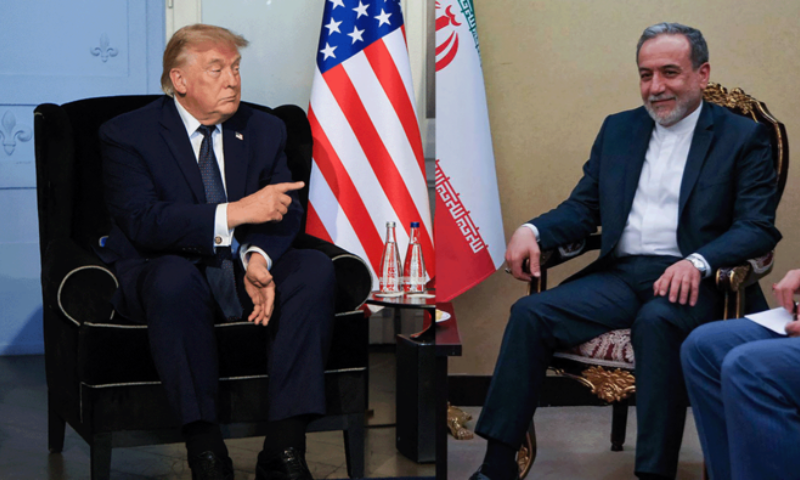
Davos/Islamabad/Tehran/Washington, June 16, 2026: A landmark memorandum of understanding (MoU) between the United States and Iran is set to be formally signed on June 19 at Switzerland’s Bürgenstock Resort, marking a significant step toward ending months of regional tensions and opening the door to comprehensive negotiations on security, nuclear issues, and economic cooperation.
The Swiss Federal Department of Foreign Affairs (FDFA) confirmed on Tuesday that the signing ceremony is scheduled to take place in the canton of Nidwalden after consultations with the United States, Iran, Pakistan, and Qatar.
FDFA spokesperson Pierre-Alain Eltschinger said Switzerland had been working closely with all parties involved and was facilitating the process by providing the necessary diplomatic and logistical arrangements for the event. He noted that the venue was proposed jointly by Pakistani and Qatari mediators, as well as Washington and Tehran. However, Swiss authorities declined to disclose further details regarding the contents of the memorandum or the signing ceremony.
Trump: Iran will never have a nuclear weapon
Speaking on the sidelines of the G7 Summit in France, US President Donald Trump described the agreement as a major breakthrough and emphasized that the memorandum clearly stipulates that Iran will not possess a nuclear weapon.
“The only thing that really matters to me is Iran will never have a nuclear weapon, and it says it loud and clear,” Trump told reporters.
The US president said he intended to release the text of the agreement in a formal setting and was considering sending the document to Congress for review following requests from Republican lawmakers.
Trump characterized the memorandum as the beginning of a second phase of negotiations, expected to take place over the next 60 days.
“I think it’s going to go pretty quickly. Iran wants to get it done. They have to get back to business, and the relationship is now normalized,” he said.
The president also reiterated that the United States would not provide direct funding to Iran under the agreement and warned that any future Iranian pursuit of nuclear weapons would trigger severe consequences.
Pakistan and Qatar praised for mediation role
Qatar’s Foreign Ministry praised Pakistan’s leadership in facilitating the breakthrough, describing Islamabad as the principal mediator in the negotiations.
Foreign Ministry spokesperson Majed Al-Ansari said Doha had actively supported the Pakistan-led mediation process and would participate in Friday’s signing ceremony in Switzerland.
“We are supporting the Pakistani-led mediation and must praise the role Pakistan has played in getting us to this point and the role it will continue to play as the main mediator,” Al-Ansari said.
He expressed optimism that the agreement would contribute to regional stability, facilitate the reopening of the Strait of Hormuz, and ensure uninterrupted global energy supplies.
Qatar, one of the world’s leading exporters of liquefied natural gas (LNG), said it hoped the agreement would restore secure navigation through the strategic waterway, which handles a significant portion of global oil and gas shipments.
Iranian Foreign Minister Abbas Araghchi confirmed that a new round of negotiations with the United States would commence immediately after the signing ceremony.
According to Araghchi, the talks will proceed in two stages. The first phase will focus on regional security issues, including the Strait of Hormuz, maritime navigation, reconstruction efforts following recent hostilities, and broader non-aggression arrangements.
The second phase will address Iran’s nuclear programme, sanctions relief, missile issues, and regional armed groups.
Iranian Deputy Foreign Minister Majid Takht-Ravanchi said Switzerland would host the signing ceremony but indicated that final logistical details were still being finalized.
Iranian media reported that Parliament Speaker Mohammad Bagher Ghalibaf would lead Tehran’s delegation during the signing event.
The memorandum has received broad international backing. A group of 17 countries, including the United Kingdom, France, Germany, Italy, Japan, Canada, Australia, and several European Union members, issued a joint statement welcoming the agreement.
The countries described the understanding as an opportunity to restore regional stability and stabilize the global economy, particularly through the reopening of the Strait of Hormuz and the restoration of unrestricted freedom of navigation.
The statement also congratulated the United States, Iran, Pakistan, and Qatar for achieving what it termed a diplomatic breakthrough and expressed readiness to support implementation of the agreement.
The signatories reiterated that Iran must never acquire nuclear weapons and pledged to work with the International Atomic Energy Agency (IAEA) and all parties involved to achieve a lasting diplomatic settlement.
Questions remain over final terms
Despite the optimism surrounding the accord, significant details remain unresolved.
While reports have suggested the possibility of a $300 billion reconstruction framework for Iran, US officials have clarified that any such investment would come from regional partners and private-sector mechanisms rather than direct American funding.
Vice President JD Vance described the signed memorandum as a brief framework document that establishes broad principles while leaving detailed arrangements to subsequent negotiations.
Analysts note that key issues—including sanctions relief, the future of Iran’s enriched uranium stockpile, regional security arrangements, and the status of armed groups aligned with Tehran—will likely dominate the upcoming talks.
Nevertheless, the planned signing ceremony in Switzerland represents the most significant diplomatic breakthrough between Washington and Tehran in years and could pave the way for a broader agreement aimed at reducing tensions across the Middle East and restoring stability to global energy markets.