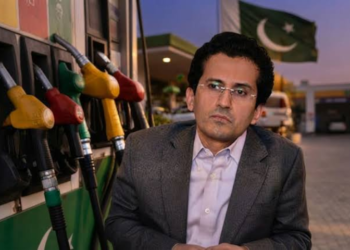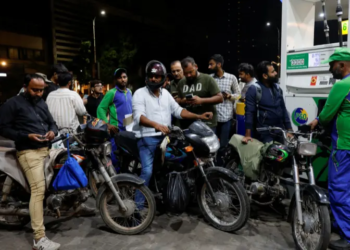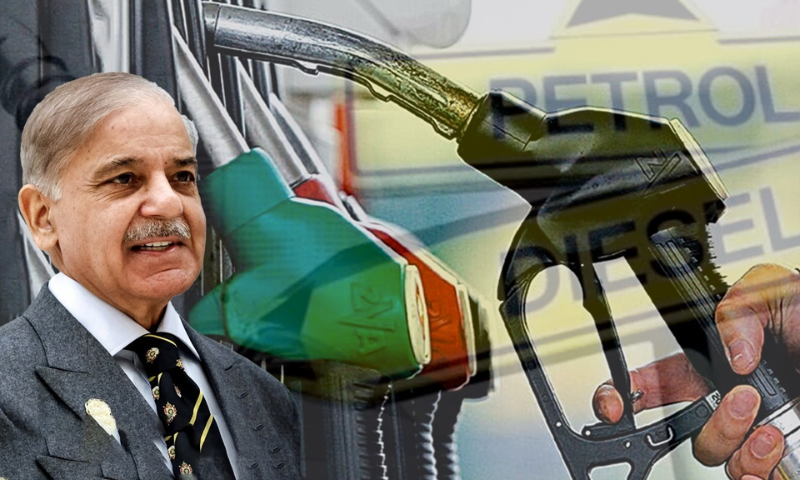
Islamabad, June 19, 2026: Prime Minister Shehbaz Sharif on Friday announced a major reduction in petroleum prices, slashing the price of petrol by Rs74 per litre and high-speed diesel (HSD) by Rs67 per litre, as the government moved to pass on the benefit of falling international oil prices to consumers.
An official notification is expected to be issued shortly. Following the reduction, the price of petrol will decrease to Rs299.78 per litre from Rs373.78, while high-speed diesel will fall to Rs311.78 per litre from Rs378.78.
In a statement issued by the Prime Minister’s Office, Shehbaz Sharif said the decision reflected the government’s commitment to transferring the benefits of an improved regional economic environment and declining global oil prices to the public.
“We are now fulfilling the promise we made to the nation,” the prime minister said.
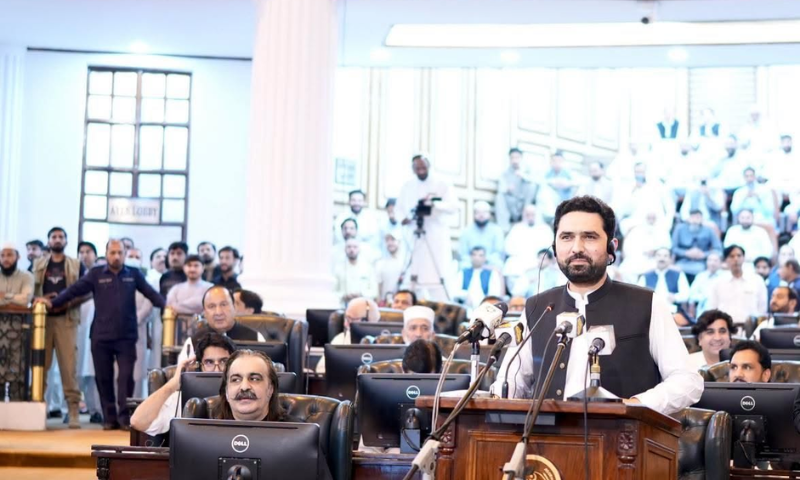
Earlier, while addressing the National Assembly, the premier had hinted at a substantial reduction in fuel prices following the easing of tensions in the Middle East after the United States-Iran peace agreement and the restoration of energy shipments through the Strait of Hormuz.
“The price of petrol is being reduced by Rs74 per litre, while diesel is being reduced by Rs67 per litre,” the statement said.
The prime minister acknowledged the difficulties faced by citizens during recent months and praised the public for demonstrating patience and resilience amid economic challenges.
“We fully understand the hardships faced by the people. You demonstrated extraordinary patience and resilience during these difficult circumstances,” he said, while expressing gratitude to citizens for supporting the government during a period of economic uncertainty.
Petrol is primarily used in motorcycles, rickshaws, private vehicles, and small transport, making its price particularly significant for middle- and lower-middle-income households. Diesel, meanwhile, is widely used in heavy transport, agriculture, power generation, and industrial sectors, meaning reductions in its price have broader implications for inflation and transportation costs.
The government had begun revising petroleum prices on a weekly basis following volatility in global energy markets triggered by the U.S.-Iran conflict and disruptions to shipping through the Strait of Hormuz.
In the first wartime revision announced on March 6, fuel prices were increased by Rs55 per litre, raising petrol to Rs321.17 per litre and diesel to Rs335.86 per litre. Prices later reached record highs on April 3, when petrol rose to Rs458.40 per litre and diesel to Rs520.35 per litre following sharp increases linked to the regional crisis.
Amid public criticism over soaring fuel costs, the government subsequently reduced petrol prices by cutting the petroleum levy, bringing the rate down to around Rs378 per litre within 24 hours.
Government committed to passing on full relief
In his statement, the prime minister emphasized that the federal and provincial governments had worked in close coordination to shield the economy from external shocks and mitigate the impact of global inflation.
“We took every possible step to protect the public from the effects of global inflation,” he said, adding that any future decline in international oil prices would be fully transferred to consumers.
The premier reiterated the government’s commitment to maintaining economic stability, controlling inflation, and providing relief to the public through targeted policy measures and subsidies for vulnerable segments of society.
“Providing maximum relief to the public remains the government’s highest priority,” he stated.
Credits diplomatic and economic team
Prime Minister Shehbaz also highlighted Pakistan’s diplomatic efforts, which he said contributed to regional peace and stability.
He paid special tribute to Chief of Defence Forces and Chief of Army Staff Field Marshal Asim Munir, describing his efforts as instrumental in facilitating the Islamabad Memorandum of Understanding that helped ease regional tensions.
The prime minister also acknowledged the contributions of Deputy Prime Minister and Foreign Minister Ishaq Dar, Interior Minister Mohsin Naqvi, and other members of the government’s diplomatic team.
In addition, he praised Finance Minister Muhammad Aurangzeb, Planning Minister Ahsan Iqbal, Petroleum Minister Ali Pervaiz Malik, and their respective ministries for their role in managing the country’s economic challenges and helping steer the economy through a difficult period.