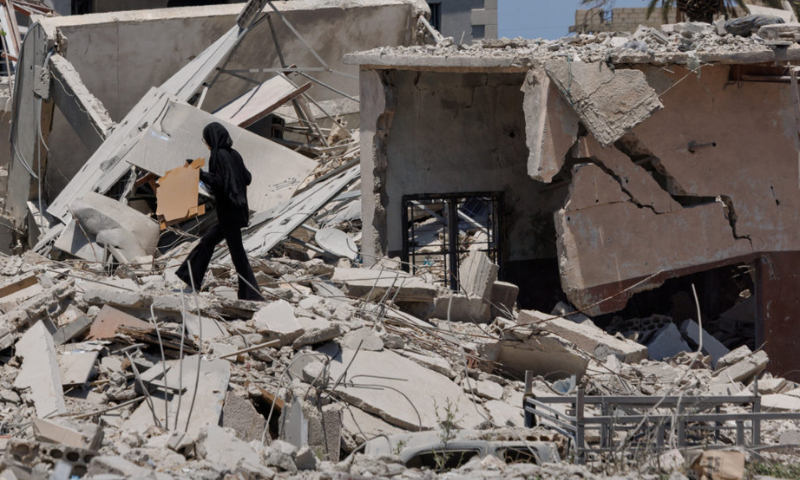
Beirut/Tehran/Islamabad, June 19, 2026: Israel and Hezbollah agreed to a ceasefire on Friday after a sharp escalation in fighting in southern Lebanon threatened to derail momentum generated by the recently signed U.S.-Iran peace accord and raised fresh concerns about stability across the Middle East.
A senior U.S. official confirmed that the ceasefire took effect shortly before 4:00pm local time in Lebanon, following intensive diplomatic efforts involving the United States, Qatar, Iran, and regional mediators.
“We understand that after the exchange of fire earlier today, Israel and Hezbollah are now in a ceasefire,” the official said, adding that American and Qatari negotiators worked closely with Iranian officials to secure the arrangement.
The breakthrough came after one of the deadliest days of fighting since the signing of the Islamabad Memorandum of Understanding (MoU) between the United States and Iran. According to Lebanese authorities, at least 31 people were killed in Israeli strikes across southern and eastern Lebanon, while Israel reported the deaths of four soldiers in combat operations.
Switzerland talks cancelled amid fighting
The renewed violence prompted the cancellation of a planned round of U.S.-Iran follow-up talks in Switzerland, which were expected to begin the next phase of negotiations under the framework established by the Islamabad MoU signed a day earlier.
Diplomatic sources said the Iranian delegation cancelled its scheduled trip to Switzerland after Tehran informed mediators that negotiations could not proceed while fighting continued in Lebanon.
A senior Hezbollah lawmaker said Iran had conveyed that meaningful dialogue with Washington required a comprehensive ceasefire covering all active fronts in the region.
The cancellation has created uncertainty over the timeline for implementing key elements of the agreement, including arrangements linked to maritime security and the full reopening of the Strait of Hormuz, a vital route for global energy supplies.
Pakistan calls MoU historic step toward peace
Earlier this week, Prime Minister Shehbaz Sharif hailed the signing of the Islamabad MoU as a “historic milestone” for regional and global peace, describing it as a triumph of diplomacy over conflict.
Pakistan, which played a central mediating role in facilitating contacts between Washington and Tehran, has received praise from both sides for its diplomatic efforts. Deputy Prime Minister and Foreign Minister Ishaq Dar on Friday also spoke with Iranian Foreign Minister Seyed Abbas Araghchi, congratulating Iran on the agreement and expressing hope that the next phase of negotiations would move forward smoothly.
Iran, in turn, thanked Pakistan for its sustained mediation efforts and support throughout the peace process.
Vance urges restraint, warns against escalation
U.S. Vice President JD Vance urged all parties to exercise restraint and preserve the momentum created by the U.S.-Iran agreement.
According to U.S. officials, the White House views stability in Lebanon as a critical component of broader regional de-escalation efforts and has expressed frustration over actions that could jeopardize the diplomatic breakthrough achieved through the Islamabad accord.
Washington has consistently maintained that ending hostilities in Lebanon forms an integral part of the wider framework aimed at reducing tensions across the Middle East.
Deadly fighting before ceasefire
Before the ceasefire took hold, Israeli forces launched extensive strikes across southern Lebanon, including in the Nabatieh region, claiming to have targeted more than 80 Hezbollah command centers, launch sites, and military infrastructure positions.
The Israeli military said dozens of Hezbollah operatives were killed in the attacks.
Hezbollah, meanwhile, reported launching rocket and mortar attacks against Israeli forces near the strategic Ali al-Taher hills overlooking Nabatieh and claimed to have targeted Israeli armored units attempting to advance in the area.
Israel also reported that Lieutenant Colonel Dor Gedalia Ben Simhon and three other soldiers were killed after a tank was struck by what military officials described as a suspected drone or anti-tank missile. A reserve officer was also seriously wounded in a separate drone attack.
The Lebanese Health Ministry said Israeli strikes hit multiple areas in southern Lebanon and the eastern Bekaa Valley, causing significant civilian casualties and damage to homes and infrastructure.
Iran condemns Israeli attacks
Iran strongly condemned the Israeli operations, accusing Washington of bearing responsibility for developments due to its role as a guarantor of the broader ceasefire framework.
Foreign Ministry spokesman Esmail Baghaei described the attacks as “aggressive and terrorist actions” that resulted in civilian casualties and extensive destruction.
He argued that the Islamabad MoU explicitly linked the cessation of hostilities in Lebanon to the broader regional peace framework and warned that continued violations could have serious consequences for regional security.
Baghaei said Tehran would take all necessary measures to safeguard its interests and those of its allies.
Netanyahu vows continued military presence
Israeli Prime Minister Benjamin Netanyahu vowed that Israeli forces would remain in southern Lebanon for as long as necessary.
“Israel will not tolerate attacks on our soldiers or our territory, and it will exact a very heavy price from Hezbollah,” Netanyahu said after the deaths of four Israeli soldiers were announced.
Defense Minister Israel Katz echoed the position, saying Israeli forces would remain deployed in Lebanon and would respond forcefully to future attacks.
Several members of Israel’s far-right coalition adopted even harsher rhetoric. National Security Minister Itamar Ben Gvir called for an expanded military response, while Finance Minister Bezalel Smotrich urged Israel to intensify operations against Hezbollah.
Fragile peace faces first test
Friday’s violence represented the most serious challenge yet to the fragile diplomatic momentum generated by the U.S.-Iran peace agreement brokered with significant support from Pakistan.
Although the ceasefire restored a measure of calm by evening, the cancellation of the Switzerland talks highlighted the vulnerability of the peace process and underscored how developments in Lebanon remain closely tied to the broader effort to achieve lasting stability across the Middle East.
Diplomats involved in the negotiations expressed cautious optimism that follow-up talks between Washington and Tehran could be rescheduled in the coming days, provided the ceasefire in Lebanon holds and regional tensions continue to ease.