Islamabad, June 24, 2026: A heated debate unfolded in the National Assembly on Wednesday as the Pakistan Peoples Party (PPP) strongly criticized Defence Minister Khawaja Asif over his controversial remarks regarding the people of Rawalakot in Azad Jammu and Kashmir (AJK), with PPP Chairman Bilawal Bhutto-Zardari questioning why the minister remains in the federal cabinet despite refusing to apologize.
The controversy stems from comments made by Khawaja Asif during a television interview, in which he stated that Rawalakot was “not Kashmir” and that he did not consider its residents to be Kashmiris. The remarks sparked widespread criticism and political backlash, particularly amid ongoing protests in the region led by the Joint Awami Action Committee (JAAC).
PPP condemns ‘irresponsible’ remarks
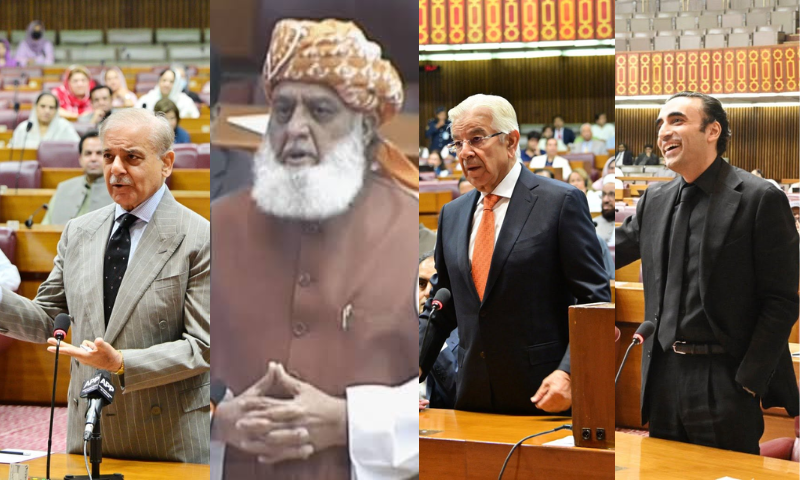
Addressing the National Assembly, former Prime Minister and senior PPP leader Raja Pervaiz Ashraf described the defence minister’s comments as a “sweeping statement” that should never have been made, especially by a senior government official.
Ashraf said the remarks had deeply hurt public sentiment and warned that Azad Kashmir remains a highly sensitive region where political leaders must exercise caution.
“Instead of adding fuel to the fire, efforts should be focused on resolving the grievances of the Kashmiri people,” he said, emphasizing that both the government and state institutions were working to address challenges facing the region.
Calling the comments detrimental to Pakistan’s Kashmir cause, Ashraf offered an apology on behalf of the defence minister to the people of Rawalakot.
Khawaja Asif defends position
Responding to criticism, Khawaja Asif referred to a clarification he had posted on social media platform X, where he argued that “Kashmiriat” is defined by decades of sacrifices and struggle rather than birthplace or official documentation.
The defence minister maintained that his remarks had been misinterpreted and reiterated that no individual becomes a Kashmiri merely through a birth certificate.
Bilawal questions government’s silence
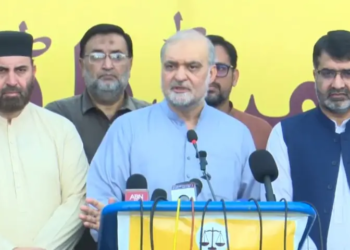
PPP Chairman Bilawal Bhutto-Zardari delivered one of the strongest speeches of the session, praising Prime Minister Shehbaz Sharif’s efforts to maintain political consensus while criticizing unnamed ministers for creating unnecessary complications.
Bilawal said Pakistan was passing through a sensitive geopolitical period and required unity and responsible leadership.
“I have supported Prime Minister Shehbaz Sharif twice for the office of prime minister. I acknowledge his dedication, work ethic and efforts to build consensus among coalition partners and the opposition,” Bilawal said.
“However, some ministers continue to create obstacles for the prime minister instead of supporting his efforts.”
The former foreign minister questioned how a defence minister could publicly declare that the people of Rawalakot were not Kashmiris and still continue to hold office without issuing an apology.
“Every political party, coalition partner and citizen should ask why such a minister remains part of the federal cabinet after making such remarks and refusing to retract them,” Bilawal said.
He argued that the statement had further inflamed an already tense situation in AJK rather than helping resolve it.
Call for political resolution in AJK
Bilawal acknowledged that both the federal government and political stakeholders in AJK shared responsibility for addressing the region’s problems. He stressed the need for dialogue and political engagement rather than confrontation.
Welcoming efforts by Jamiat Ulema-i-Islam-Fazl (JUI-F) chief Maulana Fazlur Rehman to mediate between the government and JAAC, Bilawal urged all political actors to provide him space to facilitate a peaceful resolution.
“We should engage both the protesters and the governments in Islamabad and Muzaffarabad to achieve a political settlement so that Kashmiris do not have to repeatedly take to the streets,” he said.
Bilawal also stressed that the prime minister must have authority over his cabinet, warning that conflicting ministerial positions were undermining government policy.
Bilawal targets MQM-P and PML-N on local governments
During his address, Bilawal also responded to criticism from the Muttahida Qaumi Movement-Pakistan (MQM-P), suggesting the party should hold the federal government accountable for failing to fulfil commitments made to it.
He further accused the Pakistan Muslim League-Nawaz (PML-N) of resisting local government systems in provinces under its control.
“Implement in Lahore the same local government framework that exists in Karachi and then let the people decide through elections,” he challenged.
The PPP chairman also demanded local government elections in Islamabad and Punjab before any future constitutional amendments are considered.
Fazlur Rehman accepts mediation role
JUI-F chief Maulana Fazlur Rehman informed the National Assembly that he had received a formal request from JAAC leaders asking him to mediate between protesters and the government.
Holding up the letter during his speech, Fazl said he had already responded positively and informed the government about his decision.
In a separate video message, he confirmed acceptance of the mediation request and expressed hope for resolving the “crisis and tense situation” through dialogue.
The veteran politician criticized the government’s handling of the situation and condemned provocative statements made by the defence minister.
“You have left peace to Ishaq Dar and fighting to Khawaja Asif,” he remarked, drawing laughter from lawmakers.
Fazl emphasized that politicians should lead conflict-resolution efforts and reminded the government that it must treat citizens with patience and compassion.
Light-hearted exchange between PM and Fazl
The National Assembly also witnessed a lighter moment when Prime Minister Shehbaz Sharif entered the House during Fazlur Rehman’s speech.
Responding to Fazl, the prime minister remarked that some private conversations between them would “go with him to the grave.”
Fazl humorously replied that he would permit the prime minister to publicly disclose those discussions if he wished. Shehbaz Sharif responded with a smile, saying that doing so would create even more complications.
Rana Sanaullah links protests to upcoming elections
Prime Minister’s Adviser on Political Affairs Rana Sanaullah argued that the ongoing JAAC agitation was partly aimed at influencing or disrupting upcoming AJK elections scheduled for July.
He maintained that constitutional questions surrounding the region’s 12 refugee seats could only be resolved by the AJK Legislative Assembly and not through street protests.
According to Sanaullah, the issue had already been endorsed by an all-parties conference and the AJK Supreme Court.
He also claimed that one of JAAC’s demands sought removal of a declaration in election nomination papers affirming that Kashmir would join Pakistan following the success of the freedom movement.
The adviser urged JAAC leaders to withdraw protest plans and pursue negotiations through political channels.
Khawaja Asif calls for new charter of democracy
In a separate speech, Khawaja Asif turned his attention to the opposition, urging political parties to learn from past mistakes and sign a new Charter of Democracy.
The defence minister argued that Pakistan’s major political parties, including the PPP and PML-N, had eventually moved beyond their historical rivalries and established democratic norms through political dialogue.
Referring to the political climate under the former PTI government, Asif criticized what he called the erosion of parliamentary traditions and democratic culture.
He cited the passage of dozens of bills within minutes during the PTI era and accused former Prime Minister Imran Khan of deepening political polarization.
“Our past was not perfect, but we learned from it and attempted to reform the system through democratic consensus,” Asif said.
He also suggested that further constitutional reforms may still be necessary to strengthen democratic institutions.
National Assembly approves supplementary grants
Meanwhile, the National Assembly approved supplementary grants amounting to Rs593.64 billion for FY2024-25 and Rs482 billion for the outgoing fiscal year, concluding a session dominated by debate over Kashmir, coalition politics, and democratic governance.
The proceedings highlighted growing tensions within the ruling coalition over the handling of the AJK situation, while also underscoring increasing calls for political dialogue and reconciliation to prevent further unrest in the region.