Washington/Tehran, July 16,2026: The United States and Iran exchanged fresh military strikes on Thursday as the conflict entered a dangerous new phase, while US Vice President JD Vance accused elements within the Israeli government of attempting to influence American public opinion to derail Washington’s peace agreement with Tehran.
The latest escalation saw US forces strike Iranian coastal defence systems, missile facilities and military infrastructure, while Iran retaliated with attacks on American military installations in Bahrain, Jordan and Kuwait, raising fears of a broader regional conflict.
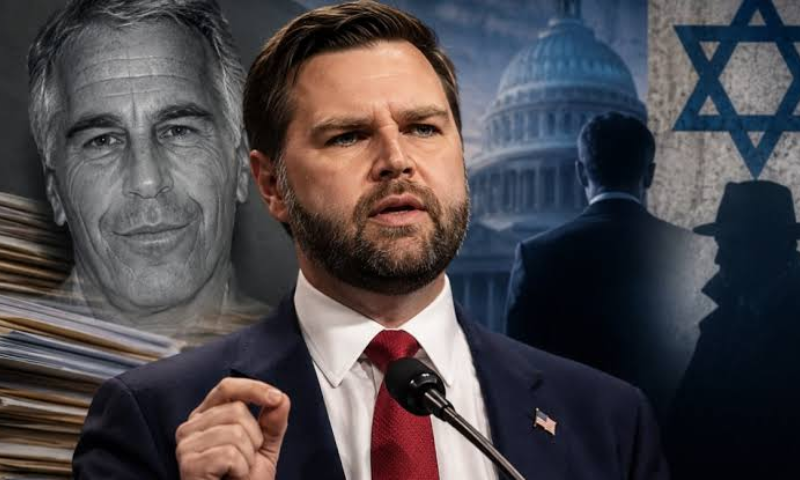
In a podcast interview with Joe Rogan released on Wednesday, Vice President JD Vance alleged that some members of the Israeli government had financed influence campaigns aimed at undermining the US-brokered agreement that sought to end the war with Iran.
“You have seen this very discreet, extremely well-funded campaign to derail the negotiations,” Vance said, claiming individuals linked to elements within the Israeli government had sought to shift American policy toward continued military action.
Vance defended the peace agreement reached last month, despite criticism from both US and Israeli officials who argue it fails to sufficiently address Iran’s nuclear and ballistic missile programmes.
Asked whether the United States would have entered the latest conflict without Israeli influence, Vance replied, “Yes, I do.”
He added, however, that President Donald Trump independently believed Iran should never acquire a nuclear weapon.
Israeli officials have repeatedly criticised the agreement, arguing that it does not adequately address Israel’s security concerns. The Israeli Prime Minister’s Office did not immediately comment on Vance’s remarks.
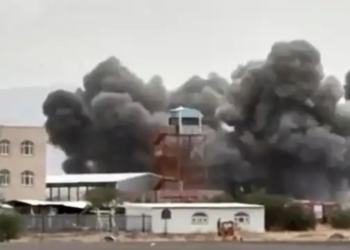
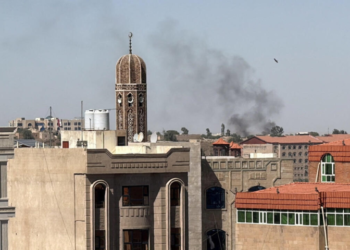
The US military launched two waves of strikes against Iranian coastal defence systems, missile launch sites, air defence facilities and command centres, including targets on Greater Tunb Island and in Bandar Abbas, according to US Central Command (CENTCOM).
Washington said the operations were intended to weaken Iran’s military capabilities and restore freedom of navigation through the Strait of Hormuz following Tehran’s closure of the strategic waterway.
Iran responded by launching missile and drone attacks against US military facilities in Bahrain, Kuwait and Jordan.
Bahrain and Jordan confirmed intercepting multiple Iranian missiles and drones, while Kuwait said its air defence systems successfully neutralised hostile aerial threats.
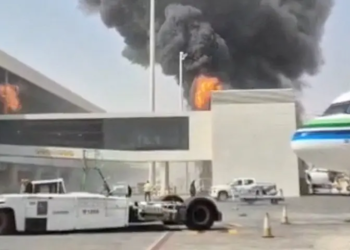
Iran’s Islamic Revolutionary Guard Corps (IRGC) claimed responsibility for strikes targeting American military infrastructure, including Ali Al Salem Air Base in Kuwait and Al-Azraq Air Base in Jordan.
Iran reiterated that the Strait of Hormuz remained under its control and warned the United States against attempting to interfere in the strategic shipping route.
Brigadier General Mohammad Akaminia, spokesperson for the Iranian army, said Tehran would “neutralise US interventions” and described the Strait as an inviolable “red line.”
Separately, Brigadier General Ebrahim Zolfaghari warned that any US attacks on Iranian infrastructure would be met with strikes on infrastructure across the Gulf region.
“All the infrastructure in the region will be crushed under the powerful blows of the Iranian armed forces,” he warned.
The Strait of Hormuz previously handled nearly one-fifth of global oil and gas shipments before the conflict disrupted maritime traffic.
Iran also condemned what it described as a US strike near Shahid Baghaei Hospital in Ahvaz, which houses a children’s cancer treatment centre.
Foreign Ministry spokesman Esmaeil Baghaei called the attack a “barbaric war crime,” saying the nearby air strikes forced the emergency evacuation of 211 children receiving chemotherapy.
Baghaei said Iran remained focused on defending its sovereignty and described the US military campaign as a blatant violation of international law and the peace memorandum previously signed between the two countries.
There was no immediate US response to the allegation.
The US-led coalition intercepted several drones over Iraq’s Kurdistan region near the American consulate in Erbil, while Iraqi Prime Minister Ali al-Zaidi condemned the violation of Iraqi airspace and ordered security agencies to prevent further attacks.
Meanwhile, Israeli Defence Minister Israel Katz informed US Defence Secretary Pete Hegseth that Israeli forces would remain in security zones inside Gaza, southern Lebanon and Syria despite ongoing diplomatic discussions regarding troop withdrawals.
Lebanese Foreign Minister Youssef Raggi, speaking in Paris, reiterated Beirut’s demand for a complete Israeli withdrawal from Lebanese territory, saying lasting stability could not be achieved while parts of the country remained under occupation.
President Donald Trump maintained that Iran was seeking a negotiated settlement despite the ongoing fighting.
“We’ll have Iran defeated soon. They’ll be defeated very soon,” Trump said during an event in Pennsylvania.
He also revealed that Iran had allowed an American citizen detained since late 2024 to leave the country, describing the move as a gesture of goodwill.
The renewed fighting follows the collapse of a fragile Pakistan-mediated memorandum of understanding intended to pave the way for a permanent peace agreement between Washington and Tehran after a 60-day negotiating period. The latest escalation has further heightened concerns over regional security, global energy supplies and international economic stability.