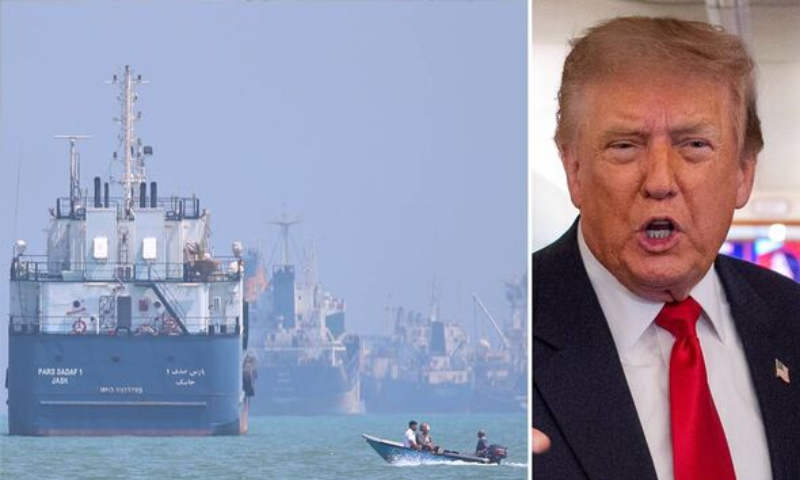
Tehran/Washington, July 28, 2026: Diplomatic efforts to ease tensions in the Gulf gathered momentum on Tuesday as the United States and Iran signalled progress in indirect negotiations, while regional powers stepped up consultations following recent drone attacks targeting Saudi Arabia and growing concerns over the security of the Strait of Hormuz.
US President Donald Trump said Washington was holding “good talks” with Tehran and expressed optimism that a diplomatic breakthrough remained possible. However, he warned that the United States would resume military strikes if negotiations failed.
“We’re having good talks. I think there’s a good chance that something could happen, and if it does, good; if it doesn’t, we go back to doing what we were doing two days ago,” Trump told reporters. Speaking later at a campaign rally in Michigan, he said negotiations were “very friendly” but reiterated that military action remained an option.
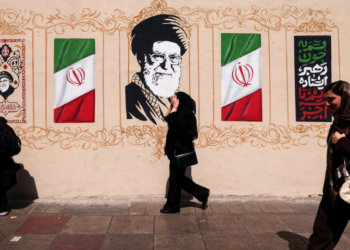
Iran, while denying that it had requested negotiations, confirmed that indirect messages continued to be exchanged through mediators. Foreign Ministry spokesman Esmaeil Baghaei dismissed reports that Tehran had sought talks as “fabricated”, stressing that diplomacy remained an available channel.
Iranian Foreign Minister Abbas Araghchi held separate telephone conversations with Saudi Foreign Minister Prince Faisal bin Farhan and Omani Foreign Minister Badr Albusaidi, discussing regional developments, the security of the Strait of Hormuz and the need for coordinated diplomatic efforts to promote regional stability.
Meanwhile, Oman has reportedly presented Iran with a proposal to establish a joint regional mechanism for managing navigation through the Strait of Hormuz. According to regional sources, the proposal—modelled on the Strait of Malacca—would allow participating countries to jointly oversee maritime security through voluntary contributions for navigation safety, environmental protection and search-and-rescue operations, rather than leaving control solely with Iran.
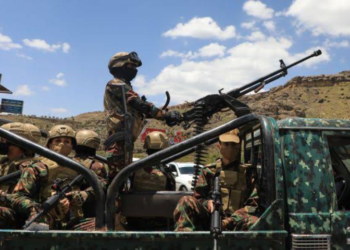
The diplomatic activity follows a series of drone attacks targeting Saudi Arabia. Saudi authorities said they intercepted drones launched by Iran-backed armed groups operating from Iraq, while Yemen’s Houthi movement separately claimed responsibility for targeting the kingdom’s East-West oil pipeline leading to the Red Sea port of Yanbu.
The Gulf Cooperation Council (GCC) strongly condemned the drone attacks, describing them as a dangerous escalation and reaffirming full support for Saudi Arabia’s sovereignty and security. Egypt also condemned the attacks, warning that they threatened regional stability.
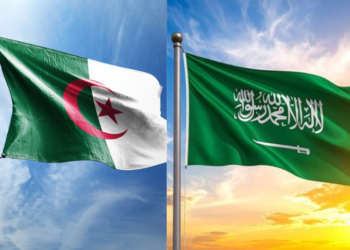
Saudi Foreign Minister Prince Faisal bin Farhan held separate telephone conversations with his counterparts from Qatar, Kuwait and the United Kingdom to discuss regional developments and efforts to maintain stability. The ministers jointly condemned attacks carried out by Iran-backed groups against Saudi Arabia.
Jordanian Foreign Minister Ayman Safadi and United Nations Secretary-General António Guterres also met in Amman, stressing the importance of preserving the US-Iran ceasefire, resuming negotiations and ensuring freedom of navigation in the Strait of Hormuz in accordance with international law.
Inside Iran, government spokesperson Fatemeh Mohajerani said recent US military strikes had caused widespread damage to civilian infrastructure, including 12 bridges, two tunnels and numerous fishing boats and tourism facilities. She added that Iran had lost around 230 million cubic metres of daily natural gas production capacity due to the conflict.
Iranian authorities also claimed that six foreign vessels attempting to transit the Strait of Hormuz without authorisation had been turned back, reiterating Tehran’s position that vessels must use the navigation channel supervised by Iran.
Oil markets continued to react positively to the pause in hostilities. Brent crude futures fell 1.66 per cent to $86.89 per barrel, while US West Texas Intermediate crude declined 1.76 per cent to $81.16, reflecting investor optimism that diplomatic efforts may prevent further disruption to global energy supplies.
Russia also weighed into the regional security debate, with President Vladimir Putin praising Iran’s so-called “mosquito fleet” of fast attack boats and midget submarines, describing them as an example of modern asymmetric naval warfare capable of operating effectively in the Gulf.
Although diplomatic engagement has raised hopes of reducing tensions, uncertainty remains over the future of the Strait of Hormuz, through which nearly one-fifth of global oil supplies normally pass, making it one of the world’s most strategically important maritime chokepoints.