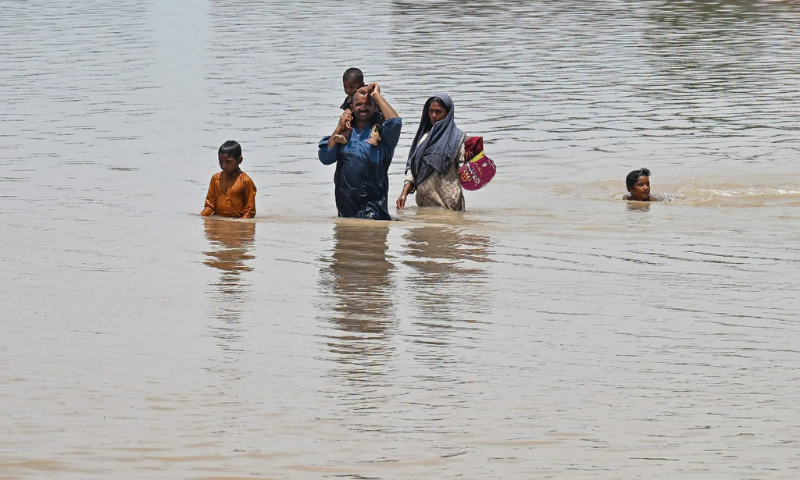
Islamabad, July 28, 2026: The Pakistan Meteorological Department (PMD) has forecast a fresh spell of monsoon rains across much of the country from July 29 to August 5, warning of urban flooding, flash floods and landslides in vulnerable areas as the country continues to recover from the ongoing monsoon season.
In its latest weather advisory issued on Tuesday, the PMD said strong monsoon currents from the Arabian Sea and Bay of Bengal are expected to penetrate the upper and central parts of Pakistan from July 29, while a westerly weather system affecting the northern regions is likely to intensify from August 1.
According to the forecast, widespread rain accompanied by wind and thunderstorms is expected across Azad Jammu and Kashmir, Punjab, Khyber Pakhtunkhwa, Gilgit-Baltistan, Balochistan and Sindh, with several areas likely to receive heavy to very heavy rainfall.
The PMD said Islamabad, Rawalpindi, Murree, Galliyat, Lahore, Gujranwala, Gujrat, Sialkot, Faisalabad, Multan, Peshawar, Nowshera and several other districts of Punjab and Khyber Pakhtunkhwa could experience heavy downpours between July 30 and August 4, increasing the risk of urban flooding.
Rainfall is also forecast in Neelum Valley, Muzaffarabad, Rawalakot, Kotli, Bhimber and Mirpur in Azad Jammu and Kashmir until August 5, while Gilgit, Skardu, Hunza, Diamer, Astore and other parts of Gilgit-Baltistan are expected to receive moderate to heavy rainfall through August 6.
In Sindh, including Karachi, Hyderabad, Mirpurkhas, Sukkur, Larkana, Badin, Thatta and Shaheed Benazirabad, rain and thunderstorms with isolated heavy falls are expected from July 31 to August 2.
The PMD also forecast rain and isolated heavy showers in eastern and southern parts of Balochistan, including Zhob, Loralai, Sibbi, Khuzdar, Lasbela, Gwadar, Turbat and Panjgur, from July 31 to August 3.
The weather department warned that heavy rainfall may trigger urban flooding in low-lying areas of Islamabad, Rawalpindi, Lahore, Faisalabad, Gujranwala, Gujrat, Sialkot, Multan, Peshawar and Nowshera. Similar flooding risks have also been highlighted for several districts of Sindh, including Hyderabad, Sukkur, Nawabshah, Mirpurkhas, Badin and Thatta.
The PMD further cautioned that flash floods could occur in local streams and hill torrents in Kashmir, Murree, Galliyat, northeastern Punjab, Islamabad, Khyber Pakhtunkhwa, Gilgit-Baltistan and the hill torrents of Dera Ghazi Khan and northeastern Balochistan during the forecast period.
Landslides are also likely in mountainous areas of Khyber Pakhtunkhwa, Gilgit-Baltistan, Murree, Galliyat and Azad Jammu and Kashmir, prompting authorities to advise tourists and residents to exercise caution.
According to the latest figures released by the National Disaster Management Authority (NDMA), 109 people have lost their lives and 360 others have been injured in rain-related incidents since the monsoon season began on June 25. Khyber Pakhtunkhwa has reported the highest death toll with 55 fatalities, followed by Punjab (36), Balochistan (8), Azad Jammu and Kashmir (7), Sindh (2) and Gilgit-Baltistan (1).
Earlier on Tuesday, NDMA officials briefed the federal cabinet that the current monsoon pattern remains concentrated over northern Pakistan, with rainfall expected to intensify across eastern Punjab, Khyber Pakhtunkhwa, Gilgit-Baltistan and Azad Jammu and Kashmir during the first ten days of August.
Addressing the briefing, Planning Minister Ahsan Iqbal stressed the importance of a whole-of-government approach to disaster preparedness, saying timely planning and coordinated rescue efforts were essential to minimizing loss of life and property.
Finance Minister Muhammad Aurangzeb said Pakistan has allocated $700 million annually over the next decade for climate-related interventions under the World Bank’s Country Partnership Framework and called for the development of viable projects to effectively utilize the available funding.