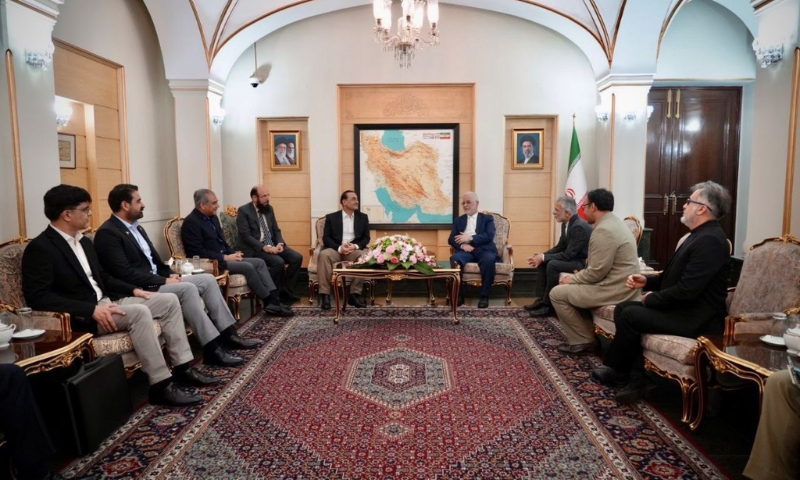
Tehran, August 24, 2026: Chief of Defence Forces (CDF) and Chief of Army Staff (COAS) Field Marshal Syed Asim Munir and Interior Minister Mohsin Naqvi arrived in Tehran on Monday for talks with senior Iranian officials as Pakistan stepped up diplomatic efforts to promote regional peace and seek a lasting resolution to the conflict in the Middle East.
The visit, described by the Inter-Services Public Relations (ISPR) as part of Pakistan’s efforts to promote regional peace and stability, comes amid heightened tensions between Iran and the United States and growing international concern over the continuing disruption of shipping through the Strait of Hormuz.
Iranian media reported that Field Marshal Munir and Naqvi arrived in the Iranian capital and subsequently held a meeting with Iranian Interior Minister Eskandar Momeni. According to Fars news agency, Munir is scheduled to hold discussions with other senior Iranian officials during his visit.
In a statement issued earlier, the ISPR said the CDF’s visit would focus on “promoting efforts towards peaceful, lasting and comprehensive resolution of the conflict in the Middle East”.
Iranian Foreign Ministry spokesperson Esmaeil Baqaei had said on Sunday that Field Marshal Munir was expected to travel to Tehran as part of Pakistan’s diplomatic efforts to strengthen bilateral cooperation and support peace and security in the region.
Baqaei said Munir would lead an official delegation and hold talks with senior Iranian officials during the visit.
Pakistan has increasingly assumed a mediation role between Tehran and Washington as it seeks to prevent the conflict from escalating into a wider regional confrontation. The Shehbaz Sharif government has maintained communication with both sides and previously helped broker a ceasefire between Iran and the United States.
An interim peace agreement reached in June through Islamabad’s diplomatic efforts, however, has since come under strain, with negotiations appearing stalled and tensions rising again.
The latest visit comes against the backdrop of renewed US pressure on Iran. US President Donald Trump last week announced that Washington would intensify economic pressure on Tehran on an “unprecedented scale”, while warning countries against providing any form of economic lifeline to the Islamic Republic.
US officials have described the planned measures as potentially “the toughest sanctions in history” against Iran, with details expected to be announced on Monday.
The sanctions threat has added to pressure on Iran’s already fragile economy, which was facing high inflation, a weakening currency, energy shortages and longstanding international sanctions even before the latest conflict.
The regional crisis began on February 28 when the United States and Israel launched a major wave of strikes against Iran, prompting Iranian retaliation across the region. An April 8 ceasefire brought an end to nearly six weeks of intense fighting, but several major issues remain unresolved.
The Strait of Hormuz has emerged as one of the most critical flashpoints. The strategically important waterway, through which a significant share of global oil and gas supplies passes, has witnessed a severe disruption in shipping. Tehran has linked the reopening of the strait to the lifting of the US naval blockade on Iranian ports, removal of oil sanctions and the unfreezing of Iranian assets held abroad.
Oil shipments through the waterway have consequently fallen sharply, with Iran threatening action against unauthorised tankers attempting to transit the strait. The disruption has raised concerns over global energy supplies and added pressure to international fuel markets.
The conflict has also inflicted substantial human and economic losses. Thousands of people have reportedly been killed, particularly in Iran and Lebanon, while Iranian military capabilities and infrastructure have suffered significant damage. The conflict has also disrupted trade and production and increased the economic burden of reconstruction.
Despite the damage to its conventional military capabilities, Iran retains missile and drone capabilities that could threaten neighbouring Gulf states and shipping in the Strait of Hormuz. The status of Iran’s nuclear programme also remains a major source of concern for the United States and Israel.
Against this increasingly volatile backdrop, Islamabad has sought to maintain its diplomatic engagement with both Tehran and Washington.
Pakistan’s earlier mediation efforts resulted in an interim understanding in June, but the arrangement subsequently faltered amid renewed tensions. Islamabad has continued to convey messages between the two sides in an effort to prevent further escalation.
Field Marshal Munir’s visit to Tehran, accompanied by Interior Minister Naqvi, is therefore being viewed as part of Pakistan’s broader diplomatic initiative to encourage dialogue and contribute to a peaceful and comprehensive settlement of the conflict.
The timing of the visit is particularly significant as Washington prepares to unveil further sanctions against Iran and Tehran faces mounting economic and security pressures. Pakistan’s latest diplomatic engagement could provide another channel for communication at a time when tensions between Iran and the United States remain high and the risk of a wider regional crisis continues to loom.