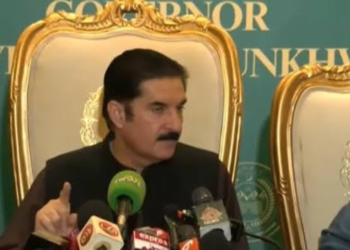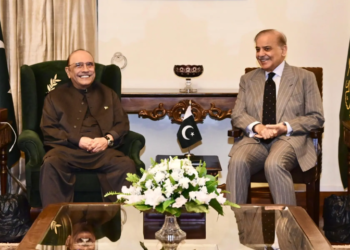
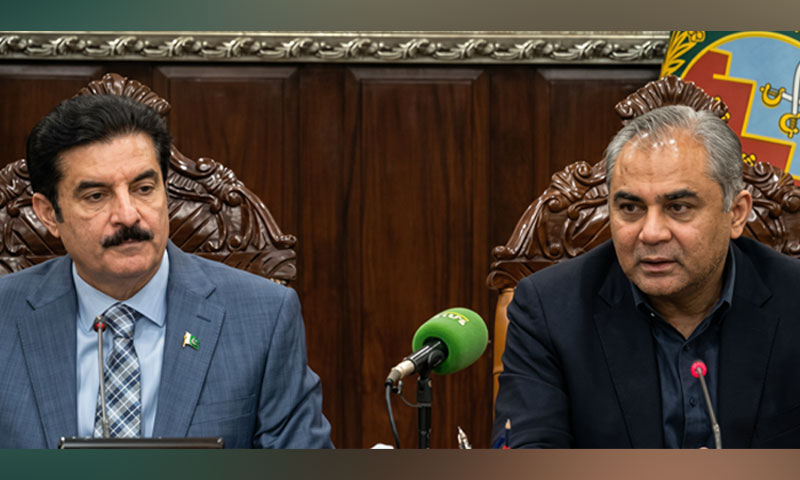
Peshawar, October 12,2026: Khyber Pakhtunkhwa Governor Faisal Karim Kundi and Interior Minister Mohsin Naqvi on Monday co-chaired a meeting of the provincial apex committee, pledging coordinated and result-oriented measures to combat terrorism a day after the federal government imposed governor’s rule and an emergency in the province.
Addressing the meeting, Kundi, who is now overseeing the province’s affairs under the new arrangement, said counterterrorism would be the administration’s top priority.
“We can sacrifice our development, but never security,” he said, pointing to what he described as a lack of coordination in counterterrorism efforts in the province.
Kundi said the new administration would ensure better coordination among relevant institutions and meet the requirements of the Counter-Terrorism Department (CTD) and police. He added that the administration would work around the clock to deliver results and meet the expectations of the federal government and the public.
“We have to show the difference,” he said, stressing that there was no time for holidays or weekends. He called for practical, result-oriented action rather than cosmetic measures.
Highlighting the security challenges facing the province, Kundi said residents of terrorism-affected districts, including Dera Ismail Khan, Tank and Waziristan, faced restrictions on their freedom to live, travel and carry out routine activities.
He stressed the need to restore freedom of movement and ensure peace, prosperity and development for the people of KP. He also expressed hope that the new administration would be remembered for restoring peace and announced that apex committee meetings would be held regularly.
Interior Minister Naqvi, who co-chaired the meeting, said the federal and provincial governments were now aligned in their approach to counterterrorism.
“Today is the first time I can proudly say that the federal and the provincial governments are on the same page,” he said.
Naqvi described the fight against terrorism as a difficult challenge, arguing that counterterrorism efforts had lacked adequate support and leadership at the provincial level.
Criticizing the previous Pakistan Tehreek-e-Insaf (PTI)-led provincial government, he said it had failed to take the lead in the fight against terrorism despite repeated requests for cooperation from the federal government.
He maintained that even substantial resources could not ensure success unless the government took ownership of counterterrorism efforts.
Naqvi said the security forces and personnel remained the same, but improved coordination and government leadership would help produce better results. He cautioned, however, that the situation would not change overnight and that difficult challenges lay ahead.
He called on the governor, police, provincial administration and federal government to work together to defeat terrorism, expressing confidence that coordinated efforts would yield results.
A day earlier, Kundi had chaired the first meeting of the KP Advisory Council, established by the federal government following the imposition of emergency and governor’s rule. He called for accelerating administrative work, ensuring timely decisions and adopting a zero-tolerance policy towards corruption.
He also urged the administration to learn from the experiences of other provinces and demonstrate a clear improvement over the performance of its predecessors.
The developments followed a federal cabinet meeting that reviewed the security situation in PTI-governed KP. According to the federal government, the provincial administration had disengaged from efforts to combat terrorism.
The federal government subsequently imposed an emergency under Article 232 of the Constitution and governor’s rule under Article 234. It also authorized the deployment of Pakistan Army troops and assets in aid of civil power in the province.
Following the announcement, shipping containers were placed at several locations in Peshawar to block roads, while police were deployed in strength.
Federal ministers also accused the PTI-led provincial government of maintaining links with terrorist groups, allegations that have formed part of the wider political dispute over the province’s security policy.
The federal government and PTI have remained at odds over counterterrorism strategy, contributing to the breakdown of their talks on October 3. PTI has maintained that it is being excluded from security-related decisions concerning KP, a claim the federal government has denied.
The party has also called for a review of the counterterrorism policy and opposed military operations, while the Centre has criticized the provincial government’s approach to combating terrorism and its position on dialogue with the Afghan Taliban.