
Islamabad, October 26,2026: The Federation of Pakistan Chambers of Commerce and Industry (FPCCI) has called for the immediate launch of the Islamabad Safe Milk City pilot project and stronger enforcement of milk safety regulations to protect public health, formalize the dairy sector and attract investment.
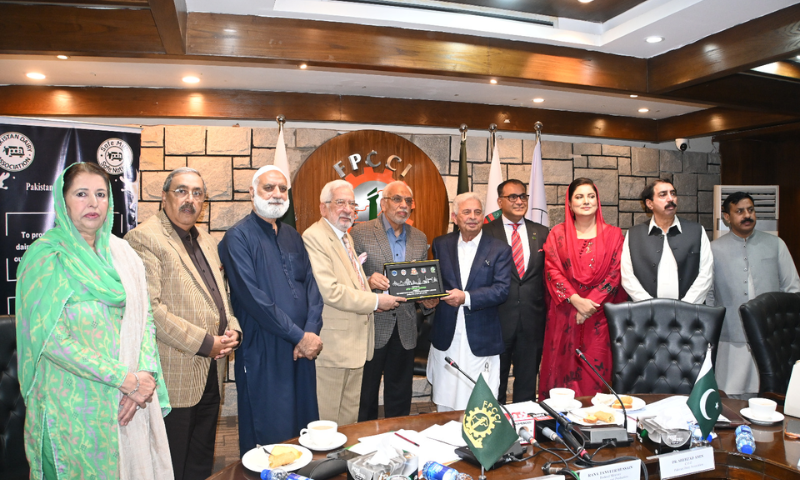
The demand was made at a Dairy Round Table Conference on “Dairy Sector Reforms” held at FPCCI Capital House, Islamabad, under the organisation’s Central Standing Committee on Dairy and Dairy Products. Federal Minister for National Food Security and Research Rana Tanveer Hussain attended as chief guest.
The conference focused on dairy sector reforms, creating a level playing field for the formal industry, ensuring safe milk supplies and addressing challenges to the sector’s growth.
Welcoming participants, FPCCI Capital Office Chairman and In-charge Karim Aziz Malik said dairy was one of the largest and most important sectors of Pakistan’s economy. He said FPCCI provided a platform for industry and government representatives to jointly discuss challenges and develop practical solutions.
He added that a safe, formal and competitive dairy sector could improve farmers’ incomes, protect public health and create new export opportunities for Pakistan.
Addressing the gathering, Rana Tanveer Hussain said safe and nutritious milk was central to national food security and public health. He acknowledged the dairy sector’s importance to the livelihoods of millions of rural families.
Dr. Shehzad Amin, Convener of the FPCCI Central Standing Committee on Dairy and Dairy Products and Chief Operating Officer of the Pakistan Dairy Association (PDA), highlighted the sector’s economic potential and the need for comprehensive reforms.
He said more than eight million rural families depended on livestock, which contributed around 35 to 40 per cent of their household income. Consumers spend approximately Rs8.2 trillion annually on milk, he said, while only Rs372 billion is captured by the formal sector, leaving nearly Rs7.9 trillion within the informal market.
Amin argued that bringing more of the market into the formal economy could unlock significant economic value, improve quality standards and create opportunities for investment.
He said around 95 per cent of Pakistan’s dairy sector operated informally, largely without adequate safety checks, quality controls or traceability. Citing a University of Veterinary and Animal Sciences (UVAS) study, he said 92 per cent of loose milk samples failed to meet quality and safety standards.
He stressed that consumers should have access to safe, tested and nutritious milk, adding that stronger regulation was essential to enable formal dairy businesses to compete fairly.
The conference also highlighted nutrition-related challenges, including childhood stunting, wasting and underweight, as well as vitamin D deficiency among women of reproductive age. Participants discussed the wider economic burden of healthcare costs and the potential role of safe dairy products in improving nutrition.
The Pakistan Dairy Association outlined three key priorities for formalising the sector.
The first was improving farmer welfare through genetic improvement, balanced animal feed, silage for smallholders and preventive animal healthcare services to strengthen productivity and rural livelihoods.
The second was attracting foreign direct investment by formalising the domestic market. Amin said international partners, including those from China, Saudi Arabia and the United Arab Emirates, had shown interest in Pakistan’s dairy industry.
The third priority was export growth through higher milk yields, improved animal performance and modernised processing systems. The conference noted that increased productivity and formalisation could help Pakistan expand beyond its existing dairy export base of approximately $500 million.
Prime Minister’s Coordinator on Agriculture and Food Security Ahmed Umair highlighted the government’s focus on farmer welfare, livestock productivity and food security.
FPCCI Policy Advisory Board Chairman Mian Zahid Hussain, recipient of the Sitara-e-Imtiaz, said consistent policies and a level playing field were essential to attracting investment into the dairy industry.
The conference identified two immediate priorities: strengthening and enforcing milk safety legislation in line with international benchmarks and launching the Islamabad Safe Milk City pilot without further delay.
According to the conference, the PDA has prepared a detailed proposal for the pilot and submitted it to relevant stakeholders.
Islamabad has around 2.4 million residents, consumes approximately 700,000 litres of milk daily and has 3,992 milk operators, the conference was told.
Participants said the pilot could improve access to safe, tested and traceable milk, bring milk operators into the formal economy, reduce milk-borne illnesses and demonstrate the potential for similar initiatives elsewhere in the country.
They also called for clearly defined responsibilities for the Capital Development Authority (CDA) and the Islamabad Food Authority to ensure effective implementation.
It was agreed that a joint working group comprising FPCCI, PDA, CDA and the Islamabad Food Authority would be established under the leadership of Federal Minister Rana Tanveer Hussain to advance the pilot project.
FPCCI will also submit the conference’s recommendations to the federal government for further action.
Participants stressed that delays in implementing reforms continued to carry costs for children, farmers and the country’s healthcare system.
The conference was attended by former FPCCI president Zubair Ahmed Malik, former FPCCI vice president Mian Shaukat Masood, Dr. Afshan Malik, Chairperson of Sindhu Social Welfare Trust, Haji Nasir Mahmood, Group Leader of GTCCI, GTCCI President Malik Mazhar Iqbal, Shameem Aftab, Convener of the FPCCI Standing Committee on Government Liaison, and other representatives.
FPCCI office-bearers, dairy processors, farmer associations and representatives of federal ministries, CDA and the Islamabad Food Authority also participated.
At the conclusion, Karim Aziz Malik presented the FPCCI crest to the chief guest.