Islamabad, June 23, 2025: Pakistan has extended its airspace closure for all Indian-registered and Indian-operated aircraft, including military flights, until 5:00 am (local time) on July 24, the Pakistan Airports Authority announced on Monday.
The extension, issued via a new Notice to Airmen (NOTAM), applies to Indian commercial airlines, private aircraft, and military planes, barring them from entering Pakistani airspace for a third consecutive month. This brings the total duration of the closure to 90 days, following the initial ban imposed on April 24.
The move came in response to India’s unilateral decision on April 23 to block Pakistani aircraft from its airspace amid rising bilateral tensions following the Pahalgam attack in Indian Illegally Occupied Jammu and Kashmir (IIOJK).
Tensions between the nuclear-armed neighbors escalated sharply in early May when India launched airstrikes on multiple Pakistani cities on May 6 and 7. In response, Pakistan’s military launched Operation Bunyan-um-Marsoos, targeting key Indian military assets.
According to Pakistan’s military spokesperson (ISPR), the operation resulted in the downing of six Indian fighter jets, including three Rafales, and several drones. The hostilities ended after 87 hours with a US-brokered ceasefire on May 10.
During the confrontation, 53 Pakistanis, including 13 military personnel and 40 civilians, were martyred in Indian strikes, ISPR reported.
While Pakistan’s aviation operations have seen minimal disruption — with only one eastbound flight rerouted via China — India’s aviation sector has borne the brunt of the closure.
According to industry sources and Reuters, Indian airlines suffered losses exceeding ₹8 billion in April alone. This includes:
- ₹5 billion in additional fuel costs
- ₹3 billion in stopover-related expenses, such as crew changes, landing fees, and refuelling
With approximately 150 daily flights rerouted, Indian carriers using Boeing 777s and Airbus A320-family aircraft have faced detours of up to 4 hours per journey.
At the current average jet fuel price of $0.82 per kilogram, Indian airlines are spending nearly $557,625 daily on additional fuel, translating to more than ₹5 billion in losses in one month from fuel costs alone.
The longer routes have triggered crew duty hour limitations, forcing unscheduled stopovers and operational bottlenecks. Flights from major cities like Delhi, Amritsar, Ahmedabad, Bangalore, and Jaipur to Europe, North America, and the Middle East are now rerouted over the Arabian Sea, further straining resources.
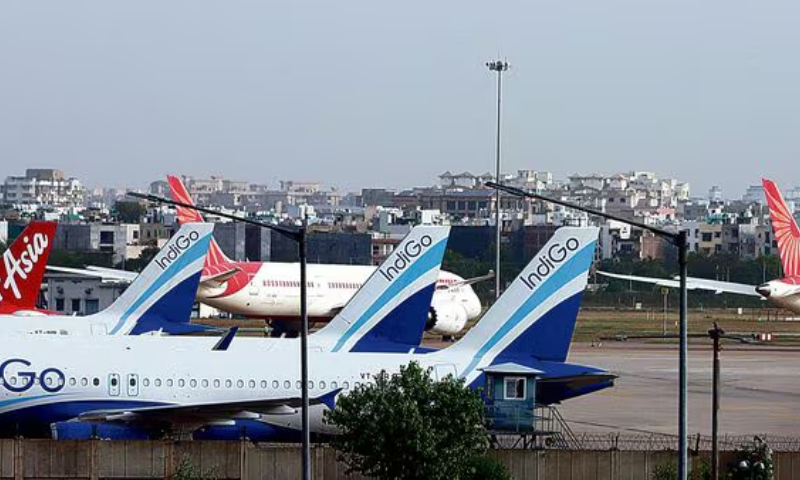
Air India is reportedly the most affected and has sought government assistance to offset the financial impact. Other carriers, including IndiGo, Akasa Air, SpiceJet, and Air India Express, have also reported disruptions.
This is not the first time Pakistan has imposed an airspace ban. Similar restrictions were enforced during the 1999 Kargil conflict and the 2019 Pulwama-Balakot crisis, both of which disproportionately affected Indian aviation.
With no breakthrough in diplomatic efforts and no indication of policy reversal, industry insiders warn that further extensions could cripple Indian long-haul operations. If the Indian government fails to provide relief, some airlines may be forced to scale back or suspend international routes.