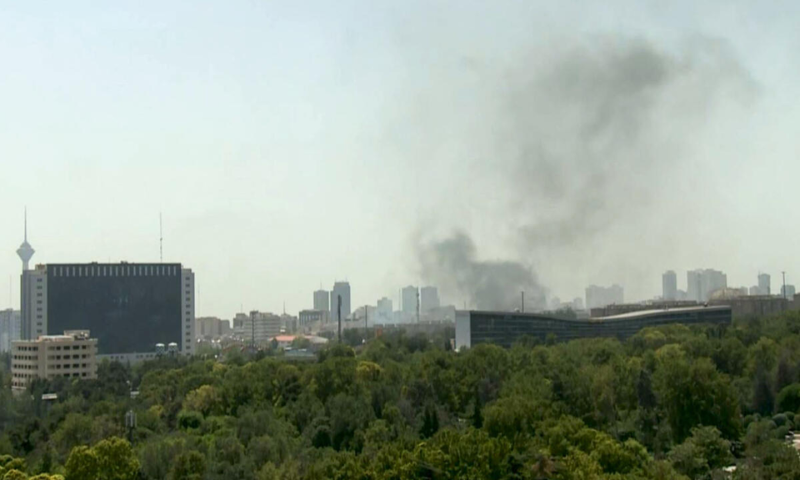
Tehran, June 23, 2025: Iran launched a missile attack on the U.S. military’s Al Udeid Air Base in Qatar on Monday, in what it called a direct retaliation for the American bombing of three Iranian nuclear facilities the day before.
Witnesses in Qatar reported seeing multiple missiles overhead, followed by explosions, though the extent of the damage at the base remains unknown. The Iranian government confirmed the attack via state television, calling it “a mighty and successful response” to “America’s aggression,” with martial music playing in the background.
The strike came shortly after Qatar proactively closed its airspace, citing potential threats from Iran.
Iranian President Masoud Pezeshkian defended the move, writing on social media platform X: “We neither initiated the war nor are seeking it. But we will not leave invasion to the great Iran without answer.”
Al Udeid Air Base, a major hub for U.S. Central Command in the region, has been previously threatened by Iran. The base is located in Qatar, a Gulf country that shares a gas field with Iran and maintains diplomatic ties with Tehran.
The Iranian missile strike on U.S. assets followed a dramatic escalation in Israel’s campaign against Iran. Earlier Monday, Israel expanded its operations to symbolic targets within Tehran, striking Evin Prison — known for detaining political activists and foreign nationals — and the headquarters of Iran’s security forces.
Plumes of smoke rose over Tehran as Iranian air defenses responded to Israeli missiles and drones. Meanwhile, Israel was hit by a renewed wave of Iranian rockets and UAVs, part of what Iran dubbed Operation True Promise 3. Explosions were also heard in Haifa, Tel Aviv, and Jerusalem.
On the 11th day of open conflict, former U.S. President Donald Trump stoked further tension, hinting at possible regime change in Tehran. “If the current Iranian Regime is unable to MAKE IRAN GREAT AGAIN, why wouldn’t there be a Regime change???” he posted on his Truth Social platform.
White House Press Secretary Karoline Leavitt attempted to clarify that Trump was “simply raising a question,” but the comment drew condemnation from Iran, which announced it would not enter negotiations and threatened further retaliation against U.S. troops and interests in the region.
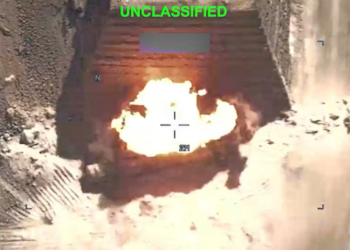
The Iranian strike came in response to a bold U.S. operation on Sunday, when stealth bombers hit three major nuclear sites in Iran: Fordo, Natanz, and Isfahan. The Pentagon said the strikes were a “one-time operation” aimed at neutralizing Iran’s weapons-grade uranium enrichment capability.
According to the U.N. nuclear watchdog IAEA, Iran had been warned that any undeclared movement of nuclear material would violate safeguards. Tehran later claimed it had relocated key materials before the U.S. strikes — a claim that remains unverified.
Israeli forces confirmed targeting roads around Fordo to limit access, while also attacking Evin Prison’s front gate. Iran released surveillance footage showing prisoners in control, but human rights groups expressed concern for detainees’ safety.
The Washington-based Abdorrahman Boroumand Center noted it had received alarming reports from families of political prisoners. Evin Prison, which houses dissidents and dual nationals, has long been targeted by U.S. and EU sanctions.
The Israeli Defense Ministry said it would continue striking “military and regime repression targets” around Tehran. So far, at least 24 Israelis have died in the conflict, with more than 1,000 wounded.
According to the Human Rights Activists in Iran (HRAI), Israeli strikes have killed at least 950 Iranians, including 380 civilians and 253 members of security forces, and injured over 3,400. The group has tracked reliable casualty data during past uprisings in Iran, including the 2022 protests after the death of Mahsa Amini.
Iranian General Abdolrahim Mousavi warned that the American attack gave Iran “a free hand to act against U.S. interests and its army.” With tens of thousands of U.S. troops spread across the region, including in Iraq, Syria, Bahrain, and the UAE, the risk of further escalation remains high.
In Moscow, Russian President Vladimir Putin condemned both Israeli and U.S. actions as “absolutely unprovoked aggression” after meeting Iranian Foreign Minister Abbas Araghchi. The two reportedly discussed options to de-escalate the conflict.
Meanwhile, Rafael Grossi of the International Atomic Energy Agency (IAEA) said that Iran had signaled its intent to protect its nuclear assets but warned that any undeclared movement of material was in breach of global nuclear agreements.
The United States maintains its strikes were limited, but the region is bracing for more fallout. Iran’s latest attack on a U.S. base marks a dangerous new phase in a war that began with Israel’s campaign against Iran’s nuclear ambitions — and may now spiral into a direct U.S.-Iran confrontation.
Despite rhetoric on all sides, no diplomatic breakthrough appears in sight, and with every new missile strike, the risk of all-out war in the Middle East increases.