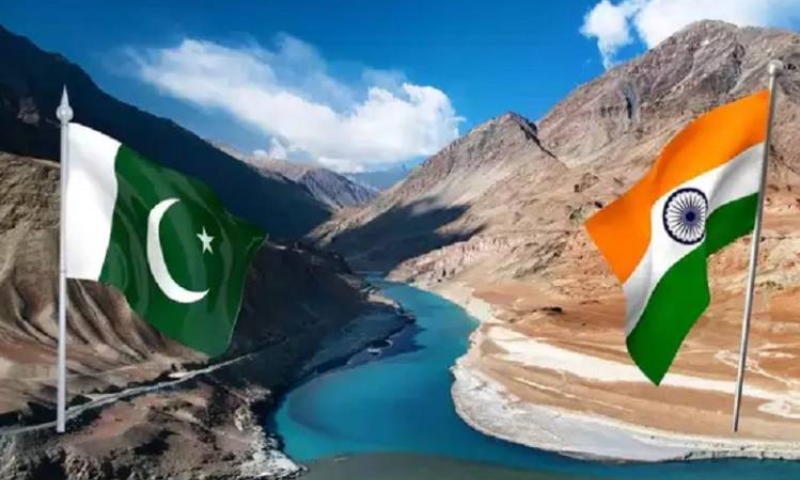
Islamabad, June 28, 2025: In a significant development, the Permanent Court of Arbitration (PCA) in The Hague ruled on Friday that it retains jurisdiction over Pakistan’s case against India under the Indus Waters Treaty (IWT), despite India’s unilateral decision to place the treaty “in abeyance.”
In its Supplemental Award, the court rejected India’s stance that its suspension of the 1960 World Bank-brokered treaty affects the court’s competence. The PCA reaffirmed that unilateral actions cannot invalidate ongoing legal proceedings, emphasizing that jurisdiction remains intact once a case is properly initiated.
“There must be a strong presumption against the incidental loss of jurisdiction over the matters placed before it by subsequent acts,” the ruling stated, referencing India’s attempt to bypass arbitration by appointing a neutral expert.
The court also clarified that “neither party acting unilaterally” may suspend dispute resolution processes under the treaty, which governs water-sharing between the South Asian neighbors. It concluded that the legal interpretation and application of hydroelectric project design and operation under the treaty remains squarely within its authority.
The Indus Waters Treaty allocates the western rivers — Indus, Jhelum, and Chenab — to Pakistan, while granting India control over the eastern rivers — Ravi, Beas, and Sutlej. Though India is allowed limited non-consumptive use of the western rivers, Pakistan has repeatedly raised objections over Indian hydropower projects that it says threaten its irrigation-based agriculture, which relies on these rivers for over 80% of its farm water.
India’s move to suspend the treaty came after the April 22 attack in Indian-administered Kashmir — an incident New Delhi blamed on Pakistan, triggering a brief four-day military conflict in May. Islamabad has categorically denied involvement and criticized India’s unilateral withdrawal from treaty obligations as illegitimate and escalatory.
Responding to the court’s decision, the Government of Pakistan welcomed the ruling as a validation of its legal and diplomatic position.
“Pakistan welcomes the Supplemental Award by the Court of Arbitration in the Indus Waters matter,” the Foreign Office said in a post on X.
“The Court has affirmed its competence, and that unilateral action by India cannot deprive either the Court or the Neutral Expert of their jurisdiction.”
Prime Minister Shehbaz Sharif also commended the ruling, calling it a landmark decision that reinforces Pakistan’s right to seek redress through international mechanisms.
“The judicial ruling strengthens Pakistan’s stance, asserting that India has no authority to suspend the agreement unilaterally,” the Prime Minister’s Office said in a statement on Saturday.
Shehbaz described water as the country’s lifeline and stressed the importance of protecting Pakistan’s rights under the treaty. He also praised Law Minister Azam Nazeer Tarar and Attorney General Mansoor Awan for their legal efforts in the arbitration case.
The prime minister reiterated Pakistan’s commitment to peaceful resolution of disputes and called for resuming meaningful dialogue with India on all outstanding issues, including Kashmir, water, trade, and terrorism.