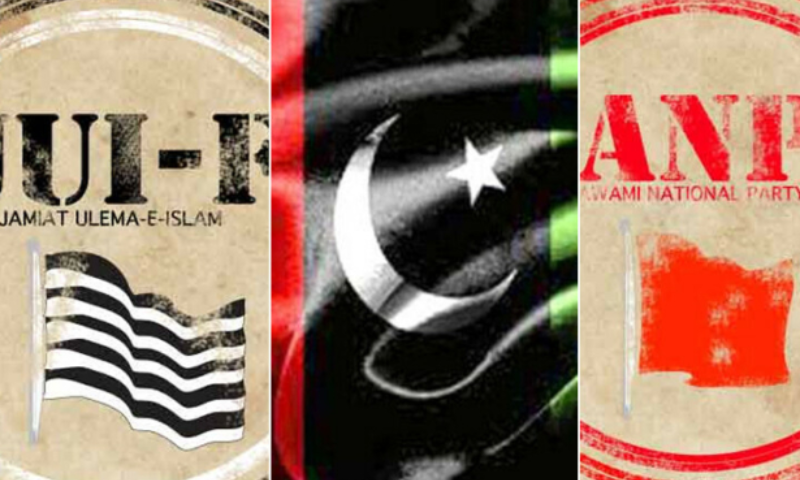
Peshawar, July 23, 2025: Three major opposition parties in Khyber Pakhtunkhwa — the Pakistan People’s Party (PPP), Awami National Party (ANP), and Jamiat Ulema-e-Islam-Fazl (JUI-F) — have announced a boycott of the All-Parties Conference (APC) called by the provincial government to address the deteriorating law and order situation in the province.
According to media reports, the opposition parties have rejected the KP government’s invitation, citing a lack of seriousness and credibility.
PPP provincial president Muhammad Ali Shah Bacha dismissed the APC as a “show-off,” accusing the government of being insincere in resolving public issues. “If the government had been serious, previous discussions on law and order and other crises would have produced results,” Bacha said. He added that the government should focus on governance rather than sit-ins and political protests. The PPP, he confirmed, will not attend the APC scheduled for July 24.
ANP’s provincial president Mian Iftikhar Hussain echoed similar sentiments, saying there was no point in attending the conference when decisions had already been made unilaterally by the ruling party. “If the PTI had convened the APC as a political party instead of the government, we would have considered participating,” he stated.
JUI-F also confirmed its boycott, aligning with the stance of the other two parties, although it issued no separate public statement.
In response, Chief Minister Ali Amin Gandapur defended the move to convene the APC, emphasizing that the aim was to foster consensus on restoring peace. “Those who refuse to attend this conference are clearly indifferent to the suffering of the people,” he remarked.
The KP government had scheduled the APC for July 24 and extended invitations to all political stakeholders in a bid to formulate a joint strategy amid rising incidents of violence and militancy across the province. However, the opposition’s collective boycott has raised concerns over the credibility and effectiveness of the conference.
The growing political divide comes at a time when KP faces mounting security challenges, making consensus-building efforts more critical than ever.