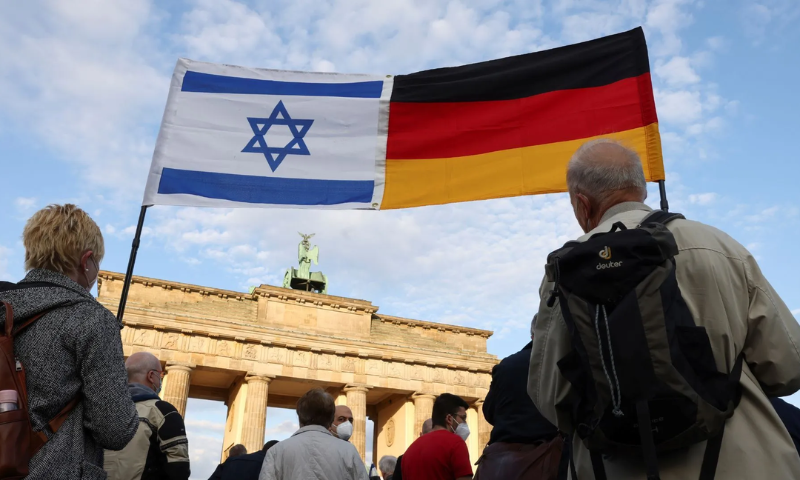
Berlin/Gaza, July 31, 2025: In a significant policy shift, Germany has warned it will respond to any unilateral Israeli actions in Palestinian territories, including threats of annexation, as pressure mounts on Western governments to adopt a firmer stance amid the escalating humanitarian crisis in Gaza.
German Foreign Minister Johann Wadephul, ahead of his visit to Israel and the Palestinian territories, said Berlin remains committed to a negotiated two-state solution, but signaled that Germany could reconsider its position if Israel proceeds with unilateral steps.
“In light of open annexation threats from parts of the Israeli government, a growing number of countries, including many in Europe, are now prepared to recognise a Palestinian state even without a prior negotiation process,” Wadephul stated.
“The region and the Middle East peace process are at a crossroads. That process must begin now. Should unilateral steps be taken, Germany too will be compelled to respond.”
His remarks come at a time of increasing alarm over conditions in Gaza, where the death toll from nearly two years of war between Israel and Hamas has surpassed 60,000, according to local health authorities. Starvation and malnutrition have become widespread, with disturbing images of emaciated children drawing global outrage and intensifying scrutiny of Israeli restrictions on humanitarian aid.
Wadephul’s statement marks Germany’s strongest warning yet to Israel. It also follows recent signals from Britain, Canada, and France, which have expressed readiness to recognise a Palestinian state during the upcoming UN General Assembly session in September, even without a negotiated settlement.
Despite this, critics argue that Germany’s overall approach remains cautious, shaped by its historical responsibility stemming from the Holocaust and further reinforced by the pro-Israel stance of its powerful media industry.
Germany’s enduring principle of “Staatsraison” — the notion that support for Israel is a core national interest — has long informed its foreign policy. However, domestic sentiment appears to be shifting. A June 4 poll showed 63% of Germans believe Israel’s military campaign in Gaza has gone too far, prompting a recalibration in Berlin’s tone.
Chancellor Friedrich Merz, historically a staunch ally of Israel, acknowledged this change earlier this week, saying the EU may now consider suspending bilateral agreements with Israel in response to the “catastrophic” humanitarian situation in Gaza.
Meanwhile, the European Commission has recommended limiting Israel’s access to Horizon Europe, the bloc’s flagship research funding programme. However, the proposal faces resistance, with Germany’s support still uncertain, blocking consensus.
Adding to the controversy is the role of Germany’s largest media group, Axel Springer, which owns Bild, Welt, and Politico Europe. The company mandates a pro-Israel editorial policy as part of its corporate values. Bild, for instance, ran multiple stories on Thursday criticizing what it called a “hunger campaign” against Israel and praising Germany for resisting international pressure to condemn Tel Aviv more forcefully.
Israeli Prime Minister Benjamin Netanyahu’s coalition, which includes far-right parties, has recently reiterated calls for annexation of the occupied West Bank and the re-establishment of Jewish settlements in Gaza, further inflaming tensions and drawing criticism from human rights groups and foreign governments alike.
As Wadephul embarks on his fact-finding mission, the spotlight is now on Germany’s next steps — and whether its historical ties to Israel will continue to temper its foreign policy, or if growing domestic and international pressure will push Berlin toward a more assertive stance.