Washington/New Delhi, September 20, 2025: U.S. President Donald Trump on Friday ordered a $100,000 annual fee on H-1B skilled worker visas, a move set to rattle the technology industry and draw concern from India, the largest source of recipients.
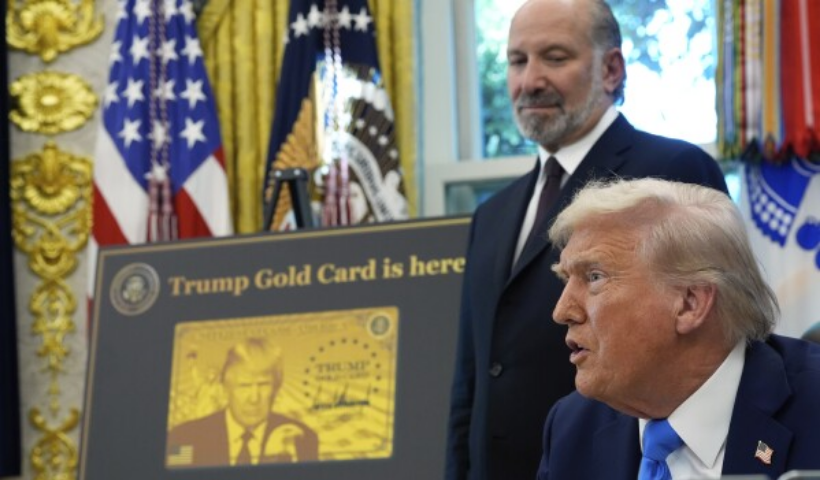
Announced alongside a new $1 million “gold card” residency programme, the order takes effect Sunday and is expected to face legal challenges. “The main thing is, we’re going to have great people coming in, and they’re going to be paying,” Trump said as he signed the orders in the Oval Office.
H-1B visas allow American companies to hire foreign professionals in specialised fields such as IT, engineering, and science. The U.S. issues 85,000 such visas annually through a lottery system, with Indian nationals accounting for roughly three-quarters of recipients. Tech giants and startups alike rely heavily on Indian talent, many of whom either relocate to the U.S. or work across both countries.
Commerce Secretary Howard Lutnick defended the move, saying, “All the big companies are on board.” However, critics — including Trump’s onetime ally Elon Musk — warned the crackdown would worsen the shortage of skilled workers in America’s tech sector.
India reacted sharply, with the foreign ministry warning of humanitarian consequences, including disruptions for families of H-1B workers. Industry body Nasscom also voiced concern, calling the sudden rollout of such a steep fee “highly disruptive” and urging a proper transition period.
“A one-day deadline creates considerable uncertainty for businesses, professionals, and students across the world,” Nasscom said in a statement.
Trump has targeted the H-1B programme since his first term, though earlier efforts to restrict qualifying jobs faced court setbacks. The new fee will initially apply for one year but can be extended. Homeland Security will retain discretion to exempt individuals, companies, or industries.
The U.S. approved around 400,000 H-1B visas in 2024, two-thirds of which were renewals, while peak rejections were recorded in 2018 during Trump’s first term. The steep hike now risks reshaping migration flows at a time when Indian workers dominate the U.S. tech visa landscape.