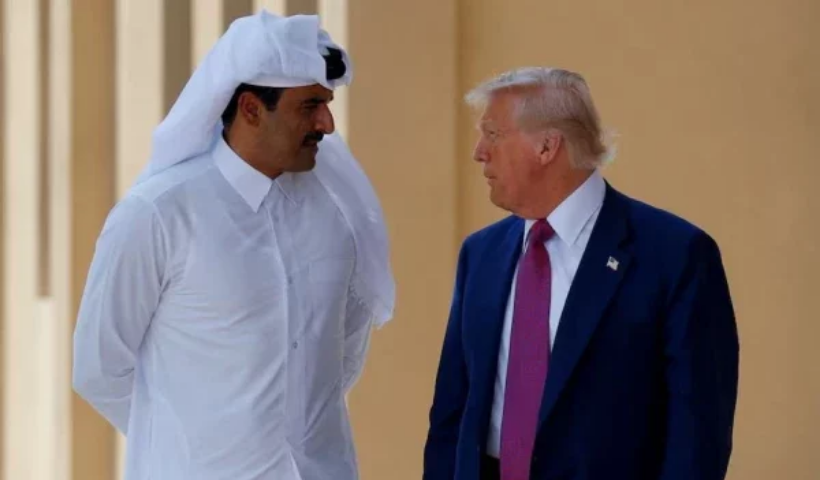
Washington, October 3, 2025: Qatar’s Emir Sheikh Tamim bin Hamad Al Thani held an emergency telephone call with U.S. President Donald Trump over the fragile Gaza ceasefire plan, officials confirmed on Thursday, after Hamas signaled unwillingness to disarm.
White House spokesperson Karoline Leavitt described the conversation as of a “sensitive nature” and declined to share details but expressed hope that Hamas would eventually back Trump’s proposal. “The President is committed to securing a lasting peace in Gaza. Although the talks are confidential, he is looking for Hamas to consider carefully the offer,” Leavitt said, adding that Trump would soon issue a deadline for Hamas to respond.
The update comes days after Trump gave Hamas three to four days to deliver its official reply. British media have suggested the group is likely to reject the plan, while French outlets reported internal divisions: one Hamas faction has flatly refused to disarm, while another has shown openness to examining the proposal.
Egyptian Foreign Minister Badr Abdelatty, speaking in Cairo, said Egypt, Qatar, and Turkey were working jointly to persuade Hamas. “The proposal has defects that should be discussed, but Egypt will never support measures leading to the forced deportation of Palestinians,” he warned.
Analysts say Qatar’s mediation underscores its rising role as a key regional interlocutor between Washington and Hamas, with Doha hosting multiple rounds of unofficial talks.
Trump has described his Gaza peace plan as a “historic opportunity” to end decades of conflict. However, critics argue the proposal leaves unanswered questions about Hamas’s political future, Israeli settlements, and Palestinian sovereignty.
With a U.S. deadline looming, international pressure is mounting. European diplomats have urged restraint, while aid agencies warn that failure to secure an agreement could further deepen Gaza’s humanitarian crisis.
The fate of the ceasefire plan now hinges on whether Washington and its regional allies can bridge Hamas’s internal divisions and address its longstanding concerns over disarmament and political recognition.