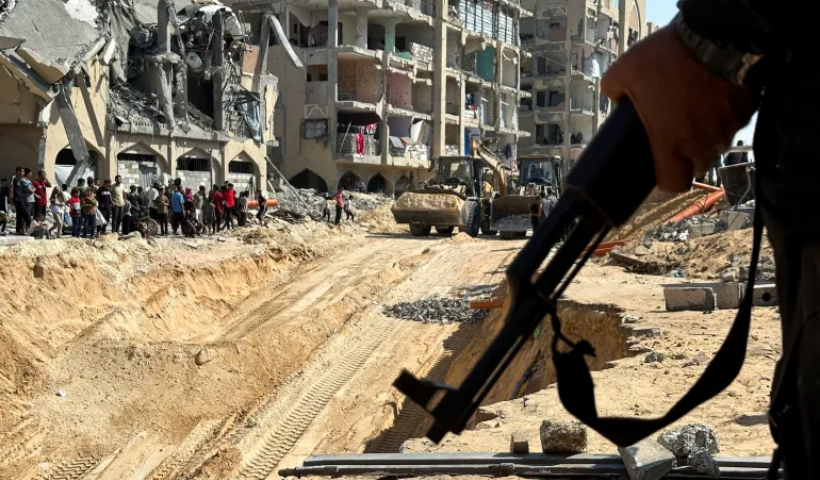
Rafah/Jerusalem/Washington, October 19, 2025: Israeli forces launched air strikes in southern Rafah on Sunday after the Israel Defense Forces (IDF) said militants fired an anti-tank missile and gunfire at troops operating in the area — actions the army called “a blatant violation of the ceasefire agreement.”
The IDF said its strikes targeted tunnel shafts and military structures used for “terrorist activity” and that the response was intended to “eliminate the threat.” The military posted that it would “respond firmly.” Hamas’s military wing, the al-Qassam Brigades, denied knowledge of any clashes in Rafah and said it had lost contact with groups in the area since fighting resumed in March.
The incident comes amid a fragile ceasefire that went into effect on October 10 under a U.S.-led plan aimed at ending more than two years of open warfare between Israel and Hamas. Washington said on Sunday it had credible reports that Hamas was reportedly planning an “imminent” attack on civilians in Gaza — a claim the group strongly denied — and warned any such attack would be a “direct and grave” violation of the truce. The State Department said it had notified other guarantors of the deal, including Egypt, Qatar and Turkiye.
Israeli Prime Minister Benjamin Netanyahu met senior defence officials and instructed them to act forcefully against “terrorist targets in the Gaza Strip,” his office said. Israeli statements additionally warned that crossings and other arrangements under the ceasefire could be affected if violations continued. International monitors and mediators have repeatedly warned that the ceasefire remains fragile.
The broader context to the fragile truce is the campaign that began after the 7 October 2023 attack on southern Israel, which Israeli authorities say killed about 1,200 people and saw 251 taken hostage. The ensuing Israeli military campaign in Gaza and the humanitarian fallout have left tens of thousands dead and the enclave severely damaged, figures that continue to be a subject of intense international scrutiny and urgently disputed claims.
Hamas has accused Israel of empowering rival gangs and militias inside Gaza — allegations Israel denies — and the territory is reported to be riven by clashes between Hamas security forces and armed groups such as the Dughmush family’s faction and others. Local sources say Hamas has recalled thousands of its security personnel in recent days to try to reassert control. Without a robust international security presence, analysts warn, infighting among Palestinian factions could worsen and further undermine the ceasefire.
The U.S. response has been stern: senior U.S. officials said they would take measures to protect civilians and preserve the integrity of the ceasefire if credible evidence emerged that Hamas or other groups were planning attacks. President Donald Trump has publicly warned Hamas against renewed violence, saying earlier this month that any deliberate attacks on civilians would be met with force — though he later clarified the U.S. would not send ground troops into Gaza.
Humanitarian agencies and U.N. officials warn that any resumption of large-scale hostilities would have grave consequences for civilians in Gaza, where aid deliveries and reconstruction efforts are only beginning to resume under the truce terms. The latest strikes in Rafah underline how quickly the current ceasefire could unravel unless guarantors and local actors move swiftly to verify and defuse alleged violations.
International responses from the ceasefire guarantors (Egypt, Qatar, Turkiye and the U.S.), any verification of the IDF’s allegations, and whether the reported follow-up measures — including restrictions on border crossings or renewed military operations — are triggered in the coming hours or days.