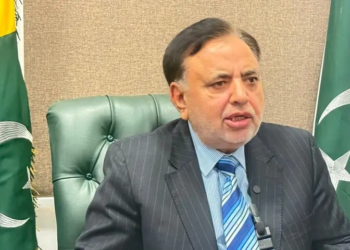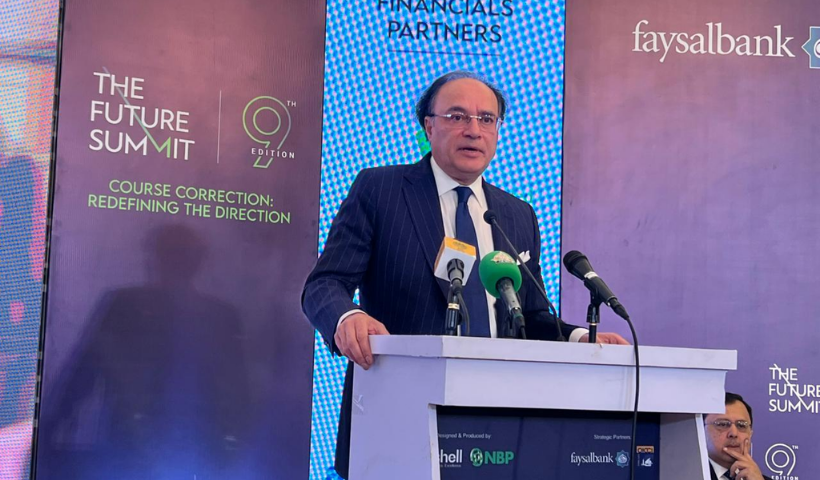
Karachi, November 5, 2025: Finance Minister Muhammad Aurangzeb on Wednesday described Pakistan’s rapidly growing population and climate change as “existential issues” that must be urgently addressed if the country is to achieve its true potential.
Speaking at a gathering of business leaders in Karachi, the finance minister said Pakistan’s challenges went far beyond short-term economic concerns, stressing that “we cannot realise the potential of this country unless we address two existential issues, population and climate change.”
According to the World Bank, Pakistan’s population stands at over 251 million, with an annual growth rate of 1.5 percent in 2024. The government’s 2023 census showed a jump from 207.7 million in 2017 to 241.5 million in 2023, representing a 2.55 percent growth rate.
Aurangzeb emphasised that while Pakistan contributes less than one percent to global carbon emissions, the country must demonstrate genuine adaptation measures rather than merely stating its low emissions record. “We have funding. First utilise the funding we have,” he added, responding to a question from the media.
The minister linked population growth not just to numbers but also to human development challenges. “Population is not only about high-level numbers — it’s about child stunting, learning poverty, and girls out of school,” he said, calling for stronger coordination between the federation and provinces to tackle these issues.
Aurangzeb underlined that while economic challenges were immediate and could be resolved in the coming years, population and climate change were “existential and now urgent enough to address — now.”
Last month, lawmakers from across Pakistan urged the government to declare rapid population growth a national emergency and to integrate population welfare goals into all policy and development frameworks. The Council of Islamic Ideology has also endorsed birth spacing, recommending the involvement of religious leaders in spreading awareness about its permissibility.
Addressing another question, the finance minister said the government was “very clear” on moving towards deregulation of wheat and sugar markets.
“My view — and that of the prime minister and the cabinet — is very clear: the government should opt out of whatever matters it can,” Aurangzeb said, adding that wheat, being a staple food, may retain a strategic reserve component but should otherwise be deregulated.
He confirmed that both wheat and sugar deregulation policies were in progress. Last month, the government unveiled the ‘Wheat Policy 2025–26: Transitioning to a Market-Based System’, which sets a minimum support price to help flood-affected farmers.
“Deregulation has to be end-to-end,” Aurangzeb stressed. “It cannot happen that we deregulate a certain element in the value chain but maintain control over another. The government has to get out of the entire value chain — that’s where we are headed.”
Commenting on agricultural exports, the finance minister acknowledged losses in rice exports this year due to flood damage in Punjab but noted that agricultural exports were still hovering between $3–4 billion.