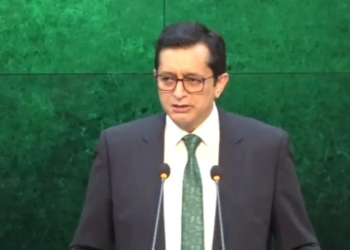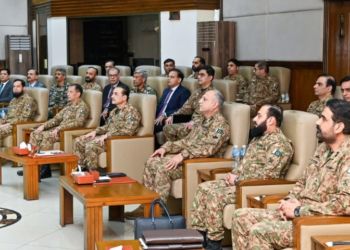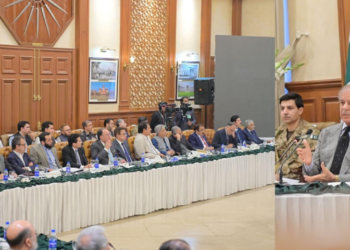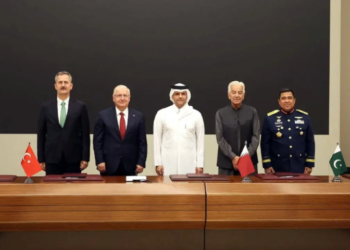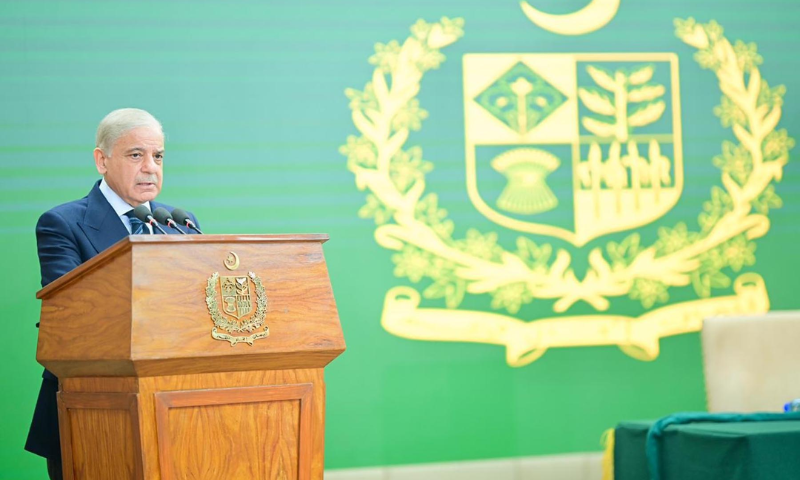
Islamabad, January 20, 2026: Prime Minister Muhammad Shehbaz Sharif on Tuesday paid tribute to the sacrifices of the people of Khyber Pakhtunkhwa (KP), law enforcement agencies, armed forces, doctors, engineers, students, and civilians in the fight against terrorism, noting that their sacrifices paved the way for the elimination of terrorism by 2018.
Addressing participants at the KP National Workshop, the Prime Minister recalled that nearly 100,000 Pakistanis, including soldiers, police, Rangers, and innocent civilians, lost their lives combating terrorism. He highlighted the 2014 APS Peshawar tragedy as a defining moment, after which the political leadership and armed forces, under former Prime Minister Nawaz Sharif, resolved that no distinction would be made between “good” and “bad” Taliban.
However, Prime Minister Shehbaz Sharif expressed concern over decisions taken after 2018, such as the release of hardened militants and the return of thousands from Afghanistan, which he said contributed to a resurgence of terrorism. He warned that terrorism remains a serious threat to Pakistan’s peace and development, particularly in KP, where security personnel continue to risk their lives daily. He strongly condemned attempts on social media to malign martyrs and propagate narratives aligned with Pakistan’s enemies, asserting, “This nation will not rest until terrorism and its facilitators, inside or outside Pakistan, are completely eliminated.”
The Prime Minister highlighted federal support to provinces, citing the 2010 NFC Award, under which KP received one percent of the divisible pool in recognition of its sacrifices, amounting to approximately Rs800 billion over 15 years for capacity building and counter-terrorism. He also noted increased allocations for Balochistan and voluntary contributions from Punjab.
Announcing major development initiatives, Shehbaz Sharif revealed that Rs400 billion has been allocated for the 850-kilometre “bloody road” project from Karachi to Chaman in Balochistan, without requiring any provincial contribution. He also highlighted solarization projects in Balochistan, expansion of Danish schools in Azad Jammu and Kashmir and Gilgit-Baltistan, merit-based laptop schemes, education endowment funds, and training for 1,000 agriculture graduates in top Chinese universities.
On foreign relations, the Prime Minister reiterated Pakistan’s desire for peaceful and brotherly ties with Afghanistan, praising Pakistan’s decades-long hospitality toward Afghan refugees. However, he expressed concern over Afghan governments’ failure to curb terrorist activities from Afghan soil, saying Pakistan had no choice but to take firm measures to protect its citizens.
Responding to questions, Shehbaz Sharif rejected claims of confrontation between the federal and KP governments, stating that he remains fully committed to the province’s development. He also announced the revival of the Prime Minister Health Card programme, providing free medical treatment worth Rs40 billion in Islamabad, AJK, and Gilgit-Baltistan.
The Prime Minister approved the establishment of a dedicated disability complex for victims of terrorism, following an emotional appeal from a survivor of a terrorist attack.
Concluding his address, Prime Minister Shehbaz Sharif reaffirmed Pakistan’s determination to defeat terrorism, strengthen the economy, and progress through hard work, integrity, and teamwork. “InshaAllah, the day is not far when Pakistan will reclaim its rightful place among the respected nations of the world,” he said.