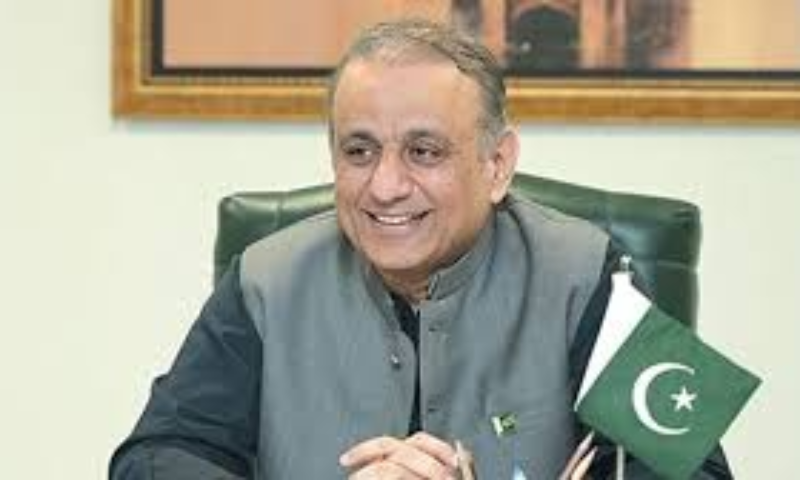
Islamabad, January 29, 2026: The 21st meeting of the National Assembly Standing Committee on Federal Education and Professional Training was held on Thursday at the Federal Urdu University of Arts, Sciences and Technology, Islamabad, under the acting chairmanship of Mr. Abdul Aleem Khan, MNA.
The committee deferred consideration of the Private Members’ Bills presented during the meeting. However, it recommended the government bill titled “The Islamabad Capital Territory Private Educational Institutions (Registration and Regulation) Amendment Bill, 2026,” aimed at ensuring 33 per cent women representation in all federal boards, statutory bodies, public sector organizations and allied committees under the Federal Government.
The committee directed the Ministry of Federal Education and Professional Training to formulate a comprehensive strategy to address operational challenges faced by the Private Educational Institutions Regulatory Authority (PEIRA). The strategy, the committee said, should include effective regulation of fee structures in private institutions and concrete measures to enhance PEIRA’s institutional capacity to perform its mandated functions efficiently.
Expressing serious concern over the occupation of buildings belonging to the Directorate General of Special Education (DGSE), the committee called for the immediate vacation of these premises by the occupying entities. It stressed that the buildings must be restored to their original purpose and used exclusively for the welfare and education of children with disabilities.
The committee was informed that out of 25.3 million out-of-school children aged 5–16 across Pakistan, including 89,127 in the Islamabad Capital Territory (ICT), the Ministry launched a Non-Formal Education (NFE) initiative in 2023. Implemented through partners such as NCHD, BECS and NGOs, the initiative has so far enrolled 71,005 students in ICT through community schools and Accelerated Learning Programme centres. These centres target marginalized groups using local spaces and teachers.
The programme operates under a policy framework aligned with SDG-4 and Article 25-A, emphasizing inclusive access, data-driven planning and community engagement. It is funded through federal allocations, community contributions and public-private partnerships, and supported by a coordination cell for quality assurance, teacher training, standardized assessment and a comprehensive monitoring mechanism, resulting in improved access, enhanced teacher capacity and successful mainstreaming of learners into formal education.
Briefing the committee, the National Vocational and Technical Training Commission (NAVTTC) stated that against a sanctioned strength of 332 posts, 245 are currently filled, while 85 posts remain vacant. The committee observed that prolonged deputations often create perceptions of favoritism and preferential treatment, negatively impacting morale and organizational efficiency.
The committee was further informed that, following recommendations regarding the regularization of employees, a summary was submitted to the Federal Cabinet. Subsequently, the Establishment Division constituted a high-level committee to examine cases related to the regularization of daily wagers, contract employees and contingent staff. The committee was told that the report of the high-level body is still awaited.
The meeting was attended by MNAs Syeda Amnah Batool, Zulfiqar Ali Bhatti, Syed Sami Ul Hasan Gilani, Zeb Jaffar, Farah Naz Akbar (Parliamentary Secretary), Dr. Shazia Sobia Aslam Soomro, Mussarat Rafique Mahesar, Sabheen Ghoury and Wajiha Qamar (Minister of State), along with officials from the Ministry of Federal Education and Professional Training, Higher Education Commission (HEC) and other concerned departments.