By Shah Khalid Khan
New York, February 3, 2026: A coalition of immigrant rights organizations, legal advocacy groups, and affected U.S. citizens filed a federal lawsuit on Monday challenging the Trump administration’s indefinite suspension of immigrant visa issuances to nationals of 75 countries.
The complaint, filed in the U.S. District Court for the Southern District of New York, names Secretary of State Marco Rubio and the U.S. Department of State as defendants. It seeks an injunction to immediately block the policy, arguing that the suspension constitutes an unlawful nationality-based ban on legal immigration and imposes discriminatory public charge rules that violate decades of established immigration law.
The lawsuit was brought by the National Immigration Law Center (NILC), Democracy Forward, The Legal Aid Society, the Western Center on Law & Poverty, the Center for Constitutional Rights, and Colombo & Hurd, on behalf of plaintiffs including Catholic Legal Immigration Network, Inc. (CLINIC), African Communities Together, working professionals seeking employment-based visas, and U.S. citizens separated from family members due to the policy.
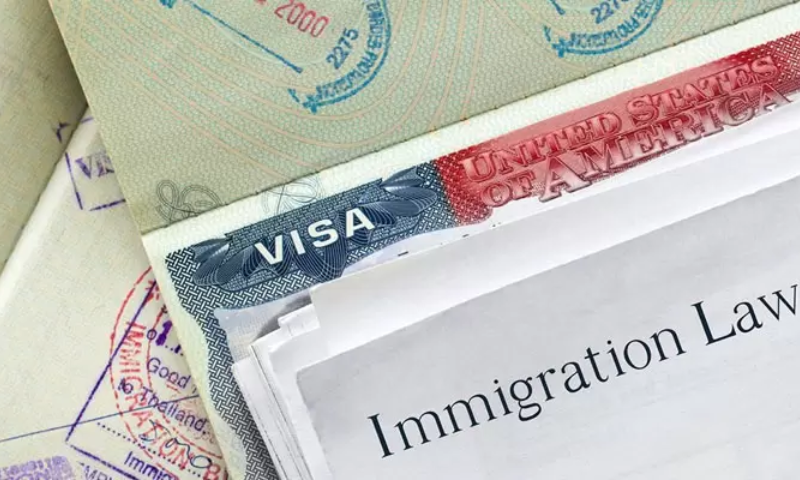
The Department of State announced the pause on January 14, 2026, effective January 21, 2026, citing a review of screening and vetting policies to prevent immigrants from “high-risk” countries from becoming a public charge or relying on U.S. public benefits at unacceptable rates. The policy applies only to immigrant visas (leading to permanent residency or green cards), including family-sponsored, employment-based, diversity, and other categories. Nonimmigrant visas, such as tourist, business, or student visas, remain unaffected.
The affected countries, as listed on the State Department’s website, include Afghanistan, Albania, Algeria, Antigua and Barbuda, Armenia, Azerbaijan, Bahamas, Bangladesh, Barbados, Belarus, Belize, Bhutan, Bosnia and Herzegovina, Brazil, Burma, Cambodia, Cameroon, Cape Verde, Colombia, Cote d’Ivoire, Cuba, Democratic Republic of the Congo, Dominica, Egypt, Eritrea, Ethiopia, Fiji, The Gambia, Georgia, Ghana, Grenada, Guatemala, Guinea, Haiti, Iran, Iraq, Jamaica, Jordan, Kazakhstan, Kosovo, Kuwait, Kyrgyz Republic, Laos, Lebanon, Liberia, Libya, Moldova, Mongolia, Montenegro, Morocco, Nepal, Nicaragua, Nigeria, North Macedonia, Pakistan, Republic of the Congo, Russia, Rwanda, Saint Kitts and Nevis, Saint Lucia, Saint Vincent and the Grenadines, Senegal, Sierra Leone, Somalia, South Sudan, Sudan, Syria, Tanzania, Thailand, Togo, Tunisia, Uganda, Uruguay, Uzbekistan, and Yemen.
Plaintiffs argue that the blanket suspension eviscerates individualized assessments required under the Immigration and Nationality Act, discriminates based on nationality, and relies on unsupported claims about public charge risks. They describe it as one of the most sweeping restrictions on legal immigration in U.S. history, disproportionately affecting non-European countries with significant nonwhite populations.
The administration maintains that the pause protects American taxpayers by ensuring new immigrants do not unduly burden public resources, with the freeze remaining in place until reassessments confirm compliance.
As of February 2, 2026, the case (CLINIC v. Rubio) is in its initial stages, with no court rulings issued yet. This marks the first major legal challenge to the policy.