By Adam Saud
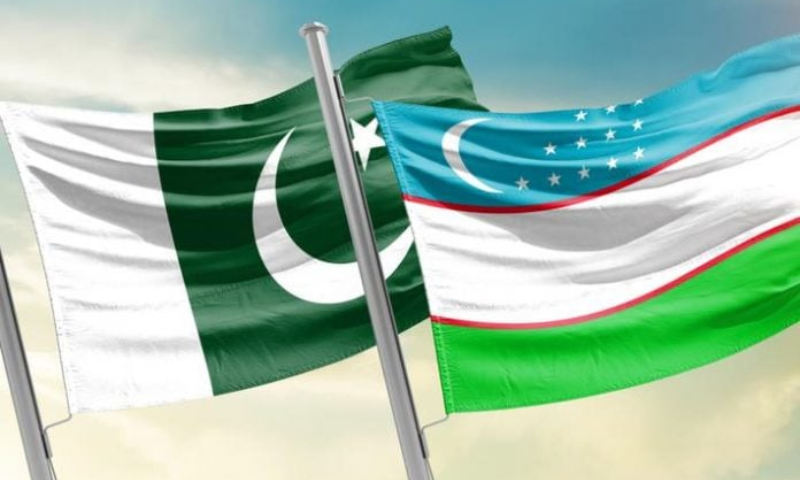
Islamabad, February 04,2026: Pakistan’s interaction with Central Asia has reached a critical stage. Not limited to diplomatic goodwill or even symbolic regionalism, Islamabad’s outreach is increasingly informed by hard geo-economic calculations focusing upon energy security, trade diversification and transit connectivity. While Pakistan enjoys cordial relations with all five of the Central Asian republics (CARs), not all partnerships are equal in terms of their strategic importance. Among them, Uzbekistan is the most consequential of Pakistan’s partners because of the demographic scale, diversified economic profile, geographical centrality, reform-oriented foreign policy and, critically, the importance of Uzbekistan in defining regional connectivity initiatives. In terms of comparisons, Uzbekistan provides Pakistan with a more extensive, deeper, and solid basis for long-term cooperation than any other central Asian country.
At the structural level, geography gives Uzbekistan a special strategic advantage. It is the only Central Asian nation bordering all other CARs and it lies at the centre of Eurasia’s internal transit routes. Historically, this centrality enjoyed by Uzbek cities, such as Samarkand, Bukhara and Tashkent, made them nodal points of the Silk Road. In modern day geopolitical setup the same geographic reproduces Uzbekistan as a natural center of east-west and north-south connectivity. For Pakistan, which seeks, to become a bridge between Central Asia and the Arabian sea, a partnership with Uzbekistan has multiplier effects. Unlike the bilateral corridors between single-country linkages, connectivity via Uzbekistan has a radiant effect to the entire Central Asian region.
Nowhere is this logic so clearly stated as in the trans-Afghan railway, which is proposed to link Termez to Mazar-e-Sharif, Kabul and Peshawar, a brainchild of the Uzbek President Mr Shavket Mizoyoyev. Tashkent considers Pakistani ports – particularly Karachi and Gwadar – as the shortest and the least expensive route to world markets. For Pakistan, the corridor holds up promises not only for transit revenues but also for strategic repositioning as a hub in Eurasian supply chains. The intersection of interests of Islamabad and Tashkent around this corridor confirms the fact of the qualitatively different position of Uzbekistan in comparison with other Central Asian partners.
Economic structure is yet another way in which Uzbekistan differs from its regional peers. Uzbekistan has a relatively diversified economy. It is a major producer of cotton, textiles, gold, fertilisers, automobiles, machinery and agricultural products, as well as a booming manufacturing base. For example, in 2024 total trade volume between Pakistan and Central Asia remained at $726 million, out of which Uzbekistan remained the top partner with $404 million) bilateral trade followed by Kazakhstan ($239 million), Tajikistan ($58 million), Turkmenistan ($41.2 million), and Kyrgyzstan ($12 million).
From Pakistan’s point of view, Uzbekistan is an opportunity for expanding the export towards the non-traditional markets. Pharmaceuticals, surgical instruments, processed foods, rice, sports goods and light engineering products are very good demand potential in Uzbekistan. On the other hand, Pakistan can import cotton, petroleum products, fertilizers, gold and industrial inputs essential for manufacturing within the country. Such two-way complementarities make Uzbekistan a particular country for energy-based partnerships that are at risk of generating asymmetrical dependencies.
Uzbekistan has 40 million population, which is the largest (half) amongst all of Central Asia states. According to Gravity Model positioning, the trade flows are positively correlated with economic size and population, and negatively correlated with distance. Although the physical distance and transit limitations still exist, Uzbekistan’s active promotion of trans-Afghan connectivity effectively minimises the economic “distance” between the two countries. In practical terms, this translates into a higher return on investment in the case of Pakistan-Uzbekistan connectivity, than would be the case for similar investments that could have been focused on smaller Central Asian economies.
Uzbekistan foreign policy transformation under President Shavkat Mirziyoyev has brought it even more strategic value. Since 2016 Tashkent has been on an agenda of a regional reconciliation, economic openness, and pragmatic diplomatic policy. Border disputes with their neighbours have been reduced, visa regimes simplified and trade barriers downtrended. For Pakistan, who finds a natural partner in Central Asia, Uzbekistan is a great option.
Both Pakistan and Uzbekistan are seriously concerned about security situation of Afghanistan. Terrorist organisations like Tehreek-e-Taliban Pakistan (TTP) and Islamic Movement of Uzbekistan (IMU) besides other transnational terrorist organisations are harbored in Afghanistan. There is an understanding in Islamabad and Tashkent to integrate Kabul economically for a better interdependence. Both invests into logistics and transportation infrastructure in Afghanistan. Pakistan’s geoeconomics approach, to entrench Kabul into regional networks for sustainable development, compliments Uzbekistan’s regional economic vision.
Both states have common membership in different regional institutions. The most active platform are Shanghai Cooperation Organisation, which provides the leadership of both countries to interact frequently through multilateral forums. Such engagements help Pakistan to pursue a proactive policy towards Central Asia in general and Uzbekistan in particular. Historical and cultural linkages is another area which needs to be strengthen. Beyond similarities in cultures and ideology, there are more than 4000 common words with similar meanings in Urdu and Uzbek languages. Although, there 1500 pakistani students enrolled in Uzbek universities, the number is negligible. Uzbek students in Pakistani universities are far less than this figure. Such soft-power foundations promote people-to-people exchanges, educational cooperation, religious tourism and cultural diplomacy, all of which foster long-term partnerships of ways that purely transactional relationships cannot. Uzbekistan Airways remains the only career in Central Asia operating four flights a week from Islamabad and Lahore to Tashkent, which plans to launch two weekly flights from Karachi soon.
Pakistan must declare Uzbekistan one of its primary strategic partners from central Asia. It can be done through full materialization of preferential trade agreements and focused investment schemes. There must be a one window operation to facilitate trade and economy related matters including visa facilitations, banking transactions, and customs clearances. Educational exchanges, language programs and cultural efforts should accompany these efforts to create societal constituencies in favor of stronger ties.
Pakistan and Uzbekistan connectivity will further improve once bilateral trade is increased to its full strength. Both the countries strive to raise the bilateral trade to $2 billion by 2030. Uzbekistan is Pakistan’s key to enter the Central Asian markets. Prioritizing Uzbekistan does not mean forgetting about other Central Asian republics. Rather, it is a realistic assessment of regional dynamics and national. A strong and multidimensional partnership with Uzbekistan ensures Pakistan deepening comprehensive connectivity and re-establishment of historical ties with the Central Asian region. Such kind of connectivity will ensure Pakistan to play a role of a bridge between Central, South, South East, and West Asia.