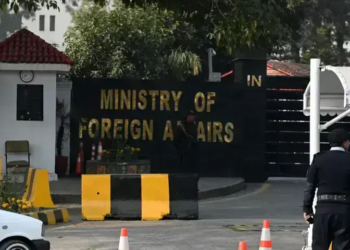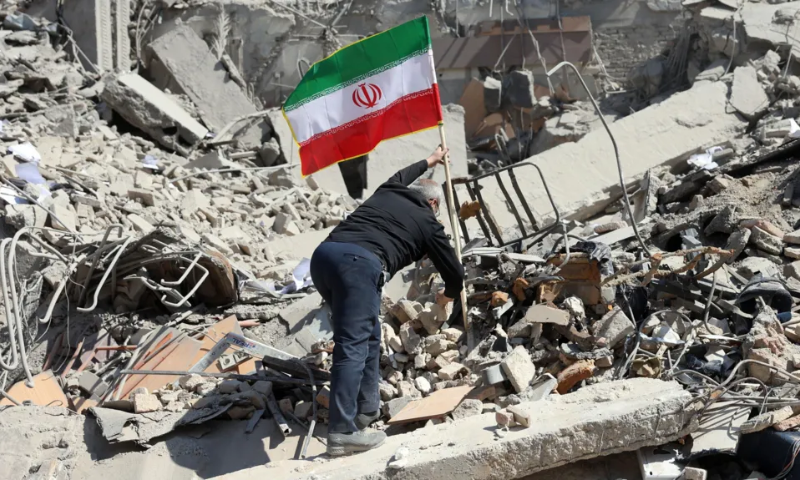
Moscow/Doha/Tehran, March 5, 2026: Russia on Thursday accused the United States and Israel of attempting to widen the ongoing Middle East conflict by provoking Iran into retaliatory strikes across the region, warning that the strategy risks dragging Arab states into a broader war.
In a statement, the Russian Foreign Ministry said Washington and Tel Aviv had deliberately escalated tensions by launching air strikes on Iran, triggering retaliatory attacks that have affected several Gulf countries.
“They deliberately provoked Iran into retaliatory strikes against targets in some Arab countries, which led to human and material losses,” the ministry said, adding that the actions were aimed at dragging Arab states “into a war for someone else’s interests.”
Russian President Vladimir Putin earlier spoke by phone with leaders of four Gulf states, offering to use Moscow’s diplomatic channels with Tehran to relay regional concerns about Iranian strikes targeting energy infrastructure.
Iran accuses Israel of staging attacks in Gulf
Meanwhile, Iran has accused Israel of carrying out covert drone attacks on energy and civilian sites in the Gulf to provoke wider regional tensions and draw Arab states into the conflict. Iranian officials claimed some of the attacks blamed on Tehran were actually conducted by Israeli operatives.
According to Iranian sources cited by regional media, Israeli intelligence agency Mossad allegedly carried out several strikes using networks of agents operating inside Iran.
Iran also privately informed Saudi Arabia that it was not responsible for an attack on the Ras Tanura oil refinery, one of the kingdom’s key energy facilities. Tehran suggested the incident was part of an effort to sabotage regional relations.
Drone and missile attacks have also targeted Oman’s Duqm Port, a major logistics hub used by international naval forces, while a drone crash was reported near the airport in Nakhchivan, an exclave of Azerbaijan bordering Iran.
Explosions reported in Gulf states
Regional tensions escalated further on Thursday when multiple explosions were heard over the Qatari capital Doha. Residents reported intense blasts and plumes of black smoke hours after authorities began evacuating people living near the US embassy.
Qatar’s Prime Minister Sheikh Mohammed bin Abdulrahman Al Thani, during a phone call with Iranian Foreign Minister Abbas Araghchi, accused Tehran of attempting to “harm its neighbours and drag them into a war that is not theirs,” according to a statement from the Qatari foreign ministry.
Explosions were also reported in Manama, the capital of Bahrain, while Saudi authorities said they intercepted three cruise missiles and several drones near the city of Al-Kharj.
In the Gulf waters, a tanker suffered a major explosion off the coast of Kuwait, causing an oil spill, according to the UK Maritime Trade Operations (UKMTO) monitoring agency.
Azerbaijan protests drone strikes
Separately, Azerbaijan summoned Iran’s envoy after drone strikes hit its exclave of Nakhchivan, damaging the airport terminal and injuring two civilians. The Ministry of Foreign Affairs of Azerbaijan described the incident as a violation of international law and warned it reserved the right to take retaliatory measures.
Iran has long voiced concerns that Israel could use Azerbaijani territory—one of its close partners—to launch attacks on Iranian targets.
Missile exchanges between Iran and Israel
The conflict between Israel and Iran continued to intensify as the Israel Defense Forces reported detecting another wave of missiles launched from Iran toward Israeli territory on Thursday.
Explosions were heard in Jerusalem following missile alerts, while Iranian air defence systems were activated in Tehran after Israeli strikes targeted the capital and nearby cities including Karaj.
Iran also launched missiles at Kurdish militant positions in Iraqi Kurdistan, following earlier clashes involving Kurdish groups across the region.
Lebanon front intensifies
On another front, Israeli forces carried out air strikes in Beirut targeting facilities linked to the Iran-backed militant group Hezbollah. Lebanese state media reported several strikes in the southern suburbs of the capital.
A separate drone strike in the Beddawi Palestinian refugee camp near Tripoli killed senior Hamas official Wassim Atallah al-Ali and his wife, marking the first targeted killing of a Hamas leader since the latest regional war began.
Hezbollah leader Naim Qassem said the group would continue resisting Israeli attacks, describing the conflict as an “existential defence.”
Lebanese authorities reported at least 72 people killed, 437 wounded and more than 83,000 displaced since the latest round of hostilities began earlier this week.
The conflict has also disrupted global energy markets and maritime traffic, with shipping through the vital Strait of Hormuz severely affected. Around 200 vessels remain anchored offshore, according to estimates, as insurers raise premiums and shipping companies suspend routes.
Meanwhile, a US submarine reportedly sank an Iranian warship near Sri Lanka, killing dozens of sailors, while NATO air defences intercepted an Iranian missile headed toward Turkey.
In Washington, the United States Senate voted 53–47 against a resolution seeking to halt the air campaign, effectively allowing President Donald Trump to continue directing military operations without new congressional authorization.
As the war entered its sixth day, governments around the world rushed to evacuate citizens from the region, while commercial air traffic remained severely disrupted across major Gulf hubs including Dubai.
The rapidly expanding conflict has heightened fears of a broader regional war with significant consequences for global security, energy supplies and financial markets.