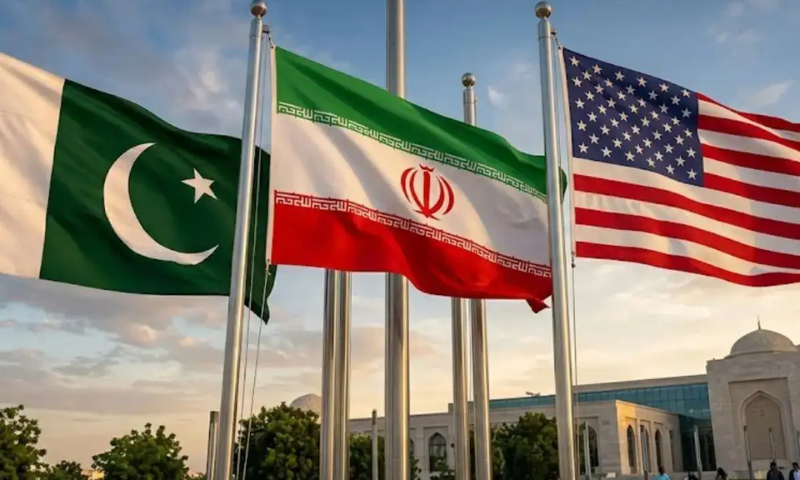
Washington/Islamabad/Tehran, April 3, 2026: Pakistan’s quiet diplomatic push to mediate between the United States and Iran came close to a breakthrough on two occasions in recent days but ultimately fell short, according to a senior government official familiar with the backchannel efforts.
The official revealed that a high-level US delegation, led by Vice President JD Vance, was prepared twice to travel to Islamabad for direct talks with Iranian representatives. However, both attempts were called off at the last minute after Tehran requested additional time for internal consultations and decided against participation.diplo
“We were very close, twice within the last ten days, to hosting a critical meeting,” the official said. “Unfortunately, on both occasions, Iran reconsidered and did not send its team.”
Pakistan has been actively positioning itself as a neutral venue for dialogue amid rising tensions between Washington and Tehran. The initiative reflects Islamabad’s broader strategy to de-escalate regional instability, particularly following recent hostilities involving US and Israeli strikes on Iranian targets.
While the United States signaled readiness to engage, Iran appeared more cautious.
“We were a bit disappointed with the Iranian response,” the official noted, adding that despite understandable concerns, “diplomacy should always be given a chance.”
In a significant disclosure, the official said Pakistan had also explored direct engagement with Iran prior to the latest escalation. Prime Minister Shehbaz Sharif, along with top military leadership, had planned a visit to Tehran for talks with Iran’s Supreme Leader Ayatollah Ali Khamenei.
However, the visit was shelved after Iranian authorities cited security concerns and indicated that a meeting under prevailing conditions would not be possible.
Pakistan’s diplomatic stance was also tested during a high-level meeting in Riyadh on March 19, where foreign ministers from 12 Muslim countries gathered to discuss the worsening regional situation.
According to the official, a phone call took place just before the meeting between Iranian Foreign Minister Abbas Araghchi and Turkish Foreign Minister Hakan Fidan, which was later joined by Pakistan’s Foreign Minister Ishaq Dar. Iran urged both countries to ensure that the joint statement would not unfairly blame Tehran.
During the meeting, Pakistan objected to an initial draft that largely held Iran responsible for the escalation, arguing that it ignored the broader context, particularly Israel’s actions. After prolonged discussions, Islamabad succeeded in securing amendments to make the statement more balanced.
However, Pakistan’s position reportedly drew criticism from some participating countries, which viewed it as overly sympathetic to Iran.
The official further disclosed that Pakistan opposed proposals for a multinational task force in the Strait of Hormuz, considering it potentially escalatory.
This cautious stance also led Islamabad to skip a recent UK-hosted meeting on restoring maritime traffic through the strategic waterway. Pakistan declined the invitation, citing concerns that such initiatives might undermine its policy of neutrality and de-escalation.
These developments highlight Pakistan’s delicate balancing act as it seeks to play a constructive diplomatic role without becoming entangled in a rapidly intensifying conflict.
While the mediation effort has yet to yield concrete results, the near-success in arranging US-Iran talks underscores both the potential and the challenges of behind-the-scenes diplomacy in one of the world’s most sensitive geopolitical arenas.