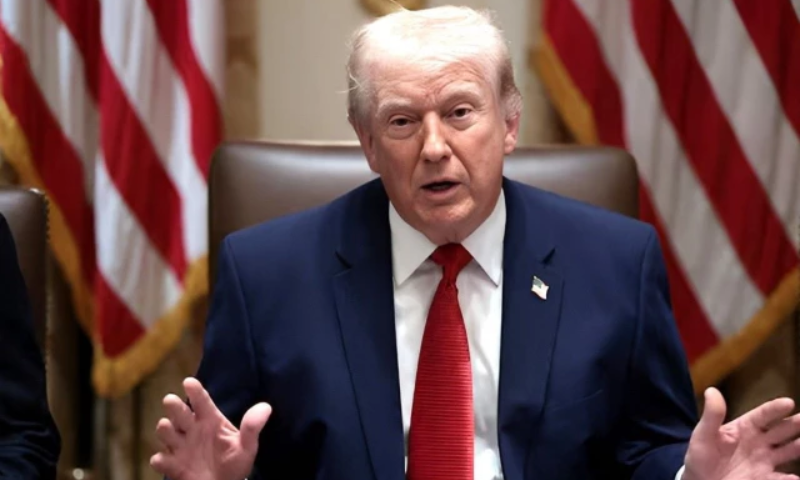
Washington/Tehran, April 4, 2026: Tensions in the Middle East escalated sharply after Donald Trump issued a stark 48-hour ultimatum to Iran, demanding that Tehran strike a deal and reopen the strategically vital Strait of Hormuz or face severe consequences.
In a post on Truth Social, Trump warned that “time is running out,” adding that failure to comply would result in “all hell” breaking loose. He referenced an earlier 10-day deadline issued on March 26.
Iran dismissed the warning, with officials mocking what they termed Trump’s “ultimatum rants,” signaling continued defiance amid the ongoing conflict.
Military escalation and airspace claims
Iran’s military announced the deployment of a new air defence system, claiming it would soon achieve “full control” over its airspace after weeks of sustained aerial operations by US and Israeli forces. Iranian officials also stated that multiple drones and aircraft had been downed, though these claims remain contested.
Reports from both sides indicate heightened risks in the airspace, including downed aircraft and a missing US pilot, raising the stakes of the conflict significantly.
Strait of Hormuz incident
Iran claimed it targeted an Israel-linked vessel in the Strait of Hormuz using a drone, setting it on fire. The waterway remains a critical global oil transit route, making any disruption a major concern for international markets.
Bushehr nuclear facility strike
A projectile struck near the Bushehr Nuclear Power Plant, killing a security staff member and damaging a side building. Iranian authorities stated there was no radiological threat, though the incident has raised alarm over the vulnerability of nuclear infrastructure during the conflict.
Regional spillover
The conflict is increasingly affecting neighboring countries:
- Iraq closed the Shalamcheh border crossing after airstrikes killed one Iraqi citizen and injured several others.
- In Lebanon, Israeli strikes reportedly killed civilians and targeted infrastructure
- Gulf states including Kuwait and the UAE reported drone strikes, missile debris, and damage to energy infrastructure.
Diplomatic efforts and Pakistan’s role
Iranian Foreign Minister Abbas Araghchi expressed gratitude to Pakistan for mediation efforts, stating Iran had not refused dialogue in Islamabad.
Pakistan’s Deputy Prime Minister and Foreign Minister Ishaq Dar welcomed the clarification, reaffirming diplomatic engagement. However, reports suggest ceasefire efforts have stalled.
Expanding conflict and human cost
The war, now in its sixth week, has:
- Killed thousands
- Triggered an energy crisis
- Disrupted global oil markets (prices surged sharply)
- Resulted in casualties among US forces
The possibility of a captured or missing US pilot inside Iran has further intensified pressure on Washington.
Strategic and economic risks
The conflict continues to threaten:
- Global oil supply via the Strait of Hormuz
- Critical infrastructure in Gulf countries
- Long-term regional stability
With no immediate resolution in sight, the situation remains volatile, and the risk of further escalation remains high.